Which Maine Registration a Week-Long Trip Needs
A week of riding in Maine raises a practical question: can your out-of-state registration cover the trip, or do you need a Maine registration? For many nonresident riders, the seven-day Maine registration is the option to check first. The right choice depends on where the machine is registered, who is riding, and whether a narrow exception applies.
The usual choice for a week-long visit
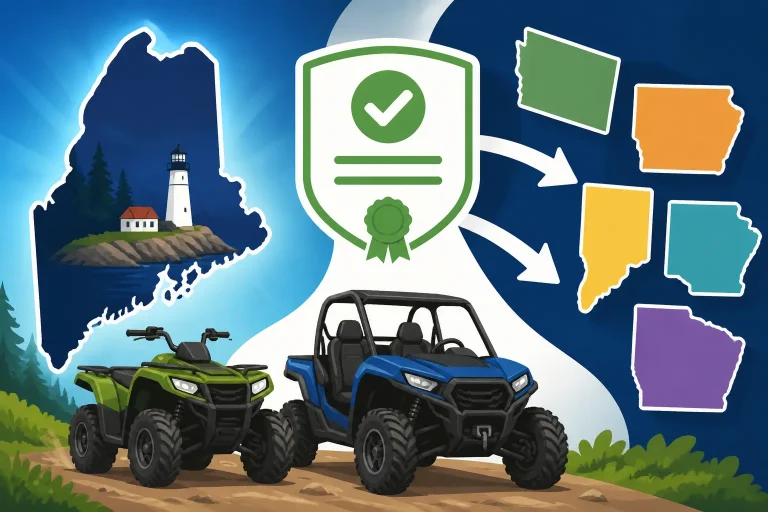
If you are bringing an ATV from another U.S. state for a week, do not assume its home-state registration is enough for Maine. Maine’s reciprocity rules are limited, and most visiting riders need a Maine nonresident registration to ride legally. A week-long trip usually points to the seven-day option rather than an annual registration.
The seven-day registration is meant for a short visit. It is separate from a trail permit: registering the machine does not automatically grant access to private trails, public lands, or routes that are closed. You still need to follow posted restrictions and have permission where required.
Before buying, make sure the registration option fits the machine and the trip dates. Registration products, fees, and the details shown during purchase can change, so verify current requirements with Maine’s official registration service or an authorized agent. For a closer look at who needs one, see Maine ATV Registration for Non-Residents.
| Your situation | What to check first | Why |
|---|---|---|
| U.S. visitor riding for about a week | Maine’s seven-day nonresident registration | Home-state registration alone may not satisfy Maine’s requirements |
| Visitor making repeated or extended trips | Maine’s annual nonresident registration | It may fit better than purchasing short-term registrations repeatedly |
| Canadian visitor relying on a special exception | The exact three-day rule and eligibility | The exception is narrow and does not cover a full week |
| Rider using a rented machine | Ask the rental provider what registration is included | Do not assume the rental’s paperwork covers every rider or use |
| Group bringing multiple machines | Check each machine separately | A registration generally applies to a particular machine, not the whole group |
The seven-day option is especially worth considering if your plan is a single, continuous week of riding. If your visit lasts longer, includes separate trips, or may extend because of weather, compare the short-term option with the annual one before you travel. The details that determine the valid period and effective dates should be checked in the official purchase process.
A Maine registration is not the same as a permit to ride every trail. Maine trails often cross private land, and access can depend on landowner permission, club arrangements, and seasonal conditions. A valid registration does not override a closure or posted restriction.
Why your home-state registration may not be enough
Rules differ among states, and a registration that allows you to ride at home does not automatically carry the same privileges into Maine. Maine’s general approach is not broad, automatic reciprocity for every out-of-state ATV registration. That is why visitors should confirm Maine’s requirement rather than relying on a sticker or document from home.
The background is useful because riders sometimes hear that Maine “has reciprocity” and assume that settles the question. Maine’s former general reciprocity arrangement ended, and the current rules include only limited circumstances. Read Maine’s ATV Reciprocity, and Why It Ended if you want the broader context.
For most visitors planning seven days, the practical question is not whether their home registration exists; it is whether Maine recognizes it for the planned use. If you cannot confirm that your particular registration qualifies under a current Maine rule, treat the seven-day Maine registration as the option to investigate. Do not rely on what a friend recalls from a past trip or on an old online discussion.
The Canadian three-day exception is not a week-long substitute
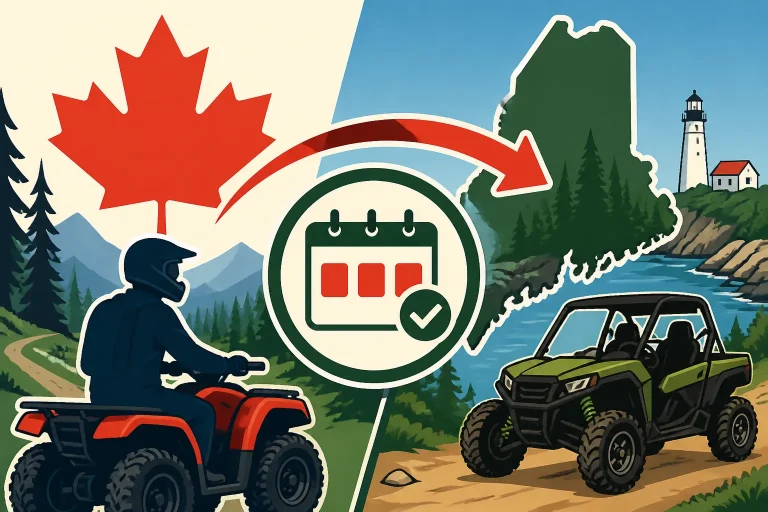
Some Canadian riders may qualify for a limited three-day exception under the applicable agreement. It is not a general waiver for all Canadian visitors, and it does not cover a full seven-day visit. It is also separate from Maine’s ordinary seven-day nonresident registration.
If you are planning to ride for a week, relying on three days of exception coverage leaves the remaining days unresolved. Check the eligibility conditions and the exact way days are counted before riding. These details matter if your travel dates cross midnight, if you arrive early, or if you plan to ride on different days across a longer stay. See Maine’s Three-Day Non-Resident Exception and Which Days Count Under Maine’s Three-Day Rule.
Canadian riders should also check the current rules for their specific home registration and trip. The fact that an agreement applies to certain riders or circumstances does not mean it applies to every machine, province, or itinerary. Maine ATV Rules for Canadian Visitors can help frame the questions to confirm.
Choose seven-day or annual based on your actual riding plans
The seven-day and annual nonresident registrations serve different trip patterns. The short-term option may be the natural fit for one week, while an annual registration may be worth comparing if you expect to return, stay longer, or ride on several trips within the applicable registration period. The better choice depends on current fees and registration terms, so check the official figures rather than relying on an old price.
| Factor | Seven-day nonresident registration | Annual nonresident registration |
|---|---|---|
| Best fit | A short, continuous visit | Longer stays or repeated visits |
| Main planning concern | Confirm the trip fits the permitted dates | Confirm the registration period covers the intended use |
| Cost comparison | Check the current fee and any purchase-related charges | Compare the current annual fee with your likely number of trips |
| If plans change | A longer stay may require another valid option | May provide more flexibility within its valid period |
| Trail access | Does not grant permission to use closed or unauthorized trails | Does not grant permission to use closed or unauthorized trails |
For a single week, compare the seven-day option with the annual option using your actual travel dates. If you might arrive a day earlier or stay beyond the seventh day, check how the registration period is calculated and whether you need coverage for the additional riding. Do not assume you can ride on an uncovered day simply because the trip is almost finished.
If you expect to make another visit later, add the likely dates to your comparison. An annual option may be more convenient in some situations, but convenience alone does not determine what you need. Confirm its validity period, the machine it applies to, and whether it will cover your planned rides.
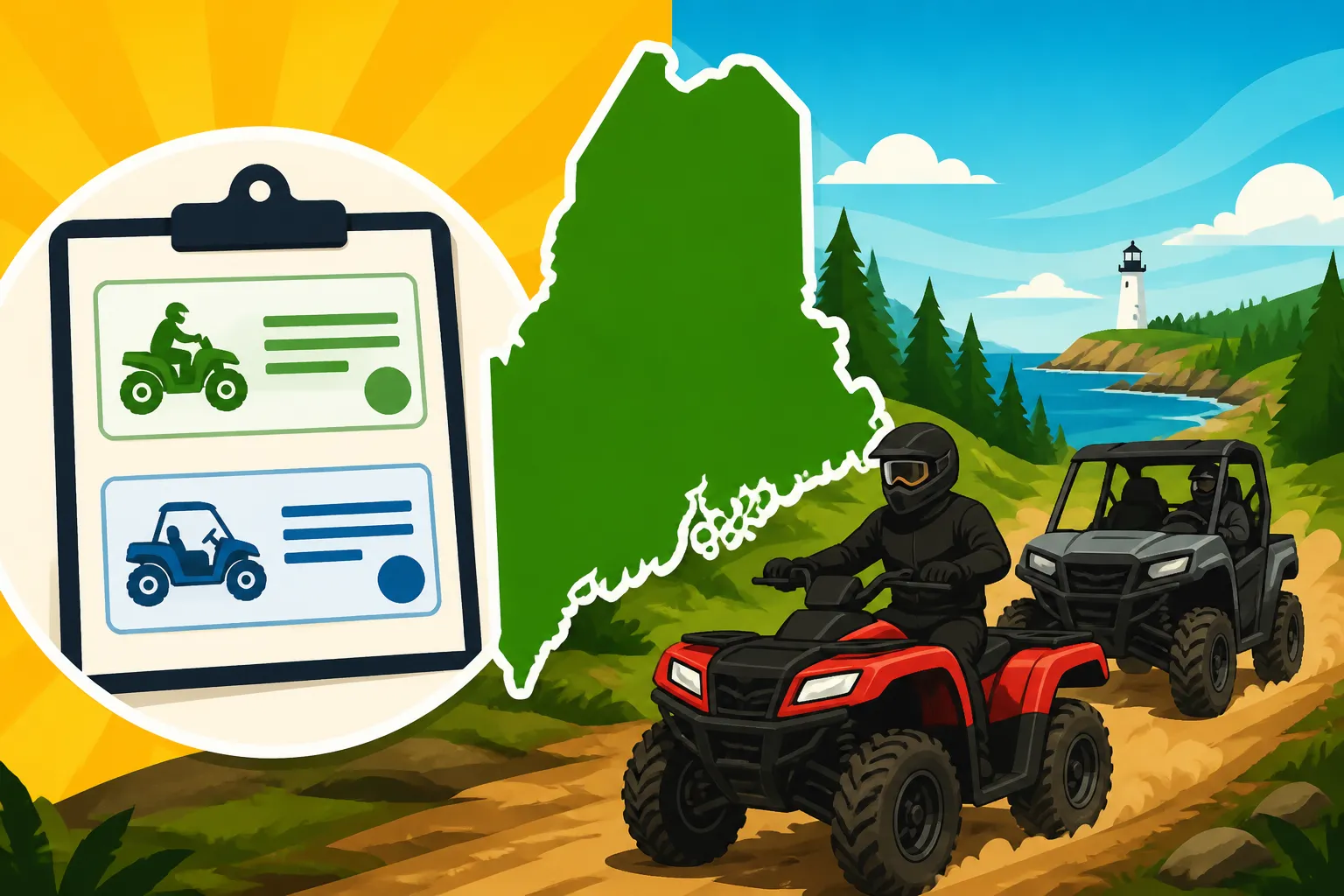
The machine type matters, too. An ATV and a UTV can have different registration considerations. If you are bringing a side-by-side, check the requirements for that machine rather than selecting an ATV option by default. See Maine UTV Registration and How It Differs for the distinction.
Buy and confirm the registration before riding
Once you have settled on the right option, leave time to complete the registration and understand what proof you must carry or display. A purchase confirmation and a decal are not necessarily interchangeable for every purpose. Read the instructions provided at purchase and confirm what Maine currently accepts while a decal is in transit, if one is being mailed.
A sensible preparation sequence is:
- Identify the machine. Confirm whether it is an ATV or UTV and have its identifying information available.
- Confirm the rider’s status. Determine whether you are a nonresident and whether any specific exception genuinely applies.
- Set your riding dates. Include the first and last day you may ride, not just the nights you expect to stay.
- Compare the available registration periods. Check the current seven-day and annual options, including their effective dates and costs.
- Complete the purchase through an official channel. Review the registration details carefully before submitting.
- Save the documents and follow the display instructions. Keep proof accessible and place any decal where Maine requires it.
- Check trail access separately. Confirm that routes are open and that the necessary landowner or club permissions are in place.
For online purchases, use the current official process and keep the confirmation available. [Buying a Maine Non-Resident Registration Online] covers the online route, while Riding in Maine on the Confirmation Page addresses the question of riding before a decal arrives. Check the current instructions rather than assuming the same procedure applies in every case.
If you buy through an agent, ask what paperwork they provide and whether any agent charges apply. If your registration is mailed, allow time for delivery and make sure you know what to do in the interim. [How Fast a Maine Non-Resident Registration Arrives] is useful when timing is tight.
Registration also does not replace basic trip preparation. Check trail status before you leave, because seasonal closures and landowner decisions can affect access. Bring the proof required for the machine, follow trail signs, and avoid entering land or routes that are closed. A valid sticker cannot turn a closed route into an open one.
The straightforward answer for many U.S. visitors is: plan on checking Maine’s seven-day nonresident registration for a week-long trip, rather than assuming the home-state registration is sufficient. Confirm the current terms, dates, and eligibility before riding. If you are a Canadian visitor who may qualify for the three-day exception, do not treat that limited exception as coverage for the full week.
Disclaimer
This article is for general informational purposes only and does not constitute professional advice. Laws, prices and regulations vary by location and change over time. Consult a qualified professional for guidance on your specific situation.