Crossing Route 1 on an ATV in Maine
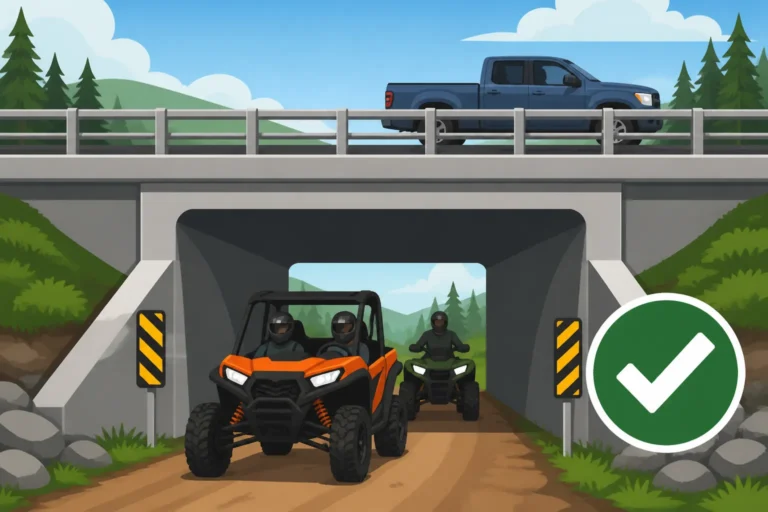
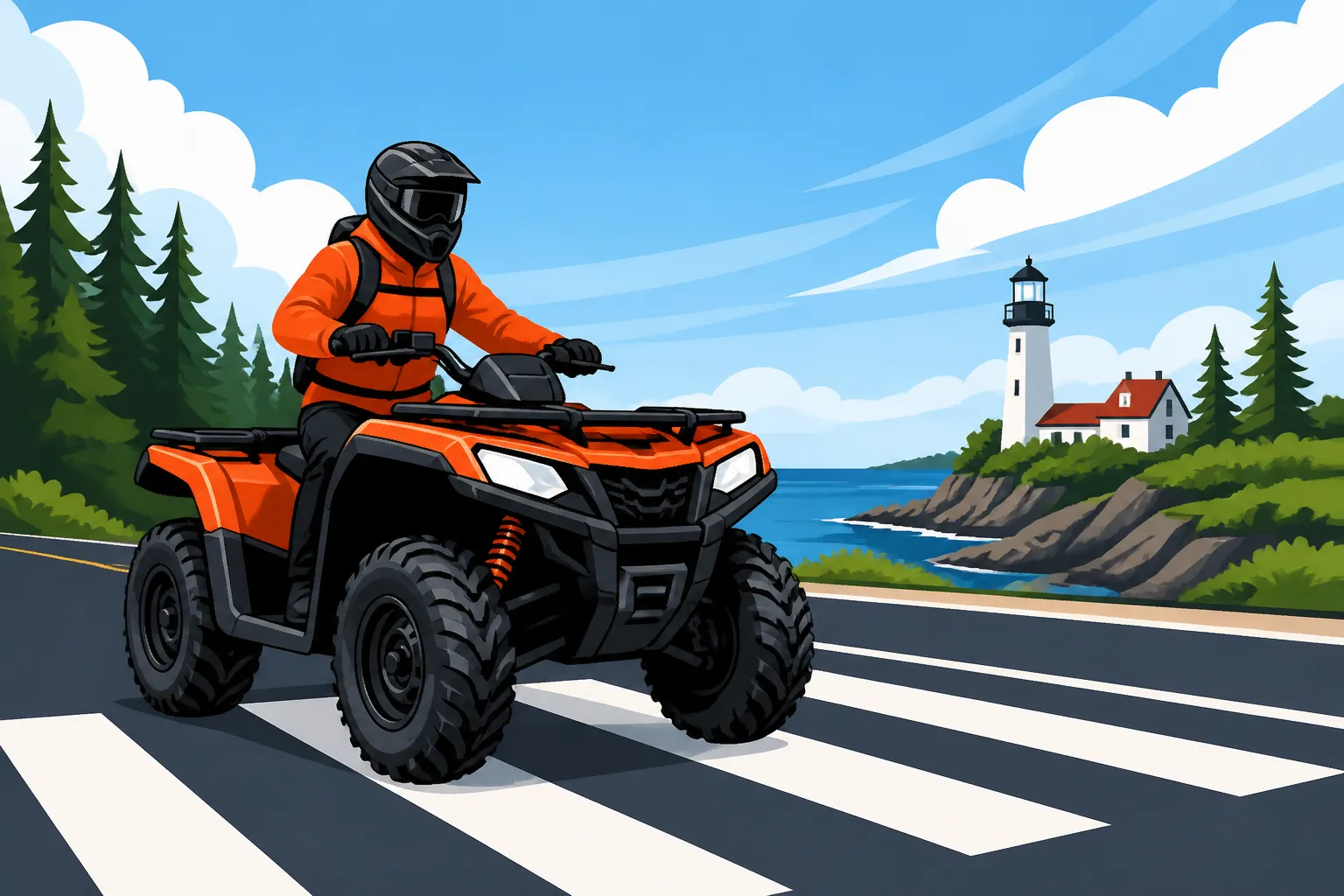
It's an age-old challenge for ATV and UTV riders here in Maine: you've got this incredible network of trails, but sometimes, to get from one section to another, you encounter a major public road. Route 1, stretching along our beautiful coast and weaving inland, is a prime example. The thought of crossing such a busy thoroughfare can be daunting, even confusing. This guide is all about demystifying the rules and best practices for safely and legally crossing Route 1 on your ATV or UTV, ensuring you can keep enjoying Maine's expansive trail system without unnecessary stress or fines.
Understanding Maine's Rules for ATV Road Crossings
Riding an ATV or UTV in Maine offers unparalleled access to the state's natural beauty, but it comes with a critical responsibility to understand and follow the rules, especially when it comes to interacting with public roads. Unlike a casual jaunt through your backyard, crossing a state highway like Route 1 requires a heightened level of awareness and adherence to specific regulations designed for everyone's safety. Many riders simply aren't sure of the precise steps, and that uncertainty can lead to dangerous situations or costly penalties.
The "Complete Stop" and "Extreme Right" Rule
One of the most fundamental rules you'll encounter when approaching any public way on your ATV or UTV in Maine is the requirement for a "complete stop." This isn't just a suggestion; it's a legal mandate. Before your machine even touches the paved surface of Route 1, you must come to a full, unequivocal stop. This isn't just about yielding; it's about providing yourself enough time to thoroughly assess the traffic conditions, identify any potential hazards, and make a safe decision.
Once you've stopped, the next crucial step is to yield to any and all oncoming traffic. Cars, trucks, motorcycles – they all have the right-of-way on a public road. You cannot proceed until it is absolutely safe to do so, meaning no approaching vehicles pose an immediate threat. If your crossing requires you to travel a short distance on the public way, which is generally limited, Maine law dictates that you must ride as far to the extreme right of the traveled portion of the road as safety permits. This reduces your footprint on the road and gives motorists ample room to see and react to your presence. These rules are in place not just to prevent accidents, but to ensure that everyone sharing the roadways, whether on four wheels or two, can do so predictably and safely. You can find more details about how to correctly position yourself when traversing a road in our guide, [Riding the Extreme Right of a Maine Road].
The 500-Yard Limit and Designated Access Routes
Maine law places strict limitations on how far an ATV or UTV can operate on a public way. Generally, you're looking at a maximum of 500 yards. This isn't meant for joyriding down the highway; it's specifically for the purpose of crossing a public way or gaining access to a trail from another part of the trail system or from a staging area. Understanding this limit is paramount, especially when you're dealing with a long, winding road like Route 1, where 500 yards can pass quicker than you think. Attempting to ride further than this limit on an undesignated section of Route 1 can quickly land you in hot water with the Maine Warden Service.
However, there's a vital exception and a key distinction to be made: designated ATV access routes. Many towns across Maine, recognizing the importance of ATV tourism and local access, have worked with the state to formally designate certain sections of public ways as legal access routes. These routes are clearly marked with specific signage and allow ATVs and UTVs to operate on the public way for more than just a quick crossing. If you're lucky enough to encounter a designated ATV access route on Route 1, these specific sections will have unique rules, allowing you to ride for longer distances, often between trail sections or to access local businesses. It's always best to check local ordinances and trail maps to identify these special access routes, as they offer a legal and safer way to navigate specific portions of busy roadways. For more on these specific routes, check out [Maine's 500-Yard Limit on a Public Way] and [Maine ATV-Access Routes and How Towns Post Them]. Knowing the difference between a simple crossing and a designated route is crucial for staying within the bounds of the law.
Yielding to Traffic and Visibility Requirements
When you're making a crossing on a busy road like Route 1, yielding is more than just a legal formality; it's a life-saving action. Motorists often don't anticipate an ATV or UTV emerging from a wooded trail or a side path. Their speeds are higher, and their braking distances are longer. Therefore, it is your responsibility as the ATV operator to ensure that the roadway is entirely clear and safe before you attempt to cross. This means waiting patiently, even if it feels like forever, for a sufficiently long gap in traffic that allows you to cross without forcing any vehicle to slow down, swerve, or take evasive action. Err on the side of caution every single time. Our guide [Who Yields at a Maine ATV Road Crossing] goes into more detail on this critical responsibility.
Beyond yielding, visibility is your absolute best friend. Think about it: a vibrant red sedan is far more noticeable than a camouflaged ATV blending into the treeline. Brightly colored clothing, especially fluorescent orange or green, can significantly increase your presence to approaching drivers. Beyond personal attire, consider your machine itself. Ensuring your headlights and taillights are functioning perfectly is non-negotiable, particularly if there's any chance you'll be riding near dusk or dawn. You might even consider aftermarket lighting solutions for enhanced visibility. Many riders install additional LED lights or reflective decals to make their machines stand out. For example, some riders find that high-quality, bright LED whip lights or additional amber running lights from brands like SuperATV can make a huge difference in being seen from a distance, especially when you're crossing a multi-lane highway or through a heavily trafficked area. The more visible you are, the safer your crossing will be for everyone involved.
Specific Challenges of Crossing Route 1
Route 1 in Maine isn't just any road; it's a major artery that can present unique challenges for ATV and UTV riders. From the bustling coastal towns to the quieter stretches heading further inland, the characteristics of this highway can vary dramatically, and with them, the risks involved in making a crossing. It's vital to recognize that a crossing in a rural area might be vastly different from one within a town's limits.
Traffic Volume and Speed on Route 1
One of the most immediate and significant challenges of crossing Route 1 is the sheer volume of traffic, especially during peak seasons like summer and fall. This isn't your quiet backwoods road where you might see one car every five minutes. Route 1, particularly in tourist-heavy areas or near larger towns, can experience continuous streams of vehicles, often moving at highway speeds. Drivers on Route 1 are typically focused on their destination, and while they should be vigilant, they aren't necessarily expecting an ATV to suddenly appear at a trail crossing.
The speed of traffic also plays a huge role. While an ATV might be able to accelerate quickly, you are still operating a machine that is much slower than a car accelerating from a full stop to 50 or 60 miles per hour. This difference in acceleration and top speed means that the "safe gap" in traffic you need to cross becomes much larger. You'll need to accurately judge not only the distance of oncoming vehicles but also their speed to ensure you have more than enough time to execute your crossing without creating a hazardous situation for anyone. Patience is not just a virtue here; it's a necessity. Don't rush it; wait for that truly clear opening.
Limited Visibility and Roadside Conditions
Route 1 is famous for its scenic twists and turns, elevation changes, and sometimes dense roadside foliage. What makes for a picturesque drive can create dangerous blind spots for an ATV operator attempting to cross. You might be at a trail exit with excellent visibility in one direction, only to find a sharp curve or a hill crest blocking your view of oncoming traffic from the other. These limited visibility situations demand even greater caution and often mean waiting for an even larger gap in traffic.
Adding to this complexity are the varied roadside conditions. The edges of Route 1 might feature steep ditches, soft shoulders, loose gravel, or overgrown vegetation. These conditions can make maneuvering your ATV or UTV precisely and quickly a real challenge. A soft shoulder could cause a momentary loss of control, or a deep ditch might prevent you from quickly pulling off if an unexpected vehicle appears. Always scout your crossing point if possible. Look for the safest, most level spot to enter and exit the pavement, and consider the angles involved. A straight-on crossing is generally safer than a diagonal one. For more insights on how to approach these specific maneuvers, see [Maine ATV Road Crossing at an Angle] and [Stopping Before a Maine Public Way Crossing].
Crossing Intersections and Village Centers
Navigating a simple, straight crossing of Route 1 from a trail can be tricky enough, but what happens when the trail leads you to a bustling intersection or right through the heart of a Maine village? These scenarios add multiple layers of complexity and potential danger. In an intersection, you're not just dealing with through-traffic; you're contending with vehicles turning left, turning right, and potentially approaching from multiple directions, often with traffic signals that don't accommodate ATV movement.
When Route 1 passes through a village center – think of towns like Wiscasset, Belfast, or Camden – the situation becomes even more intricate. Here, you'll encounter parked cars, pedestrians, crosswalks, side streets, and potentially lower speed limits for vehicles, but often a higher density of movement. Local ordinances can further complicate matters, with some towns having specific restrictions or designated routes for ATVs within their developed areas. For detailed information about navigating these urban crossings, you'll want to review [Maine ATV Rules in Village Centers]. Your best strategy in these areas is to pre-plan your route diligently, use maps that indicate designated ATV access points, and if no designated route exists, seek alternative trail sections or consider trailering your machine around the congested area rather than attempting a risky or illegal crossing.
Preparing Your ATV and Yourself for Safe Crossings
Successfully and safely crossing Route 1 is as much about preparation as it is about knowing the rules. It involves ensuring your machine is in top condition, that you as the rider are focused and properly equipped, and that you've done your homework on the specific crossing point. This proactive approach drastically reduces risk for yourself and others.
Machine Readiness: Lights, Brakes, and Tires
Before you even consider approaching a major road like Route 1, a thorough check of your ATV or UTV's critical safety components is non-negotiable. First and foremost are your lights. Your headlights and taillights must be fully functional, clean, and visible. These are your primary means of being seen by motorists, especially in less-than-ideal lighting conditions or just for general awareness. For night riding, or even for increased daytime visibility on a road, a properly functioning brake light is equally important so that drivers behind you can anticipate your stops. If you’ve been on dusty trails, ensure your lights aren't caked in mud, which can severely diminish their effectiveness.
Beyond standard lighting, many riders choose to enhance their visibility with aftermarket accessories. Products like brighter LED headlights, additional amber running lights, or even reflective tape on your machine can significantly increase your profile to other road users. Brands like SuperATV offer a range of robust lighting kits and accessory mirrors that can provide that extra edge in making you more noticeable, especially when your focus needs to be on traffic. Similarly, your brakes must be in perfect working order. Test them thoroughly before you leave the staging area. A split-second decision might require maximum braking power, and you need to be confident your machine will respond. Finally, consider your tires. While knobby tires are great for mud and rocks, they can feel a bit squirrely on pavement and may have reduced grip compared to a road-specific tread. Ensure your tires are properly inflated and in good condition for the varied surfaces you'll encounter. Our guide [Maine Lighting Requirements for Night Riding] offers more on specific lighting requirements.
Rider Preparedness: Awareness, Gear, and Planning
Your machine can be perfect, but if you, the rider, aren't prepared, the risks escalate dramatically. Rider preparedness starts with a clear head. Operating an ATV or UTV, especially when interacting with public roads, demands your full, undivided attention. Any impairment, whether from alcohol or drugs, is not only illegal but incredibly dangerous. [Maine OUI on an ATV: What Happens] details the severe consequences of operating under the influence. Your focus must be razor-sharp, constantly scanning for traffic, potential hazards, and escape routes.
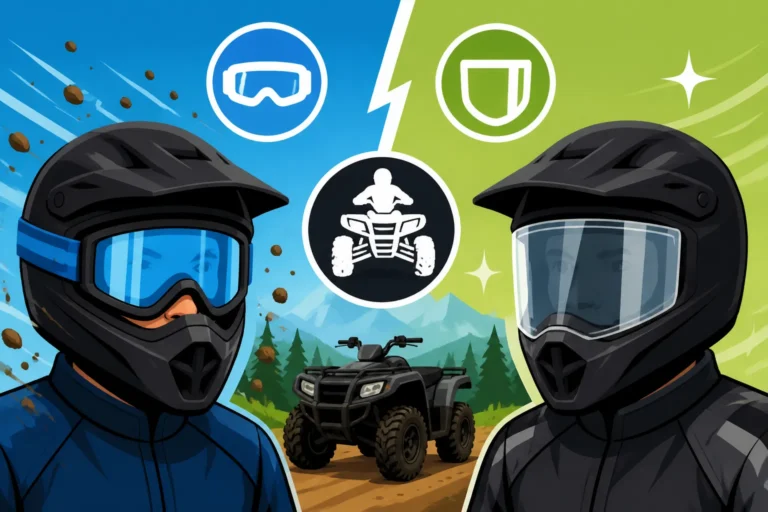
Appropriate gear is also paramount. A DOT-approved helmet is legally required for riders under 18 in Maine, but for anyone crossing a busy road, it's a smart choice regardless of age. [Maine Helmet Rules for Riders Under 18] provides the specifics. Eye protection, whether goggles or a face shield, is also critical to ensure clear vision and protect against debris. Beyond safety gear, wear bright, highly visible clothing. Fluorescent colors stand out against natural backdrops and vehicle paint. Planning your route beforehand is equally crucial. Don't just arrive at a trail and hope for the best. Use maps, whether paper or digital like those found on [onX Offroad Maps for Maine Trails], to identify exactly where you'll cross Route 1. Look for designated crossing points, and understand the flow of traffic in that specific area. This pre-ride planning can significantly reduce stress and improve safety.
What to Do if You Encounter a Warden
Even if you're doing everything right, you might still encounter a Maine Game Warden during your ride, especially near road crossings. Wardens are out there to ensure everyone's safety and compliance with the law. The best approach if you're signaled to stop is to do so immediately and safely. Pull your ATV or UTV completely off the traveled portion of the road or trail, turn off your engine, and keep your hands visible.
The Warden will likely ask for your registration papers and proof of your ATV safety course certificate if you are required to have one. Make sure these documents are easily accessible and not buried deep in a backpack or under a seat. Keeping them in a waterproof pouch in a handlebar bag or similar location is a good strategy. [Maine Warden Stops and ATV Paperwork] provides more context on these interactions. Be polite, cooperative, and answer their questions honestly. If you receive a citation, understand your options for addressing it. Riding without a current registration is one of the most common violations, and the penalties can be significant. Familiarize yourself with [Penalties for Riding an Unregistered ATV in Maine] to avoid such situations. A calm and respectful attitude can go a long way, even if you've made an honest mistake.
Crossing Requirements vs. Best Practices for Route 1
Here's a quick overview of what's legally required versus what's considered best practice for maximizing safety when crossing Route 1.
| Feature | Legal Requirement (Maine Law) | Best Practice (Enhanced Safety) |
|---|---|---|
| Stop at Roadway | Complete stop before entering public way. | Complete stop, engine off, thorough traffic scan. |
| Yield to Traffic | Must yield to all traffic on public way. | Wait for a significantly large, clear gap; err on caution side. |
| Travel on Roadway | Limited to 500 yards (unless designated route). | Minimize time on roadway; cross at 90-degree angle if possible. |
| Visibility | Functional headlights/taillights (after sunset). | Bright clothing, additional LED lighting, reflective decals. |
| Machine Maintenance | Basic operational condition. | Pre-ride check of brakes, tires, steering, all lights. |
| Rider Age/License | Specific age limits/safety course reqs for youth. | Helmet for all riders; focus, no impairment. |
| Documentation | Carry registration/safety cert. | Keep documents readily accessible in a waterproof pouch. |
| Route Knowledge | N/A (implied by trespass laws). | Pre-plan crossing points; check for designated access routes. |
Disclaimer
This article is for general informational purposes only and does not constitute professional advice. Laws, prices and regulations vary by location and change over time. Consult a qualified professional for guidance on your specific situation.