Using a Highway Underpass on an ATV
Navigating Maine's vast ATV and UTV trail network is an incredible experience, but it often brings you face-to-face with the challenge of crossing major roads. While surface crossings come with their own set of rules and anxieties, highway underpasses offer a much safer, and often more scenic, alternative to keep your ride flowing. This guide will walk you through everything you need to know about legally and safely using these hidden gems to connect trails beneath Maine's busy highways.
The Legal Landscape of Underpasses in Maine for ATVs
When you're out on the trails, hitting a highway can feel like hitting a wall, interrupting your flow and sometimes forcing you onto busy roads. Highway underpasses are designed to let traffic flow unimpeded, and for ATVs, they can be a fantastic way to link up sections of trail without ever having to contend with high-speed vehicles. However, not all underpasses are created equal when it comes to ATV access, and understanding the rules is paramount.
Understanding Maine's ATV Road Crossing Laws
Maine has very specific regulations about how ATVs can interact with public roads. Generally, riders are permitted to cross public ways at a 90-degree angle after coming to a complete stop, yielding to all traffic, and only if the crossing doesn't obstruct traffic. You can only ride on the paved shoulder for a maximum of 500 yards to get to a trail or another crossing point, and only if that section of road has been designated as an ATV-access route by the local municipality. This is why [Maine ATV Rules on Public Ways] are so critical to review.
Underpasses, on the other hand, often present a unique scenario. Since you're not technically crossing the surface of the highway, but rather passing under it, some of the immediate hazards of a surface crossing are removed. However, this doesn't automatically mean all underpasses are fair game. The crucial distinction lies in whether the underpass is part of a designated, legal ATV trail system. If an underpass is incorporated into an official trail, it acts as a seamless extension, allowing you to bypass the highway overhead. But if it's not, treating it like a casual shortcut can land you in hot water for trespassing.
Designated vs. Undesignated Underpasses
This is where many riders get confused. A "designated" underpass is one that has been officially recognized and integrated into Maine's vast ATV trail network, usually maintained by a local ATV club or the Maine Bureau of Parks and Lands. These underpasses will typically be clearly marked with trail signs, indicating that ATV use is permitted and part of the larger system. Think of them as dedicated segments of the trail that just happen to run beneath a highway.
"Undesignated" underpasses are a different story. These might be culverts, old railway tunnels, or even small bridges designed for water flow or a minor logging road that simply happens to pass beneath a major highway. They might look like a perfect shortcut, but if they aren't marked as part of an official ATV trail, riding through them is likely considered trespassing on private land or state property not authorized for ATV use. It's often difficult to tell the difference just by looking, which is why [Maine ATV Trail Maps and Club Boundaries] are your best friend. Always check your map, or better yet, consult with a local ATV club or the Bureau of Parks and Lands if you're unsure about a particular underpass. Assuming access without verification can lead to fines and, more importantly, can jeopardize the positive relationships that clubs have worked so hard to build with landowners.
Permitted Access and Landowner Consent
Even if an underpass seems like a natural part of the terrain, remember that the land beneath and around it is owned by someone. Often, the immediate area under a highway bridge or culvert might be owned by the state Department of Transportation, but the approaches to it – the land that connects the underpass to the wider trail network – are frequently private property. This is why [Maine Landowner Permission Rules] are so vital to Maine's ATV community.
Local ATV clubs play an absolutely crucial role here. They work tirelessly to secure landowner permission for trails, including sections that utilize underpasses. When you see an underpass on a club trail map, it means they've done the legwork, obtained consent, and likely maintain that section for safe passage. Riding an underpass that hasn't received this consent isn't just a technical violation; it undermines the trust and goodwill that keeps Maine's trails open. [Maine ATV Trespass Rules Along Roads] are serious, and wardens do patrol. Always respect the hard work of the clubs and the generosity of landowners by only using clearly marked and permitted routes.
Practical Considerations and Safety Tips for ATV Underpass Use
While underpasses offer a great way to avoid highway traffic, they come with their own unique set of challenges and safety considerations. These aren't just open stretches of trail; they're often confined, dark, and can present unexpected hazards. Being prepared and cautious is key to a smooth and safe passage.
Visibility and Lighting Requirements
One of the most immediate challenges in an underpass is the lack of natural light. Even on a bright, sunny day, stepping into a tunnel-like underpass can be like entering a cave. Your ATV's headlights and taillights become absolutely critical here. Make sure they are fully functional and clean before you even think about entering. Not only do they help you see potential hazards ahead, but they also make you visible to anyone else who might be using the underpass, whether it's another ATV, a cyclist, or even wildlife. [Maine Lighting Requirements for Night Riding] are strict, and while you're not technically "night riding" in an underpass, the conditions are similar.
Many experienced riders upgrade their stock lighting for better visibility in these situations. Powerful LED light bars or auxiliary lights from companies like SuperATV can dramatically improve your ability to see and be seen, turning a shadowy passage into a clearly lit path. Additionally, wearing high-visibility gear, such as a neon-colored jacket or helmet, can make a difference, especially if the underpass has a bend or a narrow section where you might encounter someone coming from the other direction.
Assessing Conditions and Potential Hazards
Underpasses, especially those built for water flow, are often prone to collecting water, mud, and debris. Before you enter, pause and assess the conditions. Is there standing water? How deep does it look? Is there a current? Mud can be incredibly deep and sticky, leading to getting stuck, while wet concrete or slick rocks can be treacherous. You might also find fallen branches, rocks, or even trash that could damage your machine or cause a loss of control.
Beyond the ground conditions, consider the physical structure itself. Are there low-hanging beams or pipes? Narrow clearances? Some underpasses are barely wider than a single ATV, leaving no room for error. Wildlife, like deer or moose, might also use these passages, especially at dawn or dusk. Always proceed slowly, scanning ahead for any potential obstacle or animal. If the underpass looks too risky – too deep with water, too narrow, or too filled with debris – it's always better to find an alternative route, even if it means backtracking. Your safety and the integrity of your machine are far more important than saving a few minutes.
Safe Passage Techniques
Once you've assessed the situation and decided the underpass is safe to navigate, adopt a cautious approach. Slow your speed significantly before entering. You want to be able to react instantly to anything unexpected. Keep your hands firmly on the handlebars and your feet securely on the footrests. If there's standing water, try to gauge its depth before driving through, or if you can see a shallower path, stick to it. If it's too deep, water can flood your engine or electrical system, leading to a breakdown.
If the underpass is long, dark, or has a bend, a quick, short honk of your horn can alert anyone else who might be approaching from the other side. This is particularly useful in multi-use underpasses where cyclists or pedestrians might also be present. Ride in single file if you're in a group, and maintain a safe distance from the rider in front of you. If the underpass is wide enough for two-way traffic, always keep to your right. Remember, even though it's not a public road, the same principles of courtesy and safety apply. [Maine ATV Road Rules Riders Get Wrong] often extend to underpass behavior, so remain vigilant.
Navigating Specific Types of Underpasses and Their Challenges
Maine's landscape, crisscrossed by rivers, streams, and various roadways, means you'll encounter a variety of underpass designs. Each type presents its own set of characteristics and challenges for ATV riders. Knowing what to expect can help you prepare mentally and physically for the ride through.
Box Culverts and Tunnel Underpasses
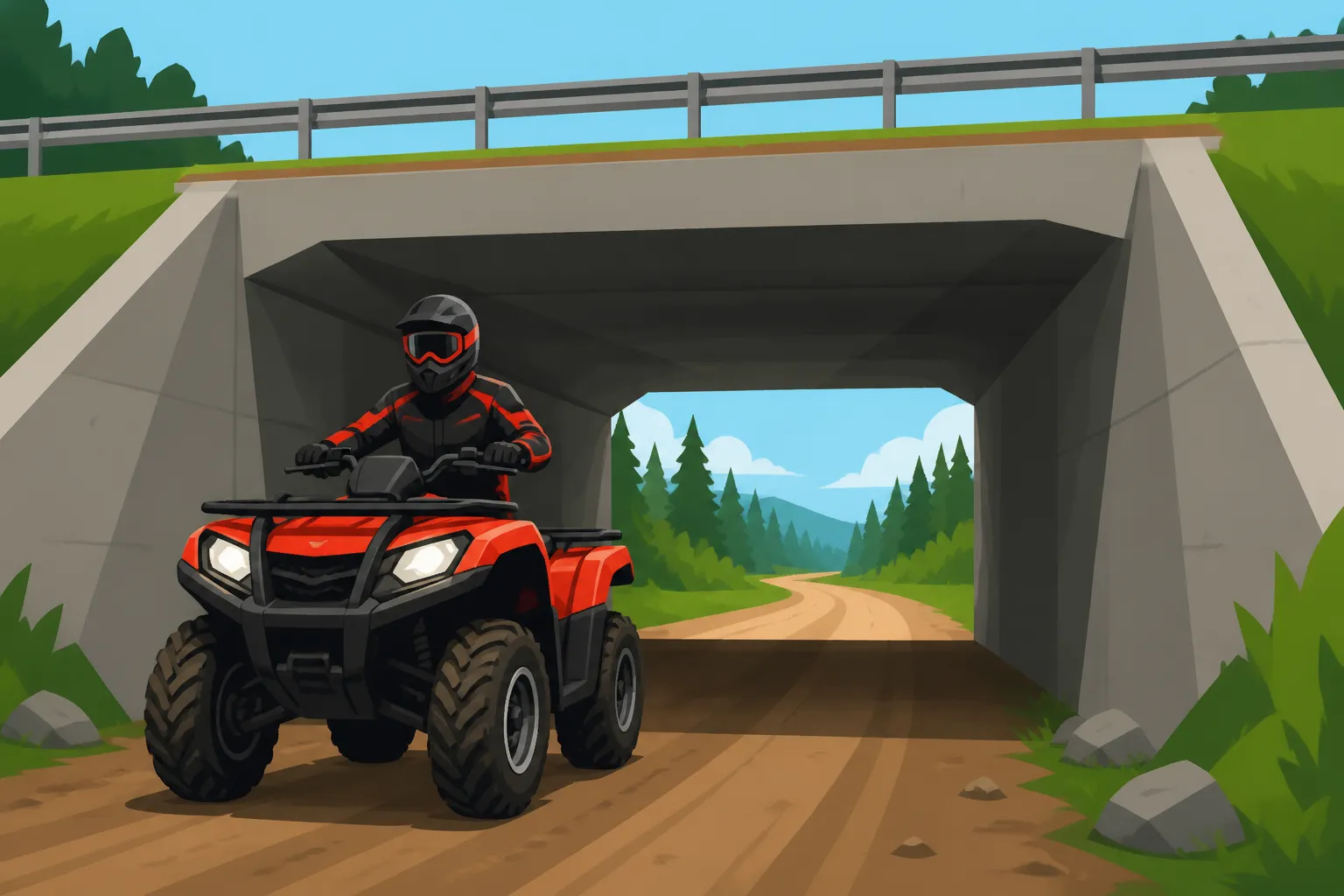
Box culverts are essentially large, rectangular concrete pipes, often used to carry streams or small rivers under highways. When dry, or with minimal water flow, some are adopted into the trail system. Tunnel underpasses, whether for old railway lines or modern construction, are similar in their confined nature. The primary characteristics of these are often their darkness, echoey acoustics, and frequently damp or wet conditions.
Riding through these can feel a bit claustrophobic. The concrete surfaces can be slick, especially if there's algae or standing water. The noise of your ATV's engine will echo, making it harder to hear other sounds, so maintain a slow speed and be extra alert. Watch for low ceilings or exposed pipes, which can be a hazard for taller riders or those on UTVs with roll cages. [Maine Helmet Rules for Riders Under 18] are always in effect, but even adults should consider wearing a helmet in these confined spaces for head protection, given the potential for unexpected bumps or drops. Ensure your headlights are shining brightly to illuminate any puddles, debris, or rough patches on the floor.
Bridge Underpasses and Overpasses
Bridge underpasses are typically more open than culverts or tunnels. Here, the ATV trail passes beneath a bridge that carries the highway traffic overhead. These are often less dark and have better airflow, but they still present challenges. The ground underneath can vary widely, from packed dirt to loose gravel, sand, or even muddy sections if a stream or drainage area runs through.
One common issue with bridge underpasses is the potential for debris falling from the bridge structure above, or from vehicles passing overhead. While rare, it's something to be mindful of. These areas can also be used by non-motorized traffic such as hikers or horseback riders, especially if they are part of a multi-use trail. Always be prepared to yield and share the path. [Maine's Stop-and-Yield Rule Before a Public Way] might not directly apply here as you're not crossing a public way at grade, but the spirit of yielding to others and being aware of your surroundings is always a good practice.
Challenges with Steep Approaches or Rough Terrain
Many underpasses are not designed with ATV accessibility in mind, so the approaches leading into and out of them can be quite rugged. You might encounter steep inclines or declines, loose rock, exposed roots, or deeply rutted terrain due to erosion or heavy water flow. These challenging sections require careful throttle control, precise steering, and good braking technique.
If an approach is particularly steep and rocky, consider using a lower gear to maintain control and prevent your machine from rolling backward or losing traction. Proper tire pressure and tread are essential for good grip on loose or slippery surfaces. If you find yourself frequently riding through areas with aggressive terrain leading to underpasses, consider upgrading certain components. Heavy-duty suspension kits or improved skid plates from reputable brands like SuperATV can help your machine handle the abuse and protect vital undercarriage components from impacts. Always be mindful of your UTV's ground clearance when tackling rocky or rutted approaches.
Common Pitfalls and How to Avoid Them
Even with the best intentions, riders can sometimes fall into common traps when attempting to use highway underpasses. Understanding these pitfalls and how to proactively avoid them will make your trail experiences safer and more enjoyable, while also protecting the integrity of Maine's extensive trail system.
Trespassing and Unauthorized Access
By far the biggest pitfall is riding through an underpass that isn't part of the officially designated ATV trail network. It's easy to see an underpass and assume it's a legitimate shortcut, especially if it looks like other trails connect to it. However, if that underpass hasn't been approved by the landowner – whether it's the state, a private individual, or a corporation – you are trespassing. The consequences can range from fines to the loss of riding privileges, and severely damage the relationships between ATV clubs and landowners, which could lead to trail closures. [Fines Maine Wardens Write Most Often] for trespass can be significant.
The only reliable way to confirm access is to consult official sources. Always check current ATV trail maps published by local clubs or the Maine Bureau of Parks and Lands. These maps are meticulously updated and clearly indicate where legal access has been granted. If an underpass isn't on the map or clearly signed as an ATV trail, err on the side of caution and find an alternative route. When in doubt, don't go. This simple rule protects you and the future of ATV riding in Maine. This brings us back to the importance of [Maine ATV Trail Maps and Club Boundaries] and understanding them thoroughly.
Misjudging Conditions and Overconfidence
Another common mistake is misjudging the conditions within an underpass or becoming overconfident. What looks like a shallow puddle from a distance could be deep mud or swift-moving water. A seemingly clear path might have hidden rocks or debris. Riders, especially those familiar with a particular underpass, might become complacent and enter at too high a speed, only to be caught off guard by changing conditions. Water levels can rise quickly after rain, or winter ice can make a once-easy passage treacherous.
Always approach an underpass as if it's your first time. Slow down, observe, and if you have any doubts about the depth of water or the stability of the terrain, don't hesitate to dismount and scout ahead on foot if it's safe to do so. Never push your machine or your skills beyond their limits, especially in an enclosed or isolated area. This is where the ability to check out your specific trail on something like onX Offroad Maps can come in handy, giving you an idea of the terrain before you even get there. Being prepared for the unexpected is a hallmark of a responsible rider.
Equipment Failures and Preparedness
Underpasses, especially remote or rugged ones, are not ideal places for equipment failures. Getting stuck in deep mud or having your engine stall in standing water can quickly turn a fun ride into a frustrating, and potentially dangerous, situation. A dead battery, a flat tire, or a broken axle in an underpass means you're in a confined space, potentially far from help, and might have limited cell service.
To avoid this pitfall, ensure your ATV or UTV is always in top mechanical condition. Perform regular pre-ride checks, paying close attention to tires, brakes, lights, and fluids. Carrying a basic toolkit, a tire repair kit, and a small air compressor is always a good idea. For more challenging underpasses, consider bringing recovery gear like a winch, a tow strap, or a small shovel. A charged cell phone, or even better, a satellite messenger for truly remote areas, can be a lifeline. Many riders rely on the durability and performance of aftermarket parts from companies like SuperATV to ensure their machines can handle the toughest trail conditions, including those found in and around underpasses. Being prepared for a breakdown ensures that if something does go wrong, you have the means to address it or call for assistance.
| Underpass Safety Checklist | Action | Why It's Important |
|---|---|---|
| Verify Legal Access | Check official trail maps. | Avoid trespassing fines and preserve trail access. |
| Headlights & Taillights | Ensure they are clean and fully functional. | See hazards, be seen by others in dark conditions. |
| Assess Conditions | Look for water, mud, debris, low clearances. | Prevent getting stuck, damage, or accidents. |
| Slow Down | Reduce speed significantly before entering. | Allows for quick reaction to unexpected hazards. |
| Sound Horn (Optional) | A quick honk in blind spots/bends. | Alerts other users or wildlife to your presence. |
| Stay to Right | If wide enough, keep to the right side. | Safe practice for potential two-way traffic. |
| Wear Hi-Vis Gear | Bright colors for clothing/helmet. | Increases your visibility to others. |
| Check Tire Traction | Ensure tires are suitable for wet/muddy surfaces. | Prevent slips, slides, and loss of control. |
| Carry Recovery Gear | Winch, strap, shovel, basic tools. | Self-sufficiency in case of getting stuck or breakdown. |
| Communicate Location | Tell someone your route, carry communication device. | Essential for remote areas with no cell service. |
Using highway underpasses responsibly is a fantastic way to maximize your ATV and UTV riding experience in Maine, connecting trails seamlessly and keeping you off busy roads. By understanding the legalities, prioritizing safety, and preparing for the unique challenges these passages present, you can enjoy this often overlooked aspect of the state's incredible trail network. Always remember to check your maps, respect the land, and ride smart – that's the Maine way to hit the trails!
Disclaimer
This article is for general informational purposes only and does not constitute professional advice. Laws, prices and regulations vary by location and change over time. Consult a qualified professional for guidance on your specific situation.