Supervising a Young Rider on the Road
It's a tough balance as a parent, isn't it? You want your kids to experience the thrill and freedom of riding an ATV, exploring Maine's incredible outdoors, but the thought of them near roads, even briefly, can bring on a whole wave of worry. This guide is all about helping you understand the rules and best practices for supervising young ATV riders when they need to cross or briefly use a public way in Maine, ensuring their safety and your peace of mind.
Understanding Maine's Age Restrictions for ATV Operation
Before we even talk about roads, it's crucial to grasp the foundational rules Maine has in place for young ATV operators. The state takes youth safety seriously, and these rules are designed to protect both the rider and others sharing the trails and occasional road crossings. You can't just put a kid on any machine and send them off; there are very specific guidelines about who can ride what and where.
Minimum Age and Safety Course Requirements
In Maine, a person needs to be at least 10 years old to operate an ATV. However, there's a big caveat: if they're between 10 and 15 years old, they must complete an approved ATV safety course. This isn't optional; it's a legal requirement. Think of it like getting a learner's permit for a car – it teaches them the basics, the rules of the trail, and how to safely handle the machine. Many parents find these courses invaluable, not just for the legal aspect, but for the confidence it instills in their young rider, and frankly, in themselves as supervisors. [Maine ATV Safety Course Requirements] can tell you more about getting that crucial certification.
Even with the safety course, there are still limitations. A rider under 16 cannot operate an ATV on land other than that owned by their parent, guardian, or a direct ancestor, unless they are under the direct supervision of an adult who is at least 18 years old. This is where the supervision aspect really comes into play, especially when you consider any proximity to public roads. It's not enough to just say "be careful"; you need to be actively engaged in their riding experience.
Machine Size Limits for Youth Riders
Beyond age and safety courses, Maine also sets limits on the size of the ATV a young rider can operate. For those under 16, the machine must be of a size appropriate for their age and physical abilities. While the law doesn't specify exact engine displacement numbers like some states do, it's generally understood that large, powerful adult-sized ATVs are not suitable for children.
This often means considering smaller, youth-specific models. These machines are designed with lower top speeds, lighter weights, and often have features like throttle limiters that parents can adjust as their child gains skill and confidence. Choosing the right size machine isn't just about fun; it's about minimizing risk. A child struggling to reach the handlebars or control a heavy quad is an accident waiting to happen, especially if they encounter an unexpected obstacle or need to react quickly during a road crossing. When looking for parts or accessories for these youth models, companies like SuperATV often have options that cater to smaller machines, helping you ensure they're well-maintained and safe.
Legal Requirements for Supervising Youth Riders on Maine Roads
Riding ATVs on designated trails is one thing, but when those trails intersect with or briefly share public roads, a whole new set of rules kicks in, particularly for young riders. Maine law is very clear about the responsibilities of both the young operator and their supervising adult in these situations. Ignoring these rules isn't just risky; it can lead to significant penalties.
The "Accompanying Adult" Rule
For any rider between the ages of 10 and 15, regardless of whether they've taken a safety course, they must be "under the direct supervision" of an adult who is at least 18 years old when riding on land not owned by a parent, guardian, or direct ancestor. When it comes to public ways, this supervision becomes even more critical. Maine's rules state that a person under 16 operating an ATV on a public way, or crossing one, must be accompanied by an adult 18 years of age or older.
What does "accompanied by" really mean in this context? It means you, as the supervising adult, need to be close enough to exert control and direct the young rider. You should be able to see them, communicate with them, and intervene if necessary. This isn't about riding ahead and waiting at the next intersection; it's about active, immediate supervision. Often, this means the adult rides immediately ahead or behind the young operator, maintaining a short, safe distance. This level of supervision is paramount, especially when navigating areas where traffic may be present. [Maine ATV Road Rules for Young Riders] delves deeper into these specific road-related mandates.
Permitted Road Use and Crossings
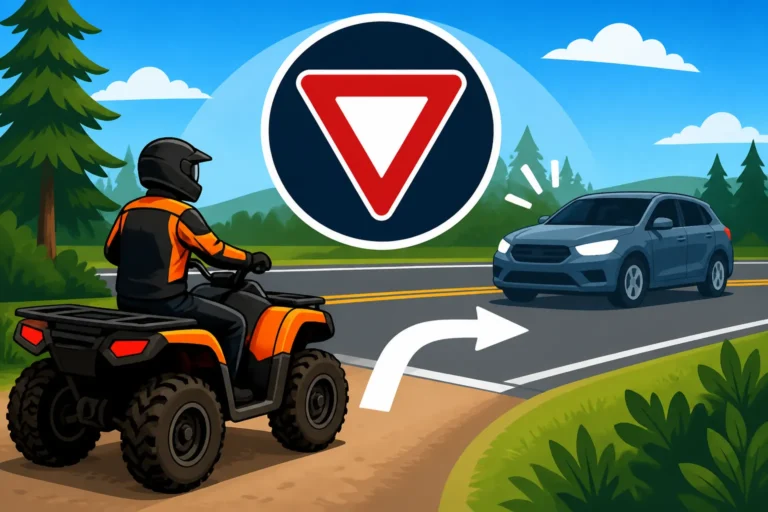
It's important to remember that ATVs generally aren't allowed to just ride down public roads in Maine. There are specific, limited exceptions, which usually involve crossing a public way or briefly using a designated ATV access route. The most common scenario is crossing a public road to get from one section of a trail to another. Maine has specific rules for this, including stopping before entering the roadway and yielding to traffic. [Maine's Stop-and-Yield Rule Before a Public Way] covers these critical requirements.
For young riders, these crossings are high-risk moments. The supervising adult is responsible for ensuring the child understands and executes these rules perfectly. This means you need to scout the crossing yourself, observe traffic patterns, and guide the child through it. You cannot assume they will know what to do without your explicit direction, especially if they are focused on simply keeping their machine upright. Designating a specific, safe crossing point, rather than just any spot along the road, is also a smart move, often indicated by ATV trail signs.
| Requirement Category | For Riders 10-15 Years Old (Maine Law) | Recommended Best Practices for Supervision |
|---|---|---|
| Safety Course | Mandatory for riding off family land. | Should be completed by all young riders. |
| Supervising Adult | Mandatory when not on family land, and for all road crossings. | Adult rides in close proximity, actively observing. |
| Machine Size | Appropriate for age and physical ability. | Start with smaller machines; consider throttle limiters. |
| Road Crossings | Stop, yield to traffic, cross at right angle. | Adult scouts ahead, directs child, often leads/follows. |
| Road Travel | Limited to designated access routes/specific exceptions. | Avoid all non-designated road travel; minimize crossing time. |
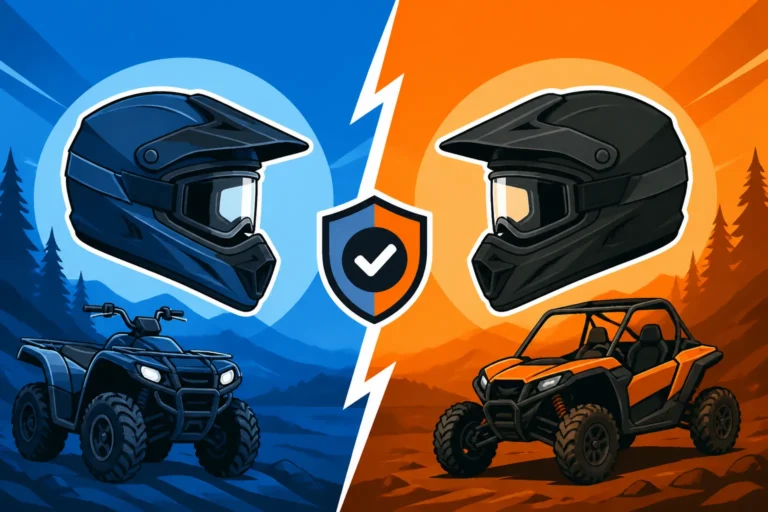
| Protective Gear | Helmet required for under 18; eye protection. | Full protective gear always, including sturdy boots/gloves. |
Practical Strategies for Safe Supervision During Road Encounters
Knowing the rules is one thing, but putting them into practice, especially with an enthusiastic young rider, takes a thoughtful approach. Effective supervision goes beyond simply being present; it involves preparation, communication, and setting clear boundaries.
Pre-Ride Briefings and Route Planning
Before you even start the ATV, have a conversation with your young rider. Go over the planned route, specifically highlighting any road crossings or brief stretches on public ways. Talk about what to expect: "Here's where we'll cross Route 1. Remember, we stop completely, look both ways twice, and wait for me to give you the signal." Emphasize that these moments require their full attention, not just on handling the machine, but on observing their surroundings and listening to your instructions.
Route planning is key. Whenever possible, choose trails that minimize or entirely avoid road use. If crossings are unavoidable, select ones with good sight lines and minimal traffic. Some trails might have underpasses or designated bridges that are much safer alternatives than crossing a busy highway. For example, some parts of the [Aroostook County's 1,300-Mile Trail Network] might have fewer road crossings than trails closer to more populated areas. Having a reliable map, or a GPS app like onX Offroad, that clearly shows road crossings and access routes can be incredibly helpful for planning.
Communication and Hand Signals
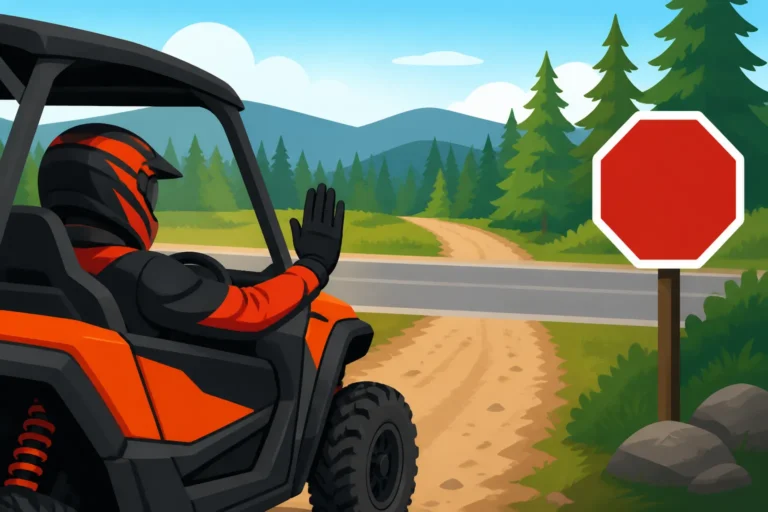
On the trail, especially during moments near roads, clear communication is paramount. While yelling might work in a pinch, it's far better to establish a system of hand signals or use helmet communicators if you have them. Simple signals like "stop," "go," "slow down," and "wait for me" can be invaluable. Practice these signals before you even leave the staging area so they become second nature.
When approaching a road crossing, the supervising adult should always be the one to assess the traffic and give the final "all clear" signal. Position yourself where you can best see oncoming traffic and communicate effectively with the child. If you're leading, stop well before the road, look, signal the child to stop behind you, then once clear, signal them to proceed. If you're following, you'll need to be right behind them, guiding them through, perhaps using a quick verbal reminder through a communicator like "Look right, look left, go!" Having accessories that improve visibility, like bright flags or additional lights – perhaps from a company like SuperATV – can also aid in communication and safety for both the adult and youth rider.
Setting a Good Example
Remember, you are the role model. If you cut corners, speed through a crossing, or fail to yield, your young rider will likely do the same. Demonstrate impeccable road safety habits every single time. This includes wearing all appropriate safety gear, even if you're an adult and not legally required to wear a helmet on a private trail section. [Maine Helmet Rules for Riders Under 18] outlines the specific requirements for youth, but it's a good practice for everyone.
Teach them defensive riding and awareness. Explain why you're slowing down, why you're looking both ways multiple times, and why you wait for a larger gap in traffic. This isn't just about following rules; it's about instilling a safety-first mindset that will serve them well in all aspects of life, not just ATV riding. Being consistent and patient is key.
What to Do During a Road Crossing with a Young Rider
The actual act of crossing a public way is often the most nerve-wracking part for parents. It's a quick, high-stakes maneuver that requires precision and cooperation. Having a clear, repeatable process makes it much safer.
The Stop, Look, and Listen Procedure
Before any wheel touches the paved or public gravel road, both you and your young rider must execute a complete stop. This means zero forward motion. Teach your child to stop a safe distance from the edge of the road, giving them space to assess traffic without actually being in harm's way.
Next, it's a rigorous "look and listen." You, as the supervisor, should be the primary traffic assessor. Look left, look right, look left again. Listen for approaching vehicles, especially those that might be obscured by blind spots or hills. Teach your child to do the same, explaining what you're seeing and hearing. "Do you see that car way down there? We'll wait for that one to pass." This helps them develop their own hazard perception skills over time.
Signaling and Crossing Safely
Once you've determined it's absolutely safe, clearly signal your young rider to proceed. If you're leading, you'll cross first, then turn to ensure they follow. If you're following, you'll give the signal for them to go, then follow immediately behind. The goal is to cross the road directly, at a 90-degree angle to the flow of traffic, minimizing the time spent on the public way. Don't try to ride down the shoulder for a bit before crossing; that's generally not permitted and increases exposure time.
Emphasize to your child that once they start crossing, they should continue moving at a steady, safe speed until they are completely off the road on the other side. They should not stop in the middle of the road or hesitate. This requires confidence in their machine handling, which comes from practice on trails. For extra visibility during these critical moments, ensuring your ATV and your child's machine are equipped with bright, functioning lights, possibly from a reputable accessory provider like SuperATV, can make a huge difference in being seen by approaching motorists. [Maine Lighting Requirements for Night Riding] are especially relevant if your ride extends into dusk.
Post-Crossing Debrief
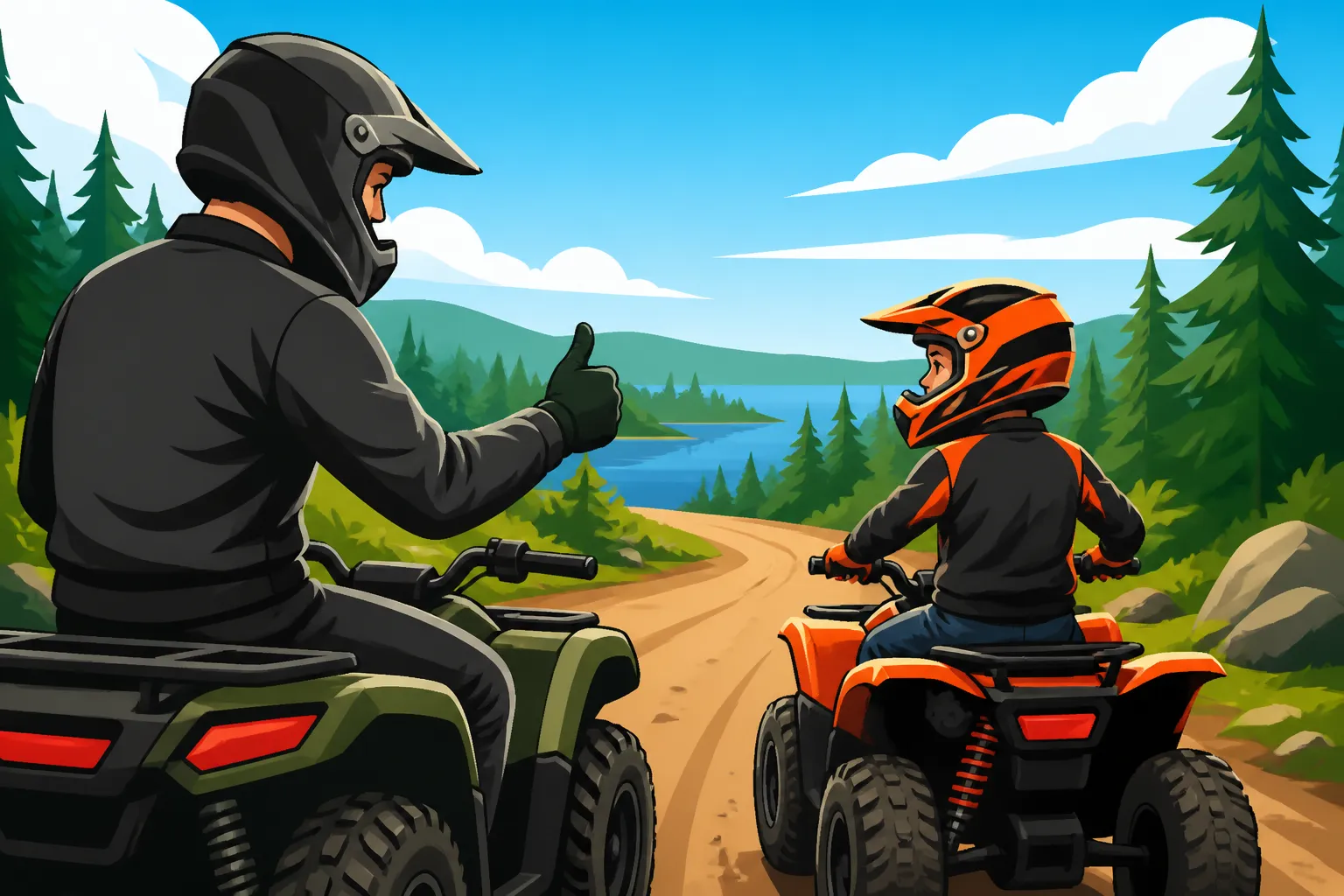
Once safely across, take a moment. A quick thumbs-up, a pat on the back, or a "Great job with that crossing!" reinforces positive behavior. If there was a hesitation or a mistake, address it calmly once you're well away from the road. "Next time, let's make sure we look for bikes too, not just cars," or "You stopped a little close to the edge; let's leave more room next time." These small, immediate debriefs are powerful learning opportunities that reinforce the importance of vigilance and proper technique. [Maine ATV Rules on Public Ways] is a good resource to review the overarching regulations regarding ATV interaction with roads.
Disclaimer
This article is for general informational purposes only and does not constitute professional advice. Laws, prices and regulations vary by location and change over time. Consult a qualified professional for guidance on your specific situation.