Sharing a Road With Logging Trucks
Picture this: you're cruising down a beautiful, dusty woods road in Maine on your ATV or UTV, enjoying the serene quiet of the forest, maybe even heading to a hidden fishing spot or a remote camp. Suddenly, you hear it – that deep, unmistakable rumble, the sound of heavy machinery echoing through the trees. Before you know it, a massive logging truck, laden with towering pines or hardwoods, rounds the bend, taking up what feels like the entire width of the road. Your heart might do a little jump. It’s a common, completely valid experience for anyone exploring Maine's vast trail network, where our recreational paths often intersect with, or even share, active logging and haul roads. This guide is all about equipping you with the knowledge, safety practices, and mindset you need to confidently and safely navigate these encounters, ensuring both your adventure and the vital work of Maine’s logging industry can coexist peacefully.
Understanding the Lay of the Land: Where Logging Trucks Operate and Why
When you’re out riding in Maine, especially in the more remote regions, it’s not just about enjoying the scenery; it’s about understanding the working landscape around you. Those logging trucks aren't just passing through; they're the lifeblood of an essential Maine industry, and their presence on certain roads is a year-round reality.
The Backbone of Maine's Economy: Why Log Trucks Are Everywhere
Maine is famously the "Pine Tree State," and that's not just a catchy slogan. Our forests are incredibly productive, supporting a robust timber industry that has shaped our state for centuries. From pulp mills to sawmills, the wood products industry is a cornerstone of Maine's economy, providing jobs and sustaining communities, particularly in northern and western Maine. When you see a logging truck, you're not just seeing a vehicle; you're seeing a critical link in a complex supply chain. These trucks are constantly moving timber from harvesting sites deep in the woods to processing facilities, often operating on tight schedules. It can certainly be jarring to transition from a peaceful, meandering ATV trail directly onto an active haul road, but understanding their purpose helps frame your approach to safety. They're on a mission, and that mission often involves heavy loads and momentum.
Common Road Types Where You'll Encounter Them
You might wonder where exactly you'll cross paths with these giants. It's not just on the main highways. Logging trucks frequently utilize a network of roads that are far from your typical paved route. The most common places are the extensive web of private logging roads that crisscross vast tracts of timberland. Many of these roads, while privately owned, are used by the public under various agreements or traditions, sometimes forming part of the official ATV trail system. You’ll also find them on unorganized territory roads, which are often gravel or dirt roads maintained by the state for general access into remote areas. Even some paved secondary routes, particularly those connecting rural towns or leading to mills, will see heavy log truck traffic. It's crucial to remember that while a section of road might be designated as an ATV access route, it could also be a primary artery for logging operations. The distinction between a dedicated ATV trail and a working haul road often blurs, requiring constant vigilance on your part. Always assume any dirt or gravel road in the Maine woods could be an active logging route.
The "Right of Way" Reality vs. Law
Legally speaking, if you're on a properly designated [Maine ATV-Access Routes and How Towns Post Them] or a public road where ATVs are permitted, you have a right to be there. But when it comes to a confrontation with a fully loaded logging truck, the practical "right of way" almost always goes to the truck. Think about it: a logging truck, often weighing tens of thousands of pounds and possibly carrying an oversized load, has a significantly longer stopping distance and far less maneuverability than your ATV or UTV. They can't just swerve out of the way, nor can they stop on a dime. For your own safety and the safety of everyone on the road, it's paramount to adopt a defensive riding posture. Always assume the truck driver might not see you, and always be prepared to yield. While the law might grant you certain privileges, physics dictates the reality. It's far better to be safe and yield than to stand on principle and risk a severe accident. Your machine is nimble; their machine is an unstoppable force in comparison.
Essential Safety Protocols When Sharing the Road
Riding an ATV or UTV in Maine's backcountry is an exhilarating experience, but it comes with responsibilities, especially when sharing the path with commercial vehicles. These safety protocols aren't just suggestions; they're essential practices that can literally save lives.
Visibility is Your Lifeline: Be Seen, Day or Night
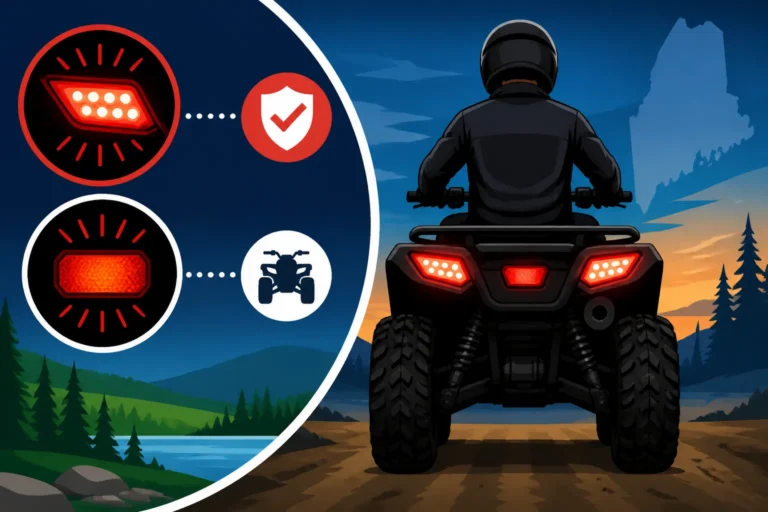
Logging trucks are enormous, but their drivers often sit high up, which can create significant blind spots, especially with the length of their trailer. Your small ATV or UTV can disappear from their view far more easily than you might think. This makes visibility your absolute top priority. Always wear bright, contrasting clothing, even on cloudy days. Fluorescent colors like orange, yellow, or lime green are ideal. Make it a habit to always ride with your headlights on, regardless of the time of day. This "daytime running light" practice dramatically increases your conspicuity. Ensure your taillights are clean and functioning perfectly. For added safety, consider applying reflective tape to your machine, especially if you have an older quad or a utility UTV that might blend in with the surroundings. You can find excellent lighting upgrades and reflective kits from brands like SuperATV that not only enhance your machine's look but critically boost your visibility. Remember, the more visible you are, the more likely a truck driver is to see you, giving them time to react appropriately. This is not just about following [Maine Lighting Requirements for Night Riding]; it's about being proactive around heavy traffic.
Anticipation and Awareness: Listening and Looking Ahead
The Maine woods have a way of muffling sounds, but a logging truck is hard to silence completely. Learn to listen for their distinctive sounds: the deep rumble of an engine, the hiss of air brakes, or the tell-tale whine of an engine brake. These sounds are your first alert. Beyond listening, keep your eyes peeled. Look for tell-tale signs like plumes of dust rising in the distance on a dry day or fresh tire tracks where there weren't any before. On winding woods roads, blind corners and crests of hills are particularly hazardous. Always slow down significantly before approaching these areas. Imagine a truck coming from the opposite direction, taking the entire road, and being ready to react. Many logging companies utilize CB radios to communicate with each other on haul roads, often announcing their location or intentions. While you might not have a CB radio on your ATV, being aware of this practice highlights the organized, professional nature of their operations and reinforces the need for you to be extra cautious. The goal is to anticipate an encounter long before it becomes a surprise.
Giving Them Space: Pulling Over and Communicating
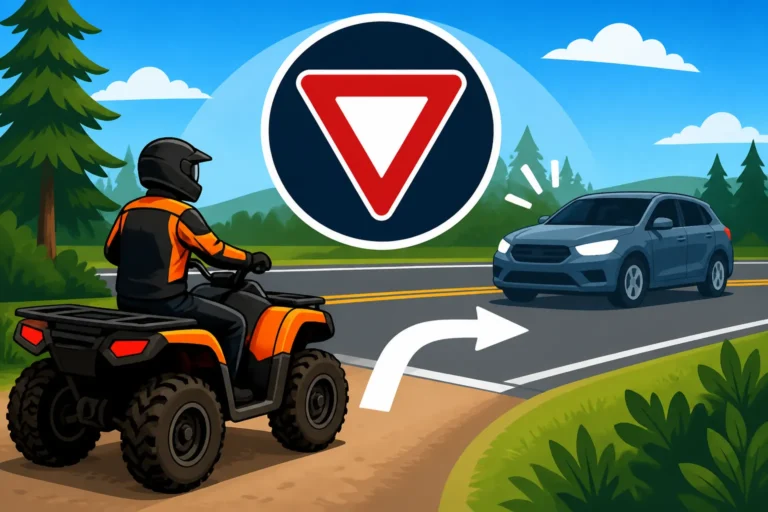
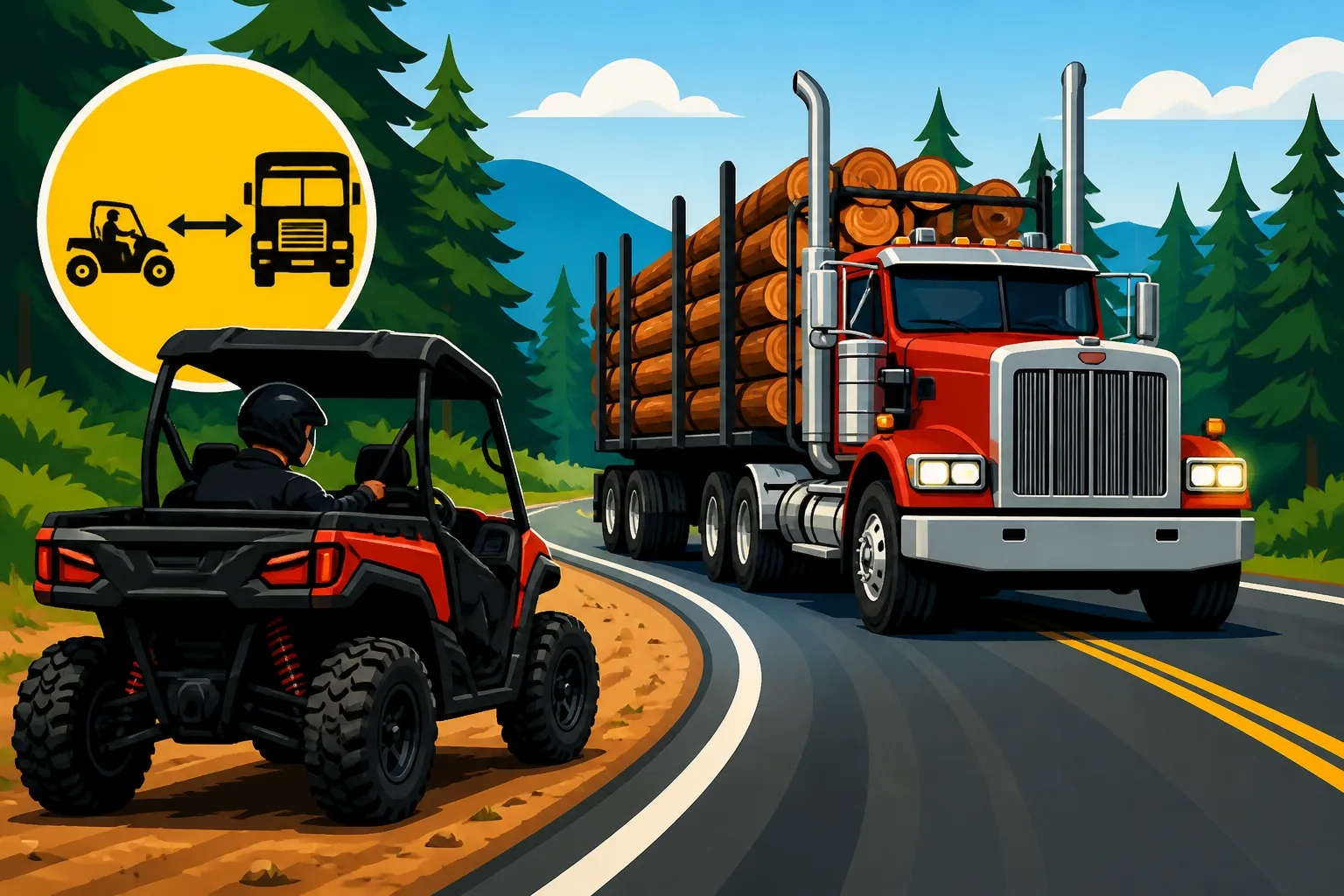
This is perhaps the single most important safety rule: when you encounter a logging truck, pull completely off the road. Don't just hug the shoulder; get as far off the travel lane as possible. If there's a ditch or a wider pull-off, use it. The driver needs all the room they can get, especially with a long trailer or an articulated load. Once you're safely off the road, stop your machine, turn off your engine (so you can hear and they can focus), and make eye contact if possible. A simple wave from you can acknowledge that you see them and are yielding. Never try to race a truck, or worse, pass one, especially on a narrow road, a blind curve, or going up a grade where they might be struggling for momentum. They simply can’t see you, and their movements are predictable only to them. This rule applies equally to [Maine ATV Rules on Dirt Town Roads] and [Maine ATV Rules on Private Camp Roads]. Giving them ample space is a sign of respect for their work and a fundamental act of self-preservation.
| Feature | ATV/UTV (Your Machine) | Logging Truck (Their Machine) |
|---|---|---|
| Weight (Average) | 500-2,000 lbs (ATV), 1,000-3,000 lbs (UTV) | 30,000 lbs (empty), 80,000+ lbs (loaded) |
| Stopping Distance | Short, quick maneuverability | Very long, requires significant distance |
| Maneuverability | Highly agile, quick turns | Limited, wide turning radius |
| Blind Spots | Generally few, good visibility | Extensive, especially to the sides and rear |
| Visibility | Small profile, easily overlooked | Massive, highly visible profile |
| Payload | Rider(s) and light gear | Tens of thousands of pounds of timber |
| Objective | Recreation, exploration | Commercial transport, strict schedule |
Legalities, Best Practices, and Equipment for Coexistence
While safety on the ground is paramount, understanding the legal framework and best practices for responsible riding helps ensure a harmonious relationship between recreational riders and the working forest. The right gear and a respectful attitude go a long way.
Understanding Maine's Rules for ATVs on Public Ways
Maine has specific regulations governing where and how ATVs and UTVs can operate on public roads. For instance, there's often a [Maine's 500-Yard Limit on a Public Way] for crossing or using public roads to connect trails. Towns can also designate specific [Maine ATV-Access Routes and How Towns Post Them]. However, even on these legally permissible routes, the presence of active logging operations adds a layer of complexity. These rules represent the minimum legal standard for your operation. When dealing with heavy commercial traffic like logging trucks, your approach needs to be more conservative and focused on safety above all else. Just because you have the legal right to be on a road doesn't mean you should push that right when a multi-ton truck is approaching. Always remember that the rules are there to protect everyone, but common sense and a strong sense of self-preservation should always prevail in these high-risk scenarios.
Equipping Your Machine for the Backcountry Haul Roads
Riding on backcountry haul roads means you’ll be encountering diverse terrain—from smooth gravel to loose rock, mud, and even occasional debris. Having the right equipment on your machine isn't just about comfort; it's about safety and preparedness. Good, aggressive tires are a must for maintaining traction on varied surfaces. A robust winch, even if you rarely use it, is an invaluable piece of equipment for self-extraction if you get stuck in mud or a soft shoulder. Consider heavy-duty bumpers, like those offered by SuperATV, which can offer extra protection from impacts with unexpected rocks or downed branches. Skid plates are also a good idea to protect the underside of your machine from rough terrain. Don't forget about communication devices; while cell service is spotty in many remote areas, a satellite messenger or two-way radio can be a lifeline in an emergency. Always carry a well-stocked first-aid kit and basic repair tools. For those who use their machines for practical purposes, like for a woodlot, [Maine ATV Registration for Farm and Woodlot Use] might be relevant, and these machines often come better equipped for rough use. Being prepared for anything is the mark of a seasoned Maine rider.
Respect and Communication: The Golden Rules
Ultimately, sharing the road with logging trucks boils down to respect and clear, if non-verbal, communication. Most log truck drivers are professional, skilled, and dedicated individuals who work tirelessly in demanding conditions. They are generally friendly, but they are also focused on their job. Acknowledge their presence, wave, and make eye contact if possible. This simple act of recognition goes a long way. Remember that these logging operations are often happening on land that the companies or landowners generously allow recreational access to. Maintaining good landowner relations is critical for keeping trails open across the state. Interfere with their work, create a hazard, or act disrespectfully, and you risk not only an accident but potentially contributing to trail closures. Be mindful of the dust stirred up by your machine, especially if you're riding near homes or active work sites. Expect loose gravel, mud, and potential debris on these roads. Adopt a patient and understanding attitude. This cooperative spirit is also important for businesses operating in the woods, as covered by [Maine ATV Registration for Clubs and Businesses]. By upholding a high standard of respect and safety, we ensure that Maine's unique blend of working forests and recreational opportunities can continue to thrive for everyone.
Disclaimer
This article is for general informational purposes only and does not constitute professional advice. Laws, prices and regulations vary by location and change over time. Consult a qualified professional for guidance on your specific situation.