Maine ATV Road Rules Riders Get Wrong
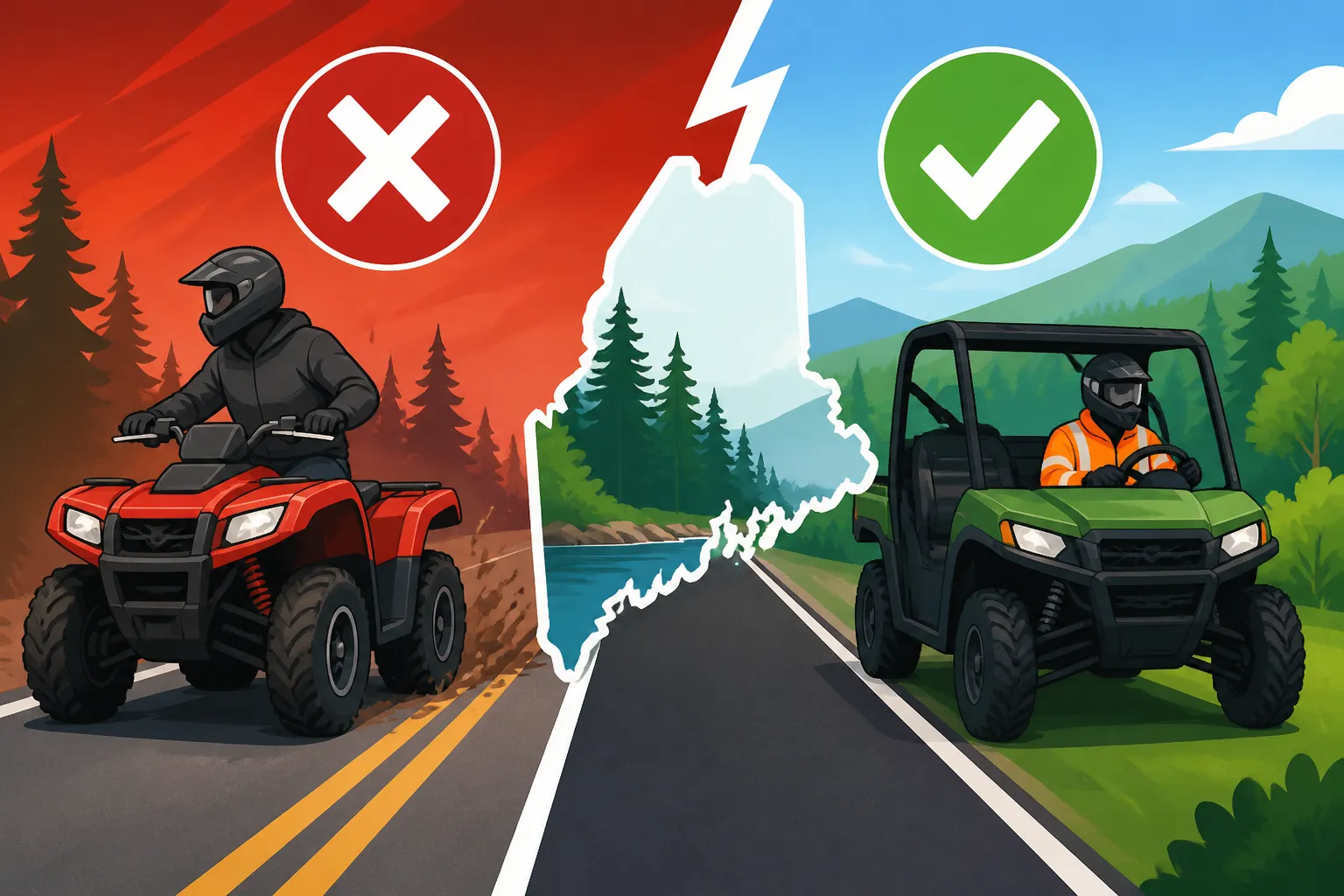
Riding ATVs and UTVs in Maine is an incredible experience, offering access to thousands of miles of trails and some of the most stunning backcountry in the country. But let's be honest, the rules about riding on public roads can feel like navigating a dense thicket of contradictory signs and whispers around the campfire. Many riders, with the best intentions, often get these rules wrong, leading to frustrating encounters with wardens, hefty fines, or worse, dangerous situations. This guide aims to clear up some of the most commonly misunderstood Maine ATV road rules so you can ride confidently and legally.
The Misunderstood 500-Yard Rule and Crossing Public Ways
One of the biggest sources of confusion among ATV and UTV riders in Maine revolves around public roads. There's a persistent myth that you can just hop on any road for a short distance, or that the "500-yard rule" means you have carte blanche for quick jaunts. The reality is far more specific, and misunderstanding it can quickly land you in hot water.
What the 500-Yard Limit Actually Means
Let's set the record straight: the infamous 500-yard rule is often misinterpreted. It doesn't mean you can generally ride on public roads for up to 500 yards. Instead, Maine law specifically allows for very limited, specific use of public ways (roads maintained by the state, county, or a municipality) under certain conditions. This exception primarily exists to allow ATVs to get from one part of a trail system to another, to access fuel, food, or lodging, or to get to a service area for repairs. It is not an open invitation to cruise down the road for leisure.
When you are allowed to use a public way under this exception, you must operate your machine on the extreme right of the traveled way. This means hugging the shoulder or as far right as safely possible. You also absolutely must yield to all vehicular traffic and pedestrians. Think of it as a brief, necessary passage, not a shared right-of-way. The intent is to connect the trail system and support trailside businesses, not to introduce ATVs into regular road traffic. If you're using this rule, you should be moving directly to your destination, not meandering. For a deeper dive, check out [Maine's 500-Yard Limit on a Public Way].
Navigating Highway Crossings Safely and Legally
Crossing a public way, especially a paved state highway, is another area where many riders make critical errors. It's not as simple as waiting for a gap in traffic and zipping across. Maine law dictates a very precise procedure to ensure safety for everyone on the road.
Before entering or crossing any public way, you are legally required to come to a complete stop. This isn't just a rolling stop sign check; it means all forward motion ceases. Once stopped, you must yield to all traffic using the public way. Your crossing must be as direct as possible, at approximately a 90-degree angle to the road. You can't just angle down the road for a bit before turning off; it's a straight shot across. This is particularly crucial on higher-speed roads where drivers may not expect an ATV. Always make eye contact with drivers if possible, and ensure they see you and you have their full attention before proceeding. Remember, safety is paramount. You can find more specific information on these critical steps in [Complete Stop Before Entering a Maine Public Way] and [Crossing a Maine Highway on an ATV].
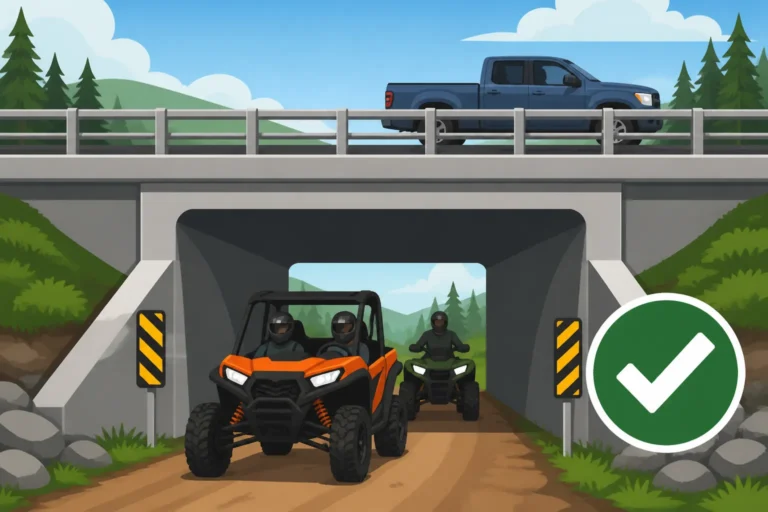
While crossing a highway might seem quick, using underpasses or designated bridges, when available, is always the safest and most legally sound option. Some major routes, like sections of the Maine Turnpike, have no legal crossing points for ATVs whatsoever, making riding a no-go near them. Always know your route and any restrictions before you hit the trails. Planning ahead can save you a lot of hassle and potential fines.
Designated ATV Access Routes vs. Undesignated Public Ways
Beyond the limited 500-yard exception, some towns and cities in Maine have proactively created designated ATV access routes. These routes are a fantastic boon to riders, allowing greater access to communities, services, and connecting trail systems. However, it's vital to understand that these are specific, marked routes, and not just any town road.
How Towns Create ATV Access Routes
The establishment of an ATV access route isn't a casual decision; it's a formal process that typically involves a local municipal vote. Town officials, often in collaboration with local ATV clubs, will propose routes that serve to link trails, provide access to local businesses, or circumvent difficult sections of terrain. Once approved, these routes must be clearly marked with specific signage indicating that ATV use is permitted. You'll often see signs stating "ATV Access Route" along these approved stretches.
These routes are a testament to the hard work of local clubs and landowners, and it's essential to respect the privilege of using them. They often represent a careful balance between rider access and community concerns. It's also important to remember that just because one town has designated routes, it doesn't mean a neighboring town will have the same policy. Some towns have even explicitly restricted ATVs on their public ways. Always check local ordinances and look for official signage. If you're curious about the process, [How a Maine Town Designates an ATV-Access Route] offers more detail.
Rider Responsibilities on Designated Routes
Even on a designated ATV access route, you are not operating a street-legal car or motorcycle. While you have permission to be there, you must still adhere to specific responsibilities. Speed limits are strictly enforced, and you should always operate at a speed that is reasonable and prudent for the conditions, especially near residential areas or businesses. Remember, these are often shared spaces, and you'll encounter other vehicles, pedestrians, and cyclists. Yielding to all other traffic is not just polite; it's the law.
You should always be on the lookout for official signage that clarifies the permitted route and any special conditions. These signs are there for your safety and to protect the privilege of access. Operating your machine respectfully, keeping noise to a minimum, and slowing down when passing homes or businesses helps foster good landowner relations and ensures these valuable routes remain open for everyone. Maintaining a low profile and demonstrating courteous riding behavior is key to preserving these critical connections. Further insights can be found in [Riding the Extreme Right of a Maine Road] and [Maine ATV Speed Limits Near Buildings].
Helmet Laws, OUI, and Other Critical Safety Misconceptions
Beyond where you can ride, how you ride is equally important. Maine has specific laws regarding helmets, operating under the influence, and general machine operation that riders often overlook or misunderstand. These aren't just minor suggestions; they're legal requirements designed to keep everyone safe.
Maine's Specific Helmet Requirements
The state of Maine has very clear helmet laws, especially for younger riders. If you are under 18 years of age, you are legally required to wear a helmet while operating or riding as a passenger on an ATV or UTV on any land other than your own. This isn't just a suggestion; it's a non-negotiable rule. The helmet must be approved by the federal Department of Transportation (DOT) or meet ANSI standards. This means a bicycle helmet or construction hard hat simply won't cut it. Your helmet must be designed for motorized vehicle use to provide adequate protection.
Furthermore, eye protection is also highly recommended, and often required in conjunction with a helmet, especially if your helmet doesn't have a face shield. Flying debris, dust, and insects are common on trails and roads, and an eye injury can quickly end a ride or worse. While adults over 18 are not always legally required to wear a helmet on trails, it is unequivocally the safest choice. Think about it: a sudden stop or impact at even low speeds can cause severe head injuries. Protect your most important asset. For more details, refer to [Maine Helmet Rules for Riders Under 18].
Operating Under the Influence (OUI) on an ATV
Let's be absolutely clear: operating an ATV or UTV under the influence of alcohol or drugs in Maine carries the same serious legal consequences as operating a car while impaired. This is not a loophole or a lesser offense. An ATV is considered a motor vehicle under OUI laws, and wardens and law enforcement agencies take this very seriously. The legal blood alcohol content limit is the same, and penalties can include fines, suspension of your driver's license, and even jail time.
Beyond the legal ramifications, operating an ATV while impaired is incredibly dangerous. ATVs are powerful machines that require quick reflexes, sound judgment, and full attention to navigate safely. The uneven terrain, unpredictable trail conditions, and presence of other riders or obstacles demand your best. Don't risk your life, the lives of your passengers, or other trail users by getting behind the handlebars after consuming alcohol or drugs. Maine has a zero-tolerance policy for reckless and impaired operation. For a full understanding of the penalties, see [Maine OUI on an ATV: What Happens].
Speed Limits, Noise, and Other Operating Rules
Just because you're on an ATV doesn't mean you can disregard general operating etiquette and rules. Speed limits, for instance, are not just for cars. On designated ATV access routes and shared public ways, posted speed limits must be obeyed. Even on trails where no specific speed limit is posted, you are expected to operate at a reasonable and prudent speed, especially near dwellings, businesses, or other trail users. Roaring past someone's camp at full throttle is not only disrespectful but can also lead to complaints that jeopardize trail access.
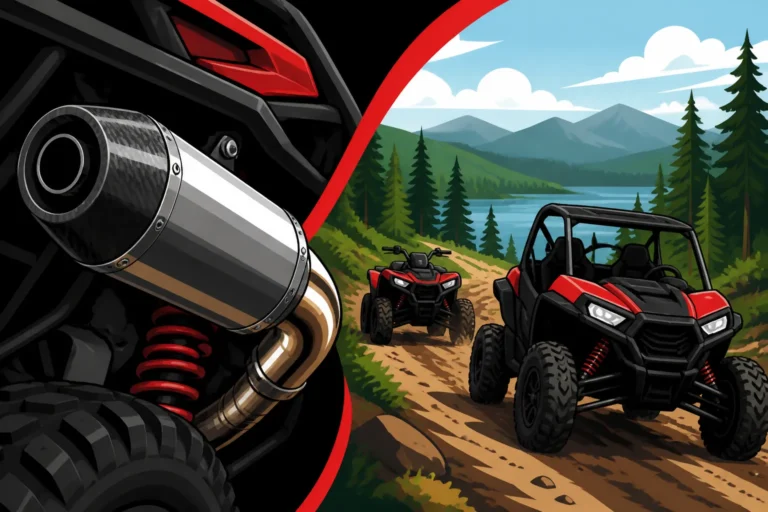
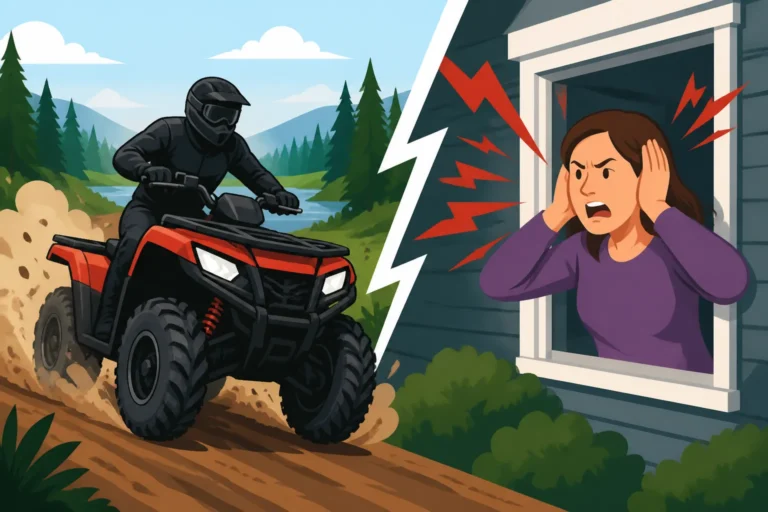
Noise is another big one. Excessive noise from aftermarket exhausts without proper spark arrestors is a major source of conflict with landowners and local communities. Maine law requires spark arrestors, and many trail systems and towns have strict noise ordinances. Loud machines erode public support for ATV access. Responsible manufacturers like SuperATV offer a range of parts, including exhaust systems, that are designed to meet regulatory requirements while still providing performance. Always ensure your machine is equipped with a functioning spark arrestor and that your exhaust system isn't exceeding acceptable noise levels. If you're unsure about your machine's compliance, it's worth checking with an authorized dealer or a local ATV club. You can learn more about these regulations in [Maine Noise Limits and Muffler Rules].
The Reality of "Street Legal" UTVs in Maine
The concept of a "street legal" UTV is gaining traction, and many riders dream of taking their side-by-side from the trail directly to a local eatery or store without needing a truck and trailer. While Maine does have provisions for some low-speed vehicles, making a UTV fully "street legal" in the same vein as a car or motorcycle involves a distinct set of challenges and specific requirements.
What it Takes to Make a UTV "Street Legal"
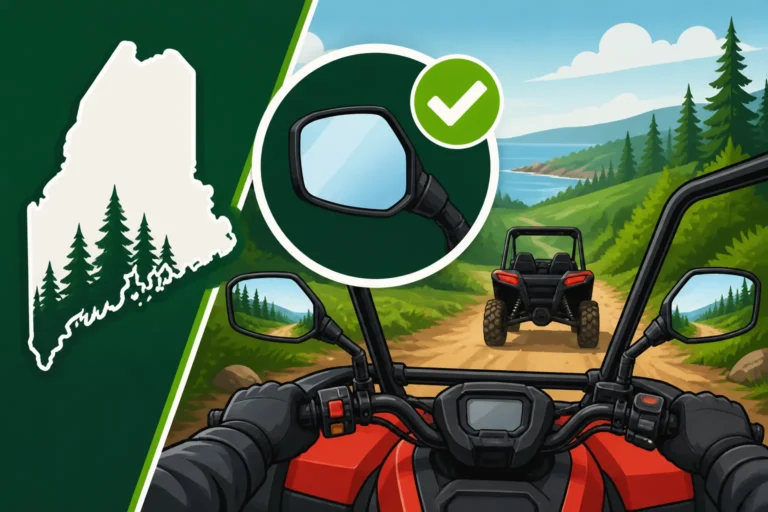
Converting a UTV to be legally operated on public roads isn't a simple bolt-on affair. It requires specific equipment that goes beyond what's needed for trail riding. Generally, to be considered for road use, a UTV would need a host of modifications, including, but not limited to: DOT-approved tires, windshields, windshield wipers, rearview mirrors (often side mirrors too), turn signals, brake lights, headlights (high/low beam), a horn, seatbelts, and a license plate holder with illumination. These aren't just optional accessories; they are fundamental safety features required for highway use.
Many companies, including SuperATV, offer aftermarket parts and conversion kits to help UTV owners equip their machines with these necessary components. However, installing the parts is only part of the equation. You must ensure that your converted UTV meets all state and local regulations for registration as a street-legal vehicle, which can sometimes be a complex process involving inspections and specific certifications. It's not the same as registering your machine as an ATV for off-road use; it falls under different motor vehicle categories. For a comprehensive list of what you might need, check out [Street-Legal UTV Equipment Lists].
Limitations and Permitting for Road-Legal UTVs
Even if you successfully convert and register your UTV as a street-legal vehicle, it doesn't automatically mean you can drive it on every public road. There might still be limitations on maximum speed, specific types of roads (e.g., interstates or high-speed arterial roads are usually off-limits), or even certain times of day. This is often dictated by the specific classification your UTV receives during the registration process (e.g., a "low-speed vehicle" versus a fully registered "motorcycle" or "automobile").
It's crucial to understand that a "street legal" UTV registration is entirely separate from an ATV registration. You will need proper vehicle insurance that covers road use, a valid driver's license, and you must adhere to all traffic laws just as if you were driving a car. This is not to be confused with the limited, incidental use allowed for ATVs under the 500-yard rule or on designated ATV access routes. A fully road-legal UTV provides more freedom but comes with a much higher bar for equipment, registration, and responsibility. Before investing in an expensive conversion, thoroughly research Maine's specific requirements for [Maine Registration for a Road-Legal Side-by-Side] and consider consulting with your local DMV or a knowledgeable dealer.
Here's a quick reference table to help clarify some of these points:
| Aspect | Common Misconception | Maine Law/Reality |
|---|---|---|
| 500-Yard Rule | I can ride up to 500 yards on any public road for convenience. | Only for specific access (fuel, food, trail connection), extreme right, yield to traffic. |
| Highway Crossing | Just zip across when traffic clears. | Stop completely, yield, cross at 90 degrees, direct path. |
| Designated Routes | Any town road is fair game if trails connect. | Only clearly marked routes with official town approval. Look for signs. |
| Helmet Law (Adults) | Adults don't need helmets on an ATV. | Required for riders/passengers under 18; highly recommended for all for safety. |
| ATV & Alcohol | It's just an ATV, so OUI rules are laxer. | Same OUI laws and penalties as operating a car. |
| "Street Legal" UTV | Bolt on some lights, and you're good to go on roads. | Requires specific equipment, registration as a road vehicle, insurance, and license. Still has limitations. |
Disclaimer
This article is for general informational purposes only and does not constitute professional advice. Laws, prices and regulations vary by location and change over time. Consult a qualified professional for guidance on your specific situation.