Do Adults Need Helmets on Maine Trails?
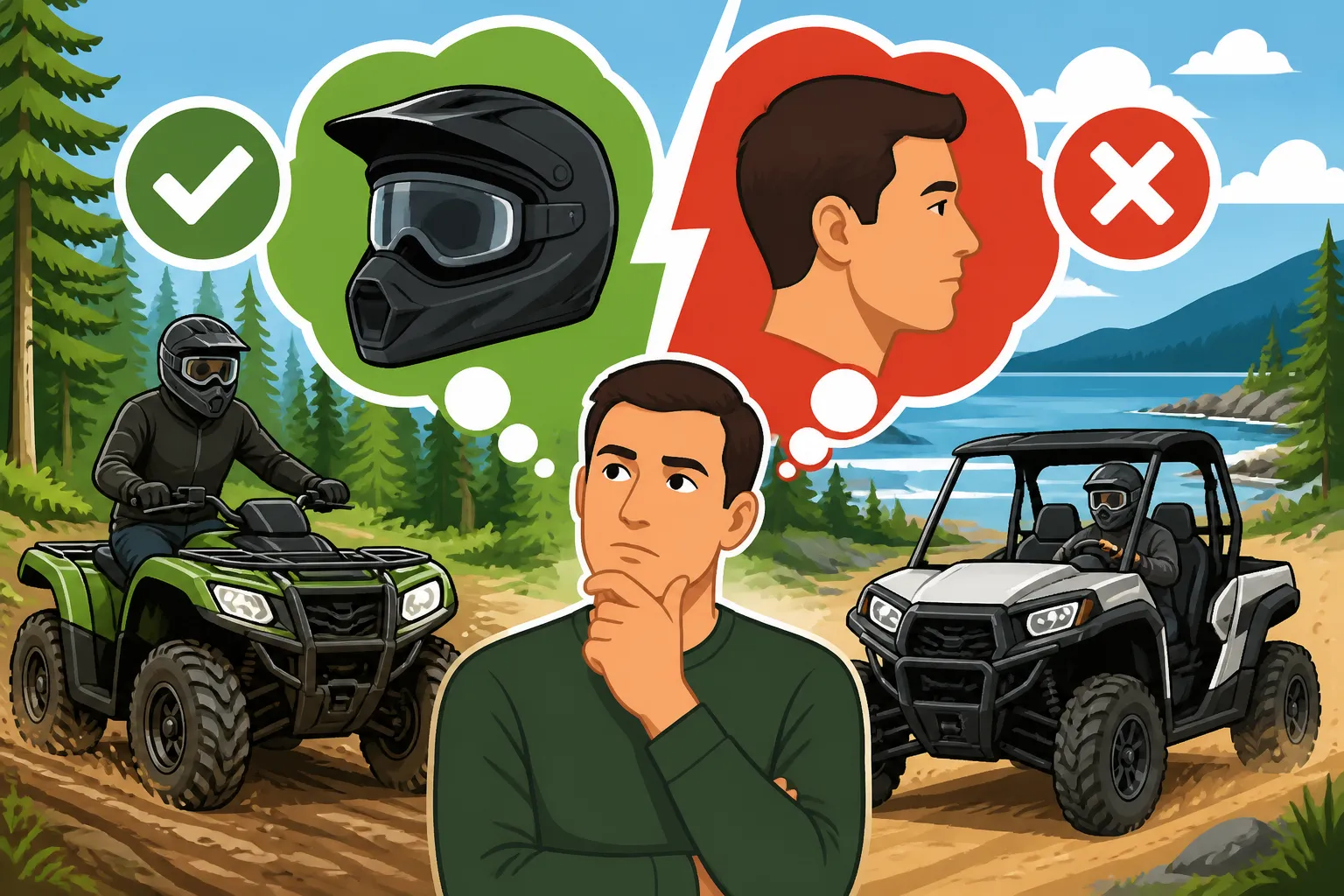
If you’re an adult planning an ATV or UTV ride in Maine, it’s reasonable to wonder whether a helmet is legally required—or simply a smart precaution. The short answer is that adults generally aren’t covered by a statewide helmet mandate for ordinary trail riding, while riders under 18 generally are. Trail rules, rental terms and the type of machine can add requirements, so check before you ride.
What Maine’s helmet rule means for adults
For ordinary ATV trail riding, Maine does not generally require adults to wear helmets under a statewide age-based rule. The helmet requirement is primarily aimed at riders and passengers under 18. That distinction answers the basic question, but it doesn’t mean every adult can ride helmet-free in every setting.
The details can depend on how the machine is classified, where you’re riding and who controls the route. An ATV, a side-by-side and a vehicle being operated on a public way may not be subject to exactly the same rules. Local requirements, event rules and private landowner conditions can also apply. If any of those circumstances are part of your ride, confirm what applies to that specific machine and location rather than assuming the general trail rule covers it.
| Situation | What to keep in mind |
|---|---|
| Adult riding an ATV on a typical trail | A helmet generally is not required by Maine’s statewide age-based rule, but wearing one is strongly recommended. |
| Rider or passenger under 18 | Helmet requirements generally apply. Check the details and any limited exceptions before riding. |
| Side-by-side or UTV | Don’t assume the ATV rule answers every question. Check the vehicle’s classification and any applicable operating, event or rental rules. |
| Club route or organized ride | A club, event organizer or landowner may set a stricter helmet rule. |
| Rental machine | The rental contract and the outfitter’s safety rules may require a helmet, even when state law does not require one for an adult. |
For a closer look at how age affects the rule, see Maine Helmet Requirements by Age and Do Adults Need Helmets on Maine Trails?. If a young rider will be along, review Helmet Rules for a Maine Passenger Under 18 before choosing a machine or planning the route.
It also helps to separate a legal minimum from a practical safety recommendation. A helmet can reduce the risk of serious head injury in a crash or rollover. It can protect against flying stones, branches and other debris, too. A legal exemption for adults is not a finding that riding without a helmet is risk-free.
Check the rules for the route and ride
Maine trails can cross land managed by different owners, and access may depend on permission and local arrangements. A club that maintains or manages access to a route may set conditions for riders using it. An organized ride can have its own rules, and an outfitter may require helmets as a condition of renting a machine. Those requirements can be stricter than the general state rule.
Before setting out, check the trail or club’s current instructions and ask the organizer or landowner if the helmet rule is unclear. If you’re renting, read the contract and safety briefing rather than relying on what a friend says is customary. For general safety and operating requirements, Maine ATV Safety Course Requirements is also a useful starting point.
Why wearing a helmet still makes sense
A helmet is protective equipment for situations that can arise even on familiar, low-speed trails. A machine can tip on a slope, slide on loose gravel, strike a rut or hit an obstacle hidden by brush. Another rider can make an unexpected move. A branch can reach the path of your head before you have time to react.
That does not mean every ride is equally risky. Trail conditions, speed, visibility, the machine and the rider’s experience all matter. But a short ride close to camp still involves the same basic possibility of a fall or collision as a longer trip. The decision to skip a helmet is a decision to leave your head less protected if something goes wrong.
A helmet can also improve comfort in some conditions. It can help shield your face and head from wind, dust, insects and light debris, depending on its design and the eye protection you use. Those benefits do not replace a proper fit or make a helmet suitable for every machine, but they’re practical reasons many adults wear one even when they aren’t legally required to.
Match the helmet to the machine and conditions
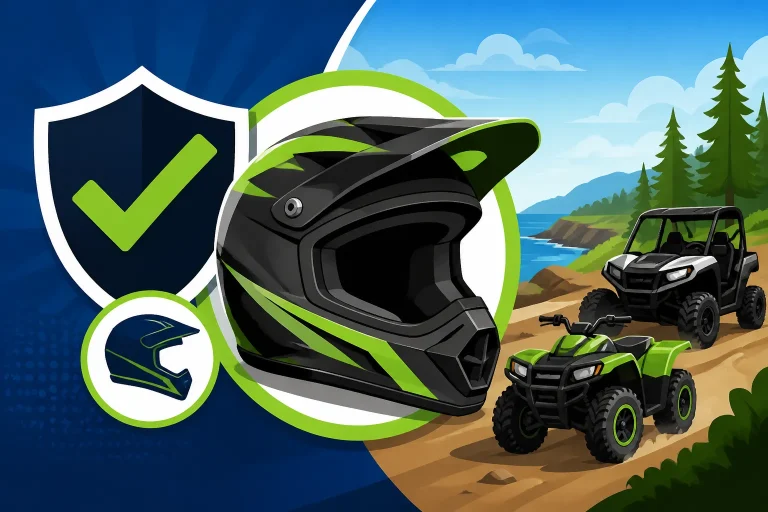
For an open ATV, riders commonly choose a motorcycle- or ATV-style helmet with secure retention and appropriate eye protection. A full-face design offers more coverage around the chin and face than an open-face design; an open-face helmet may provide a wider sense of openness but leaves more of the face exposed. Neither style makes an unsafe ride safe, and comfort and fit are essential.
For a UTV or side-by-side, consider how the helmet will work with the seat, restraint system and available clearance. A roll cage is not a substitute for head protection, and a helmet does not substitute for using the vehicle’s restraint system. Follow the manufacturer’s instructions and any requirements set by the outfitter or event organizer. If passengers are children or teens, confirm both helmet and restraint requirements rather than treating the vehicle’s enclosed cabin as protection enough.
Dust, rain, cold and bright sun can affect what works best. Goggles or a face shield can help protect your eyes, but they should fit securely with the helmet and not block your view. For more on helmet types and standards, see DOT vs ANSI Helmet Standards for Riders and Helmet Standards That Meet the Law.
Choosing and checking a helmet before you ride
A helmet only helps as intended if it fits, is in good condition and stays fastened. A loose helmet may shift or come off during a fall. A damaged helmet may not provide the protection you expect, even if its exterior looks presentable.
Start by checking that the helmet is intended for motorized riding and that its certification and labels match the standards required for your situation. Read the manufacturer’s instructions, including information about fit, cleaning, storage and replacement after an impact. If the legal standard is relevant to a rider or passenger under 18, verify the current requirements rather than relying on a vague product description.
When trying one on, check that it sits level and snug without painful pressure. It should not rock freely when you move your head. Fasten the retention strap and check that it remains secure when you try to move the helmet by hand. A helmet that feels comfortable at first may become irritating during a longer ride, so take time to assess the fit before heading out.
A sensible pre-ride check includes:
- Inspect the shell and interior. Look for cracks, deep gouges, compressed padding or other damage. Don’t use a helmet that has been in a significant impact unless the manufacturer says it is safe to do so.
- Check the strap and fastening system. Confirm they are intact, adjust correctly and hold the helmet securely.
- Confirm the fit. The helmet should stay in place and sit as the manufacturer intends, without interfering with your view or movement.
- Check eye protection. Make sure goggles or a face shield are clean, secure and compatible with the helmet.
- Secure loose items. Tie back long hair and avoid accessories that interfere with the helmet’s fit or fastening system.
- Follow the manufacturer’s care guidance. Improper cleaning, alterations or storage can affect the materials.
If shopping online, don’t treat a product title or a retailer listing as proof that a helmet meets a particular standard. Even when browsing options on Amazon, check the manufacturer’s specifications, certification information, sizing guidance and return conditions. When possible, trying a helmet on in person can make it easier to judge fit. A low price or an attractive design is not a substitute for suitable protection and a secure fit.
Remember that a helmet does not replace other safe-riding practices. Keep your speed appropriate for trail conditions, leave enough space between machines, avoid riding impaired, and use the machine’s safety equipment as intended. If you’re new to trail riding, a safety course can help with basic control and decision-making; Maine ATV Safety Course Requirements explains what to check.
Before leaving, make sure everyone on the ride knows the plan. Confirm whether helmets are required by the route, club, event or rental provider; check that each helmet fits its wearer; and make sure riders under 18 have the required equipment. If you’re unsure about a specific legal requirement, verify it with the appropriate Maine authority or the organization responsible for the ride.
Disclaimer
This article is for general informational purposes only and does not constitute professional advice. Laws, prices and regulations vary by location and change over time. Consult a qualified professional for guidance on your specific situation.