Helmet Rules for a Maine Passenger Under 18
Taking a child or teenager as an ATV passenger in Maine means checking more than whether the machine has a passenger seat. Riders under 18 have a helmet requirement, and the helmet needs to fit and be suitable for off-road riding. Here’s how to apply the rule, choose protective gear, and avoid common mistakes with ATVs and side-by-sides.
The Helmet Rule for Passengers Under 18
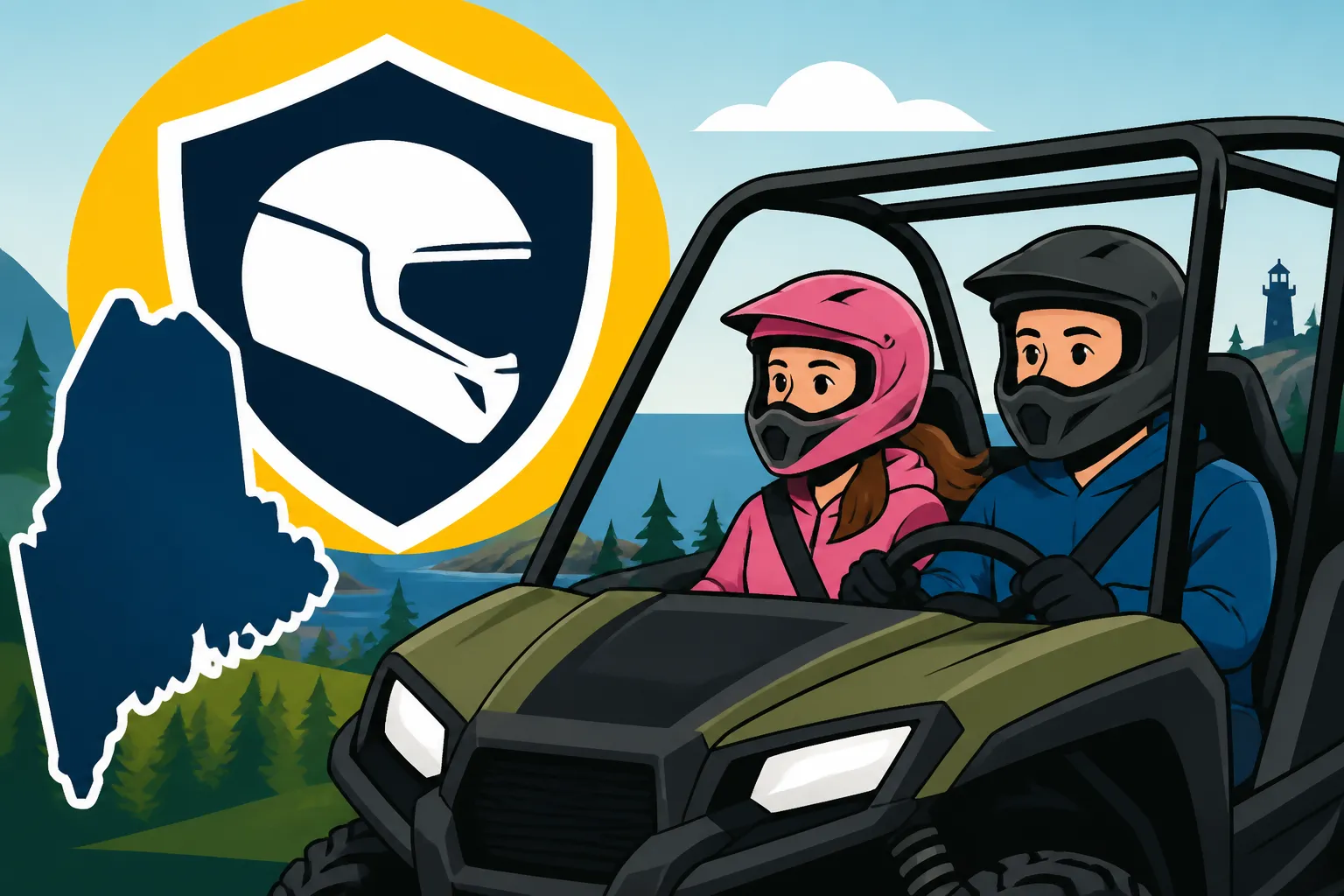
In Maine, a passenger under 18 must wear protective headgear when riding an ATV. The rule applies even when the operator is an adult, the trip is short, or the child is riding on familiar property. A parent’s permission or a passenger seat does not replace the helmet requirement.
The operator should not carry a passenger under 18 who is not wearing an appropriate helmet. In practical terms, check the passenger’s helmet before starting the machine, not after reaching a trail or road. If the helmet is missing, damaged, loose, or unsuitable, postpone the ride until you have a safe replacement.
The passenger’s age matters, not just the operator’s. An adult can be required to wear a helmet because of the passenger’s age, even if the adult would not otherwise be subject to the same age-based rule. Other requirements can apply based on where you ride, the machine, and local or landowner rules.
A helmet also does not make an otherwise unsafe passenger arrangement legal. The machine must be designed to carry a passenger, and the passenger needs a proper seat and footrests. A child riding on the back of a single-rider quad, or sitting in a cargo area, is not made safe or lawful just by wearing a helmet. See Maine ATV Passenger Age Rules and Carrying a Passenger on a Single-Rider Quad before taking someone along.
| Situation | What to check |
|---|---|
| Passenger is under 18 on an ATV | Passenger wears an approved, properly fitted helmet |
| Adult operates with a passenger under 18 | Do not carry the passenger unless the helmet requirement is met |
| Passenger is on a single-rider quad | Confirm the machine is designed and equipped to carry a passenger |
| Passenger is in a side-by-side | Check the vehicle’s occupant rules, helmet requirements, seat belt, and restraints |
| Ride is on private land | Do not assume private property removes safety duties or landowner conditions |
| Helmet is cracked, altered, or does not fit | Do not use it for the ride |
The helmet requirement is only one part of Maine’s operating rules. A young rider may also be subject to age-specific supervision, training, or operating restrictions. An adult passenger does not change those rules. For the broader age picture, see Helmet Rules for Riders Under 18 and Maine ATV Safety Course Requirements.
Choosing a Helmet That Meets the Rule
A helmet should be designed for motorized off-road riding, fit the passenger securely, and meet a recognized safety standard accepted under Maine’s rules. Do not assume that any helmet sold as a “youth helmet,” bicycle helmet, or novelty helmet is suitable for an ATV. Check the manufacturer’s certification label and the product information, and confirm that the helmet standard is accepted for the intended ride.
A DOT certification label refers to the U.S. Department of Transportation’s Federal Motor Vehicle Safety Standard 218. That is a widely recognized benchmark for motorcycle helmets, but it is sensible to check Maine’s current requirements rather than rely on a product listing or a seller’s description alone. The specifics are covered in Helmet Standards That Meet the Law and Maine Helmet Standards: ANSI and FMVSS 218.
Look for a complete, undamaged helmet with a secure chin strap. A full-face design can provide more coverage for the chin and face than an open-face helmet, although the best choice depends on fit, visibility, ventilation, and the type of riding. A helmet with a loose or damaged strap cannot be secured properly. A cracked shell, compressed liner, missing parts, or signs of a serious impact are reasons to replace it.
When shopping online, including through Amazon, read the manufacturer’s safety details and inspect the helmet when it arrives. A product title or a customer review is not proof that the helmet meets Maine’s requirements. Check that the item received matches the listed make and model, that certification markings are present, and that the seller has not substituted a different product. If certification is unclear, choose a helmet with verifiable markings or ask the manufacturer before riding.
Fit matters as much as the label
A correctly certified helmet still offers poor protection if it is too large, too small, or fastened incorrectly. Try it on with any head covering the passenger will wear under it. The helmet should sit level, cover the forehead, and feel snug all around without causing painful pressure. When the chin strap is fastened, the helmet should not roll easily from side to side or lift off the head.
Children can outgrow helmets, sometimes before the helmet itself looks worn. Recheck fit as they grow, especially at the beginning of a riding season. Hair, hats, and bulky liners can change how a helmet sits, so do not size up with the expectation that a loose helmet will “grow into” a secure one.
A passenger who resists keeping the strap fastened or who cannot tolerate the fit is not ready to ride in that helmet. Adjust the fit according to the manufacturer’s instructions, try a different size or model, or wait until the right protective gear is available.
Do not rely on a borrowed or old helmet without checking it
A helmet that fits one family member may not fit another. Before lending a helmet, inspect it for damage, confirm the strap and retention system work, and make sure it fits the passenger securely. Avoid helmets with unknown crash history. Damage may not always be obvious from the outside, and a helmet that has taken a significant impact may no longer protect as intended.
Follow the manufacturer’s instructions for cleaning and storage. Solvents, harsh cleaners, or unapproved modifications can damage materials. Do not drill holes, remove protective components, or add accessories that the manufacturer does not approve.
ATV and UTV Passenger Safety Are Not the Same
The term “passenger” covers different setups. A two-person ATV may have a separate passenger seat and footrests. A side-by-side, often called a UTV, has a cab or seating area with restraints. In either case, do not assume that a helmet makes every passenger position acceptable.
For a conventional ATV, confirm that the manufacturer designed the machine to carry a passenger and that the passenger can sit securely with both feet supported. Do not carry a child on a rear rack, cargo box, or improvised seat. A passenger who cannot hold on, reach the footrests, or remain seated safely may be too small for that machine, even if a helmet fits.
For a side-by-side, the passenger should use the designated seat and the restraints supplied for that seating position. A helmet requirement and a seat belt requirement address different risks; one does not replace the other. Check Seat Belt Rules in a Side-by-Side and the vehicle’s manual for proper use of seat belts, doors, nets, and other occupant restraints.
Because people use “UTV” for different kinds of machines, check how the particular vehicle is classified under Maine rules. Do not infer that a machine is exempt from an ATV-related rule simply because it has a steering wheel, a cab, or a model name that includes “side-by-side.” If the classification or helmet rule is unclear, confirm it with the appropriate Maine authority before riding.
The same caution applies to route and property rules. A landowner, trail club, event organizer, or facility may set conditions that are stricter than the minimum legal requirement. A helmet rule for a passenger under 18 is a baseline, not a promise that every route allows every machine or passenger.
Before the Ride: A Simple Check
Make the helmet and passenger checks part of the routine every time. That is especially useful when a child is switching machines, borrowing gear, or riding with a different adult.
- Check the passenger’s age and the applicable rules. If the passenger is under 18, plan on a helmet. Confirm any additional age, supervision, training, or route requirements that apply.
- Confirm the machine can carry a passenger. Use only a designated passenger seat with appropriate foot support. Do not improvise a place to sit.
- Inspect the helmet. Look for certification markings, damage, missing parts, and a working strap. Follow the manufacturer’s instructions on replacement after an impact.
- Check the fit. Position the helmet level, fasten the strap, and make sure it stays secure when the passenger moves their head.
- Use the machine’s other safety equipment. On a side-by-side, fasten the passenger’s seat belt and use the supplied occupant protections. On an ATV, make sure the passenger can sit and hold on as the manufacturer intends.
- Review the route and conditions. Confirm that the trail or property is open to the machine and that any local, club, or landowner conditions are met.
Do not treat a registration card or a helmet as authorization to ride anywhere. Registration, permission to use a trail, and safe operation are separate issues. If you are stopped, be prepared to show required documents and explain that the passenger is seated and equipped properly. Maine Warden Checks and What They Ask covers the kinds of issues riders may need to be ready to address.
If the passenger’s helmet is forgotten or does not fit, the practical answer is to stop and get the right one. A short trip is still a ride, and an adult’s judgment that the route is easy does not remove the requirement. Likewise, if a child is too small to sit securely in the passenger position, take a different vehicle or make the trip without carrying that passenger.
Rules can change, and details may depend on the machine and location. Before riding, confirm current requirements with Maine’s official ATV or law-enforcement resources, and check the owner’s manual and any trail or landowner conditions. For a related overview, see Maine Helmet Requirements by Age.
Disclaimer
This article is for general informational purposes only and does not constitute professional advice. Laws, prices and regulations vary by location and change over time. Consult a qualified professional for guidance on your specific situation.