Crossing the Border With an ATV on a Trailer
Taking an ATV across the U.S.–Canada border on a trailer is usually a paperwork and transport question before it is a riding question. You need to satisfy border officials, carry documents for the machine and trailer, and check the rules where you plan to ride. A little preparation can prevent delays or a trip that ends at the trailhead.
Before you leave: confirm what the trip involves
Start by separating the trip into two parts: transporting the ATV across the international border and using it after you arrive. Permission to bring a machine temporarily into another country does not automatically register it for local trails, roads, or private land.
Decide which country you are entering, how long you will stay, whether you are bringing the ATV for personal recreation, and whether you will take it back with you. If you are moving the machine, selling it, lending it for an extended period, or bringing it for business, the process may differ from a temporary recreational visit. Ask the appropriate border agency about your specific circumstances before departure. The details can depend on your residency, the machine’s ownership, and the purpose of the trip.
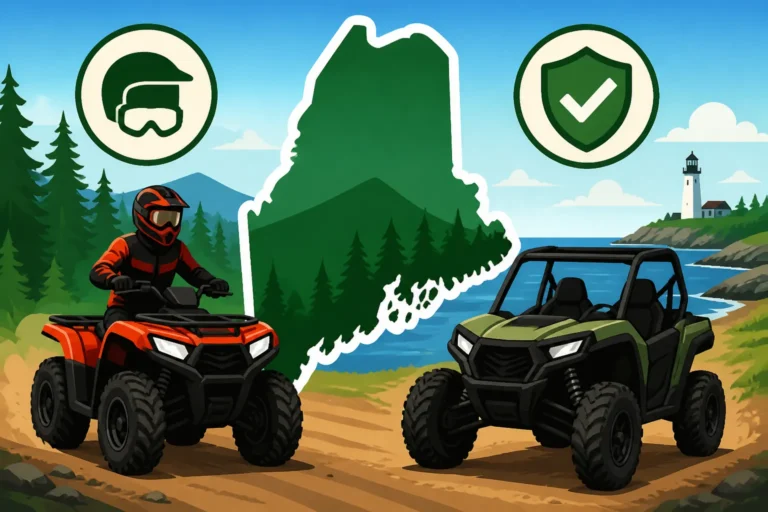
If you are coming into Maine from Canada, check Maine’s current registration rules for non-residents rather than assuming a Canadian registration is enough. Maine’s reciprocity arrangements have changed, and any limited exception should be confirmed for your dates and situation. Start with Maine ATV Rules for Canadian Visitors, then check the details in Maine’s Three-Day Non-Resident Exception. Registration and trail access are separate from the customs process.
If you are heading from Maine into Canada, research the destination province’s rules before you travel. A Maine registration does not, by itself, establish that an ATV can be used on every trail or public way across the border. Requirements may vary by province, trail system, landowner, or permit program. For a trip into New Brunswick or Quebec, review the relevant guidance on Taking a Maine ATV to New Brunswick or Taking a Maine ATV to Quebec and verify current rules with the destination’s official sources.
Build a document folder
Keep documents together in the tow vehicle, where you can reach them without unloading the ATV. Carry originals when practical and keep a separate, accessible copy of important records. The documents below are useful starting points; border officials may ask for different or additional proof.
| Document or detail | Why it can help |
|---|---|
| Passport or other accepted travel identification | Identifies the people crossing the border; confirm current requirements for everyone in the vehicle |
| ATV registration | Shows how the machine is registered where it is based |
| Proof of ownership | Helps establish who owns the ATV and supports its travel history |
| Trailer registration and plate details | Identifies the trailer being used to transport the ATV |
| Insurance information | Helps you check coverage and respond if there is an accident |
| Written permission from the owner | Useful if the ATV is borrowed or registered to someone who is not travelling |
| Trip details | Explains where you are going, how long you plan to stay, and whether you intend to bring the ATV back |
A bill of sale, title, or other ownership record may be relevant depending on the machine and the border agency’s instructions. If the ATV has no clear ownership paperwork, resolve that issue before travel instead of expecting a registration sticker to prove ownership. See Proof of Ownership for a Maine ATV Registration and Maine ATV Registration for a Machine Without Paperwork for related Maine documentation questions.
If someone else owns the ATV, ask the owner for written consent that identifies the machine and authorizes the trip. This is a practical precaution, not a guarantee that a particular document will meet every official requirement. If the ATV is financed, leased, company-owned, or being transported for someone else, ask the owner or relevant institution whether additional permission is needed.
Prepare the ATV, trailer, and tow vehicle
A smooth border crossing starts before you reach the inspection area. Make sure the ATV’s identifying information is legible, the load is secure, and you can produce documents without climbing over equipment or opening a tightly packed cargo area.
Record the ATV’s make, model, color, and vehicle identification number. Photograph the machine and its VIN before loading it. Compare the VIN on the ATV with the paperwork; a mismatch can create questions about ownership or identity. If you cannot locate or read the VIN, address that before departure. Where the VIN Is Stamped on a Quad explains where to look on common machines, while VIN Verification Before Registering in Maine covers a related paperwork issue.
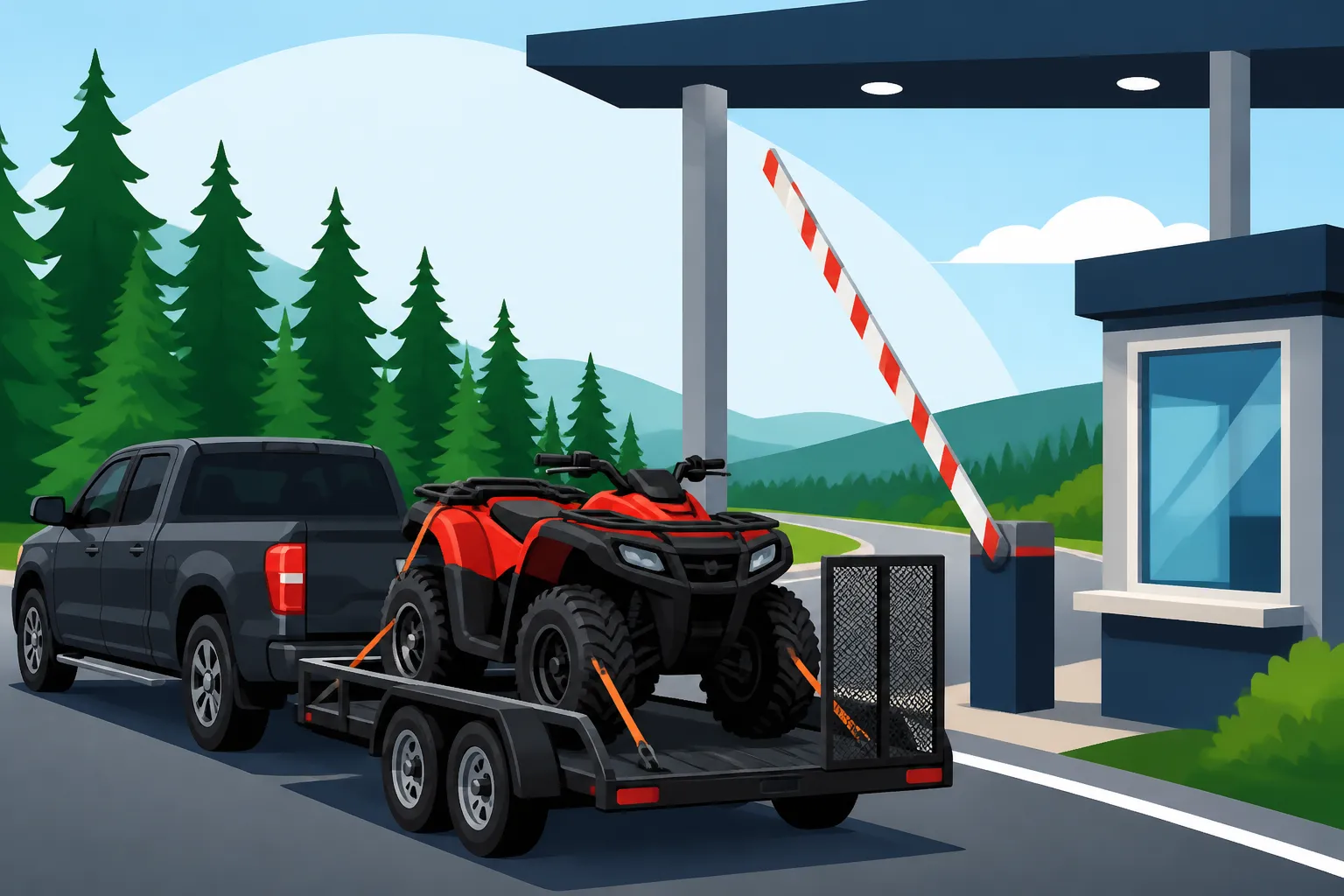
Secure the ATV using tie-downs suited to the machine and trailer. Check that the ramp is properly stowed, the machine cannot shift, and no part of the load blocks lights or the trailer plate. Confirm the trailer’s tires, hitch, safety chains, lights, and brakes where equipped. Check the towing vehicle’s capacity and make sure the combined load is within the limits for the vehicle and trailer. For more on secure loading, see Tying an ATV Down for the Highway.
Avoid packing documents, fuel containers, tools, or personal items in a way that makes an inspection difficult. Border officials may want to inspect the vehicle, trailer, or cargo. Keep potentially restricted items separate and declare goods when required. Do not assume that an item is permitted simply because it is common ATV equipment; check official guidance for anything that may be regulated, especially firearms, ammunition, fuel, food, or items intended for sale.
A quick pre-trip check should cover:
- ATV VIN and paperwork match.
- Registration is current for the place where the ATV is registered.
- Trailer plate and registration are in order.
- Tie-downs, lights, tires, hitch, and safety chains are ready for the journey.
- Travel documents and owner permission are easy to reach.
- You know the planned border crossing and have allowed time for inspection.
- You have checked current rules for the country you are entering and the places where you intend to ride.
At the border: declare the ATV and answer clearly
At the crossing, follow the lane signs and instructions from border officials. Be ready to explain that the ATV is secured on the trailer, who owns it, where you are taking it, why you are bringing it, and whether you plan to return with it. Keep answers direct and consistent with your documents.
Do not treat a registration decal as a substitute for declaring the machine. If asked about the trailer’s contents, describe the ATV and other items accurately. If an official directs you to secondary inspection, follow the instructions and do not unload or move equipment unless asked. Having the VIN accessible and your paperwork organized can make the process simpler, but it does not guarantee a particular inspection outcome.
Rules for temporarily bringing recreational equipment across an international border can depend on who is importing it, how it will be used, and whether it will leave the country again. Ask the relevant border agency in advance whether any declaration, temporary import document, or other step applies to your trip. Do not rely on an online forum or another rider’s experience as proof that your circumstances are identical. For a broader checklist, see Customs Rules for Bringing an ATV Across the Border.
If your plans change, tell the border official when appropriate. For example, a trip that shifts from a short recreational visit to leaving the ATV in the other country, selling it, or using it commercially may raise different questions. Avoid making assumptions about what is allowed based on the original plan.
Be especially careful when carrying firearms or other controlled items. Requirements can differ between countries, and an item allowed at home may be restricted or require advance steps across the border. Check current official rules before packing it. The same principle applies to food, fuel, and goods you plan to sell or give away.
After crossing: confirm riding permission separately
Once you arrive, do not assume you can unload and ride immediately. Confirm the ATV’s registration or permit status for the destination, the applicable trail access rules, and any requirements set by the landowner or trail organization. A machine may be admitted temporarily as personal property without being authorized for a particular trail network.
For a Canadian ATV entering Maine, verify the current non-resident registration rules and any limited exception before riding. Do not infer eligibility from a neighbouring province’s rules or from a past trip. The articles New Brunswick Registrations Honored in Maine and Quebec Registrations Honored in Maine address specific registration questions, but you should confirm that the rules apply to your machine and travel dates. If you need a Maine registration, check the available options in Maine ATV Registration for Non-Residents.
For a Maine ATV entering Canada, check the destination province’s rules for registration, permits, insurance, equipment, and where ATVs may operate. Also confirm whether the trail system is open and whether access requires permission or a separate trail permit. A province’s registration rule does not necessarily grant permission to use privately managed trails.
Keep proof of registration and ownership with you while riding, along with any permit or travel paperwork that officials may ask to see. Make sure your route stays on trails and roads where ATV use is allowed. If the planned route crosses private land, confirm permission rather than relying on a map line or another rider’s assumption. Rules for trail access are distinct from border rules and can change with closures, landowner decisions, and local requirements.
Before returning across the border, check the re-entry requirements for people and property, and be prepared to explain where the ATV has been and whether anything has changed. If you bought, repaired, modified, or acquired equipment during the trip, keep related receipts and ask the relevant agency how to declare it. A temporary visit is easiest to document when the machine’s identity, ownership, and travel plans are clear from the start.
Disclaimer
This article is for general informational purposes only and does not constitute professional advice. Laws, prices and regulations vary by location and change over time. Consult a qualified professional for guidance on your specific situation.