Customs Rules for Bringing an ATV Across the Border
Bringing an ATV across the U.S.–Canada border involves more than showing a trail registration. Customs officers may ask why the machine is entering, who owns it, and when it will leave. Plan for the ATV, trailer, people, and gear separately, and confirm current requirements with both countries before travel.
Customs rules depend on why the ATV is crossing
If you are taking your own ATV from Maine into Canada for a trip and plan to bring it back, you are generally asking to bring personal property into Canada temporarily, not to import it permanently. Be ready to explain that purpose clearly and show that you own or are authorized to use the machine. Border officers decide how to handle each entry, so temporary travel should not be treated as an automatic exemption from questions or documentation.
The reverse applies when you return to the United States: the ATV is coming back after a temporary trip, but officers may still ask about its ownership, where it has been, and anything you bought or had done to it abroad. Declare what you are carrying and answer questions directly. A machine that is being sold, left in Canada, or transferred to someone else is not simply returning home after a recreational ride; it may involve a formal import or other customs process.
It helps to distinguish three situations:
| Situation | What to clarify before travel |
|---|---|
| Temporary trip with your own ATV | Ownership, intended use, travel dates, and plan to take the ATV back |
| Borrowed or rented ATV | Written authorization, rental terms, permitted border travel, and who is responsible for the machine |
| Sale, gift, or permanent move | Import requirements, customs declaration, and any applicable vehicle or product rules |
For a temporary trip, be prepared to explain where you will ride, where you will stay, and when you expect to return. Keep your answer consistent with your travel plans and paperwork. If you are crossing for a longer stay, transporting several machines, or taking an ATV that belongs to a business, contact the relevant customs authority before leaving. The details can affect whether officers regard the machine as a temporary personal item or an import.
A customs inspection is separate from permission to ride. An ATV admitted into Canada still has to meet the requirements that apply to its use there, including any trail access, registration, insurance, and landowner rules. Likewise, being allowed to bring a machine through customs does not mean it is eligible for a particular Maine trail or crossing. For trail-specific planning, see Taking a Maine ATV to New Brunswick and Taking a Maine ATV to Quebec.
Prepare documents for the ATV, trailer, and people
Bring documents that make it easy to establish who you are, who owns the ATV, and why it is on the trip. Requirements can vary with the circumstances, and an officer may ask for information beyond the basic travel documents. Carrying a well-organized set of records can reduce confusion, especially if the ATV is financed, registered to someone else, or being transported by a person who is not its owner.
Useful documents to gather include:
- Identification and travel documents for every person in the vehicle. Check the current entry requirements for each traveler before departure.
- Proof of ATV ownership, such as registration records, a bill of sale, or other documents that connect the machine to its owner. Registration is not always the same thing as proof of ownership, so bring both when available.
- The ATV’s VIN or serial number, recorded somewhere accessible. Make sure it matches the number on the machine and the paperwork.
- Written permission if the ATV belongs to another person or a business. Include the owner’s contact information and a clear statement that you are allowed to take the machine across the border and bring it back.
- Rental documentation if the ATV is rented. Confirm with the rental company in advance that cross-border travel is permitted; do not assume a rental agreement allows it.
- Trailer and towing-vehicle documents, including registration and proof of insurance where applicable.
- Travel details, such as your route, lodging, intended riding area, and expected return date.
If you have recently bought the ATV, ownership records deserve extra attention. A receipt or bill of sale can help explain why the registration name does not match the person driving. For help sorting out purchase records, see Maine ATV Bill of Sale: What to Include and Proof of Ownership for a Maine ATV Registration.
Keep originals or accepted official versions of documents available, and store backup copies separately. A phone photo can help if a paper copy is misplaced, but it is safer not to rely on a single device or image. If a document is not in your name, bring a written explanation and the owner’s contact details rather than expecting an officer to infer the arrangement.
Record the VIN before travel and check it against the machine in daylight. A damaged, obscured, or mismatched VIN can slow down a conversation about ownership. Do not alter or remove a VIN plate. If you have an unusual machine, such as one with missing paperwork, a rebuilt frame, or a replacement VIN plate, contact customs officials before the trip rather than trying to resolve the question at the border.
When the ATV is on a trailer, the trailer is another item to account for. Confirm that it is properly registered and secured, and that your towing vehicle and insurance are suitable for the trip. The practical details of transporting the machine are covered in Crossing the Border With an ATV on a Trailer.
Declare the machine and answer questions clearly
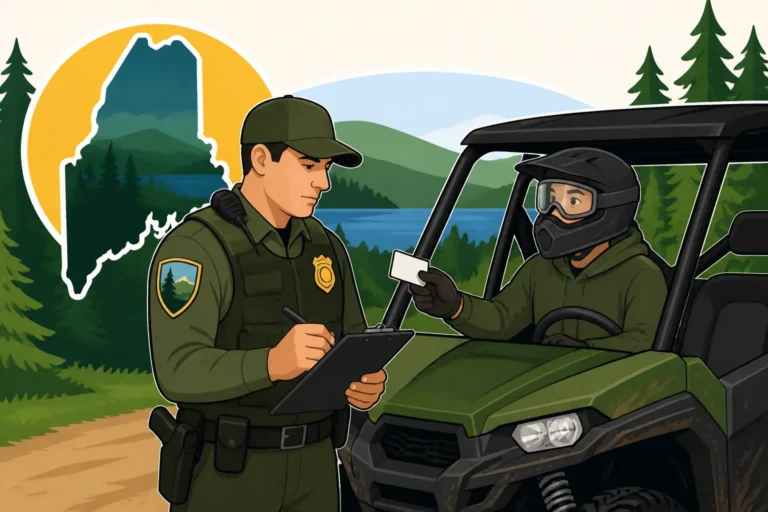
Use an official border crossing and declare the ATV when asked about goods or property being brought into the country. Do not assume that a machine on a trailer is invisible to customs or that it does not need to be discussed because it is not being ridden on public roads. If you are unsure how to declare it, say so and ask the officer how to proceed.
Be ready to explain:
- Who owns the ATV and who is transporting it
- Whether it is for personal recreation, work, sale, or another purpose
- How long you intend to keep it in the country
- Where you expect to use it
- Whether it will return with you
- Whether you are carrying other items that need to be declared
Give clear, consistent answers. Do not describe a machine as temporarily visiting if you intend to leave it abroad, sell it, or transfer ownership. If your plan changes after you cross, seek guidance from customs before acting on the change. Leaving a vehicle or recreational machine in another country can create obligations that do not arise on an ordinary short trip.
The same care applies on the return journey. Declare purchases and services as required, including parts or accessories acquired abroad and work performed on the ATV. If the machine has been repaired, modified, or damaged during the trip, keep receipts and explain what changed. Customs treatment can depend on the facts, so do not assume that every part or repair is treated the same way.
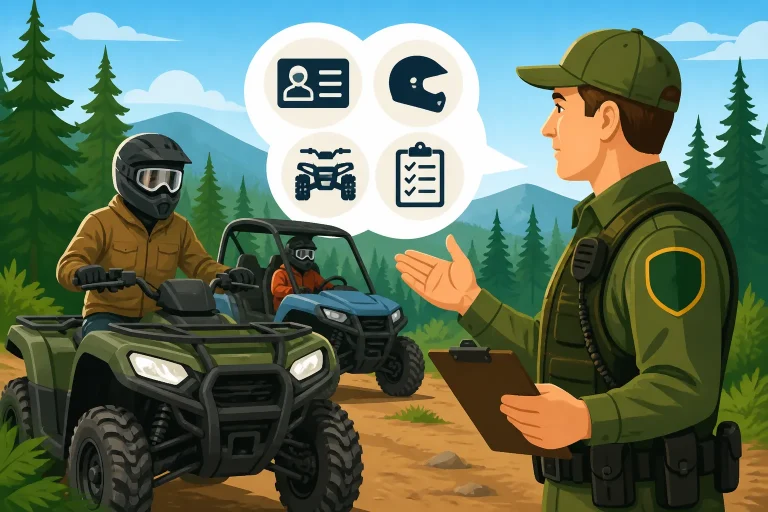
Be prepared for an inspection. Officers may want to check documents, inspect the ATV or trailer, or ask about items carried in the vehicle. Keep the machine accessible enough for an inspection, and avoid packing bags, fuel containers, or loose equipment in a way that blocks important identification points. Follow instructions at the crossing, and do not remove equipment or move the trailer unless asked.
Food, plants, animal products, firearms, and other regulated items can raise separate border questions. An ATV trip does not exempt passengers from declaring those items or complying with restrictions. Check current rules for everything you plan to carry, not just the machine. If you are traveling with fuel, chainsaws, hunting equipment, or camping supplies, confirm the applicable requirements before departure.
Customs clearance is not a trail permit
A customs officer’s decision about entry is only one part of the trip. Before riding, check the ATV rules and trail access requirements for the places you plan to visit. A Maine registration, a Canadian registration, or a border declaration may not substitute for a trail permit. The rules can differ by province, trail system, machine type, and rider, so confirm them with the relevant trail organization or authority.
For riders traveling from Maine into Canada, confirm whether you need a separate trail permit and what proof of registration or insurance the trail system expects. These requirements are independent of customs. See Trail Permits for Riding in New Brunswick or Trail Permits for Riding in Quebec for the trail side of the trip.
On the Maine side, Canadian visitors should check Maine registration rules rather than assume that a registration from home automatically provides access. Maine’s limited arrangements with neighboring jurisdictions have specific conditions; they are not a general customs exemption. Read Maine’s Three-Day Agreement With New Brunswick and Quebec and Maine ATV Registration for Non-Residents before planning a ride.
Insurance is another separate question. A policy that covers an ATV at home may not cover every activity or location across the border. Ask your insurer whether the machine is covered in the destination country, whether trailer transport is covered, and what documentation you should carry. For Maine-specific coverage considerations, see Maine ATV Insurance and When You Need It.
A useful pre-trip sequence is:
- Decide whether the ATV is making a temporary visit or being sold, transferred, or left abroad.
- Contact U.S. and Canadian customs authorities if the situation is unusual or could be treated as a permanent import.
- Gather identification, ownership records, registration details, VIN information, and any required written authorization.
- Confirm that the trailer and towing vehicle are documented and insured for the trip.
- Check trail permits, registration, insurance, and land-use rules for the riding area.
- Declare the ATV and other required items at each border crossing, and keep your paperwork available on the return trip.
If the ATV is not yours, the trip is long-term, or the machine will not return with you, get advice before reaching the border. A short call or written inquiry can help identify which agency to contact and what documents to prepare. Customs, registration, and trail access are separate processes; treating them separately is the simplest way to avoid a preventable delay.
Disclaimer
This article is for general informational purposes only and does not constitute professional advice. Laws, prices and regulations vary by location and change over time. Consult a qualified professional for guidance on your specific situation.