Maine Campgrounds With Trail Access
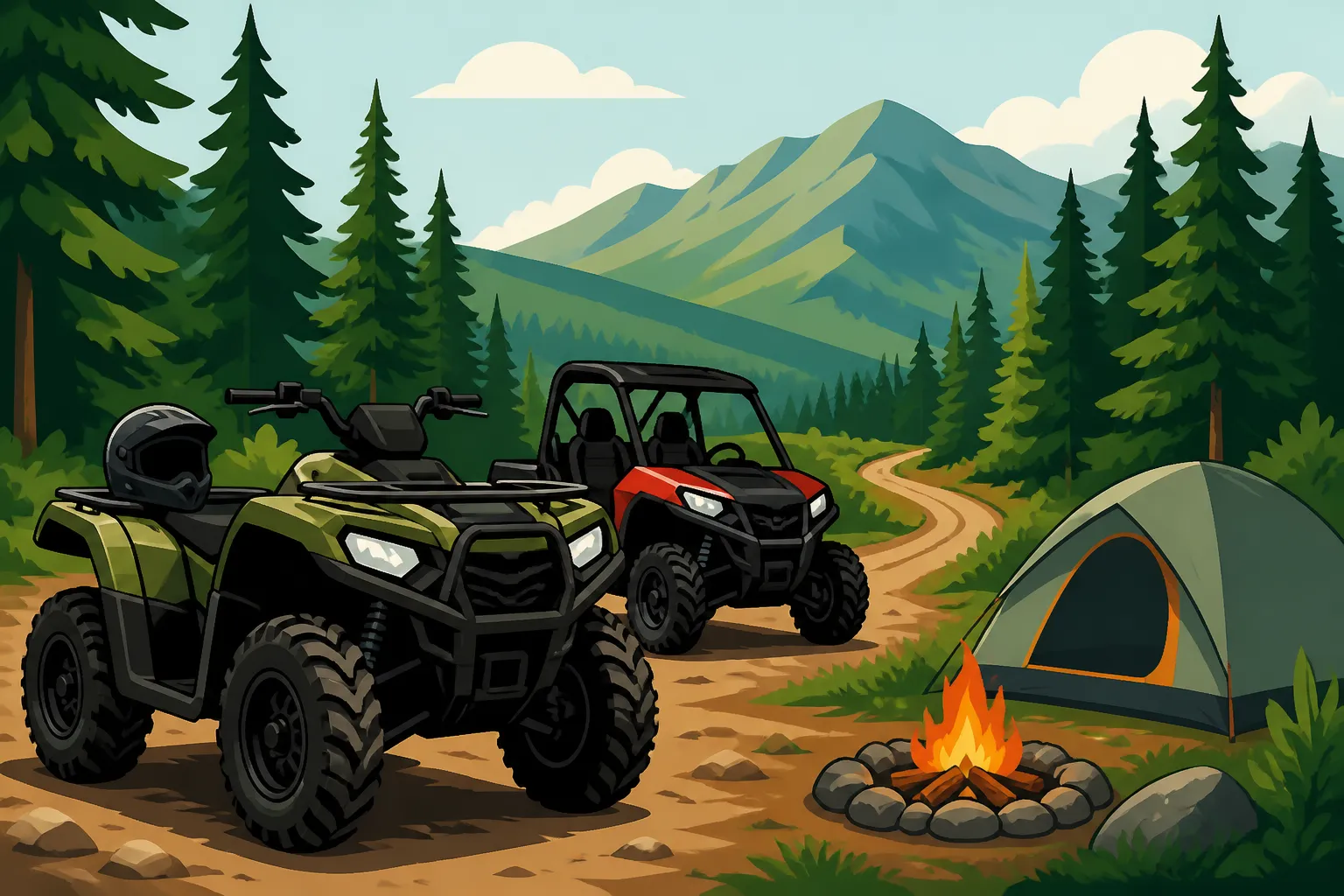
Arriving at a Maine campground with your ATV loaded, only to discover the nearest trail is across a road you can’t legally ride, is a frustrating way to start a trip. This guide explains what “trail access” can mean, where to look for campgrounds near riding areas, and how to confirm that your route, machine, and plans actually fit.
What campground trail access means in Maine
Direct access is different from being near a trail
A campground may advertise itself as close to ATV trails without offering a legal route from your site to the trail network. “Nearby” might mean a short drive with your ATV on a trailer. “Trail access” might mean a signed connector, a permitted section of road, or a route that begins at the campground entrance. Those distinctions matter when you’re planning around a loaded trailer, children, or a group that wants to ride straight from camp.
Before you book, ask the campground to describe the route in practical terms: Where does it begin? Is it open to ATVs, UTVs, or both? Does it connect to a maintained club trail, or only to a road section? Are there restrictions on machine width, operating times, or the direction riders must travel? A clear answer is more useful than a broad claim that the property is “near trails.”
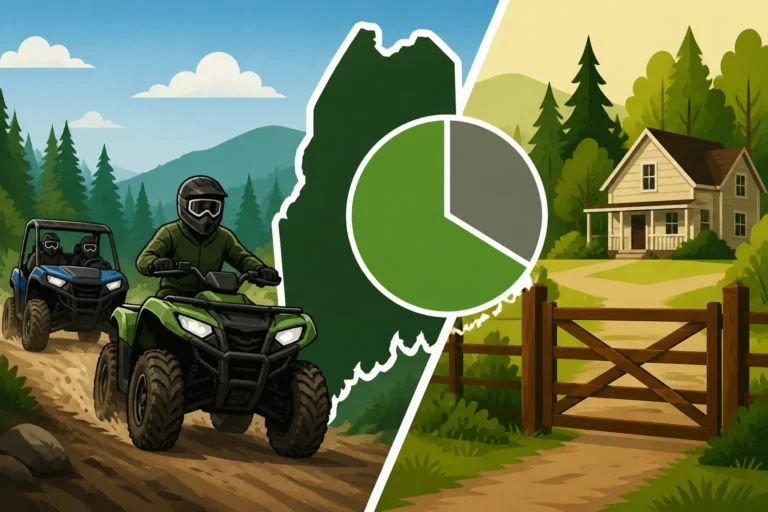
In Maine, trail access can depend on landowner permission and local conditions. A route used in one season may be closed or rerouted later, and access across private land should never be assumed. The broader context in Why 80 Percent of Maine Trails Sit on Private Land explains why landowner relationships are central to riding here.
Campground access does not automatically mean all rides are open
Even when a campground connects to a trail, that connection does not give riders permission to go wherever they like. Trails can cross private property, club-maintained corridors, and roads with different rules. A campground host may know the local route, but riders still need to follow posted signs and any current closures.
It also helps to separate campground access from machine requirements. Your ATV or UTV may need a valid registration, and riders may need to meet applicable safety and age rules. If you’re bringing a machine from outside Maine, check the rules for visitors before planning to ride; [Maine ATV Registration for Non-Residents] is a useful place to start. For a wider trip checklist, review What Maine Riders Need Before They Ride.
Maine areas to consider for a campground-based ride
The Forks and Jackman
The Forks is a practical place to investigate if you want a North Woods trip with riding, lodging, and outdoor recreation in the same general area. Northern Outdoors is one example to ask about when researching camping and trail access near The Forks. Confirm exactly what its current camping options include and whether riders can legally connect from the property to the trails they want to use. Don’t rely on an old map or a past visitor’s route description as proof that a connector remains open.
Jackman is another useful base to research, particularly for riders planning longer days in a remote region. Ask about staging space, trailer parking, fuel planning, and the route from the campground to the trail network. You can compare the area’s riding options with ATV Riding Around The Forks and Jackman, Maine and Jackman Trail Loop Mileage. Those topics can help shape your itinerary, but confirm trail conditions and access with local clubs or the campground before unloading.
Greenville and the Moosehead Lake region
Greenville can work well for riders who want to combine trail time with a stay near Moosehead Lake. Campgrounds and lodging options vary, so check whether a property is genuinely connected to a legal riding route or simply located within a short towing distance of a trailhead. If you’re traveling with a wide side-by-side, ask about both trail width and the campground’s own access roads.
The same questions apply around Rockwood and other Moosehead-area communities. A scenic location does not guarantee a rideable connection, and a route that works for a narrow ATV may not suit a larger UTV. Use Greenville and Rockwood ATV Trails to explore the region, then verify the route with local sources. For an overnight plan built around riding, Maine ATV Trail Camping and Lodging can help you think through the lodging and access details to compare.
Millinocket, Aroostook County, and Rangeley
Millinocket and the Katahdin region offer another area to research if you want to pair camping with trail riding. Before choosing a campground, ask whether the connection is a trail, a signed road route, or a short trailer transfer. Make sure you understand where the legal route begins, especially if reaching it means crossing a public road or riding through a village.
Aroostook County has extensive riding opportunities, but distances between services can make campground location and fuel planning especially important. Rangeley is worth considering for riders interested in western Maine, though access and trail conditions depend on the specific property and route. Browse Millinocket and the Katahdin Region Trails, Aroostook County ATV Trail Riding, and Rangeley Area ATV Trails as starting points—not as guarantees of campground access.
How to choose a campground with real trail access
Ask questions that reveal the actual route
When you call or email, ask for a description you can check against a map. “Can we ride from our campsite?” is a useful opening, but follow it with specific questions. Find out whether the route is currently open, what type of machine it accommodates, and whether you must register or meet other requirements before using it.
A short checklist can keep the conversation focused:
| Ask the campground | Why it matters |
|---|---|
| Is there a legal route from the property to an open trail? | “Close to trails” may still require trailering |
| Is the connection suitable for my ATV or UTV width? | Some routes cannot accommodate wider machines |
| Does the route include a public road or signed access route? | Road use may have separate restrictions |
| Are there seasonal closures or landowner conditions? | Access can change with weather, maintenance, or permission |
| Is trailer parking available at the site? | Not every campsite can fit a tow vehicle and trailer |
| Where can I get current trail status? | A planned route may be closed or rerouted |
If the answer is vague, ask the campground for the name of the local ATV club or trail organization responsible for that area. Then check with that organization before you go. For a broader look at access rules, see [Landowner Permission on Maine ATV Trails] and Maine Trail Openings and Mud Season.
Check maps and local updates before you leave
A map helps you understand the shape of a ride, but it doesn’t replace confirmation that a trail is currently open. onX Offroad can help you review route possibilities and get a sense of distances, nearby roads, and terrain before setting out. Use it as one planning tool, then confirm trail status with the campground or local club. Mapping information should not be treated as permission to ride across private property or as proof that a route is open.
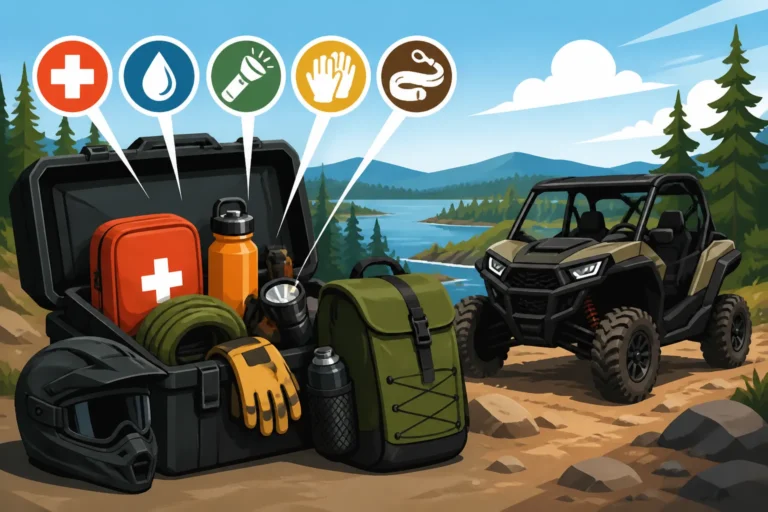
Save the campground’s directions and contact details before you travel. Cell service can be limited in remote areas, so consider carrying a paper map or offline navigation information as a backup. If you’re unfamiliar with the region, ask where riders typically stage, where fuel is available, and which trails are appropriate for your machine. For more preparation ideas, see Navigating Trails Without Cell Service.
Before departure, check for trail notices and ask whether recent rain, maintenance, or landowner changes have affected the route. onX Offroad may help you visualize the options, but the most useful plan is one that combines a map with local confirmation. Recheck after arrival if the campground reports a change.
Make the trip work for your group
Match the campground to your riding style
A family with young riders may value short loops, an easy return to camp, and a place to rest between rides. A group of experienced riders may prefer a base with longer routes and fewer daily trailer transfers. Neither group should assume that the closest campground is the best fit. Look at the access route, campsite layout, trail difficulty, and available services together.
For UTV owners, measure the machine’s width and ask about narrow bridges, gates, and trail restrictions. A campground may allow a large side-by-side on its property while nearby trails do not. Smaller ATVs can face different concerns, including steep or muddy terrain that may be challenging for inexperienced riders. Wide Side-by-Sides on Narrow Maine Trails offers a useful reminder to verify fit rather than relying on a general “ATVs welcome” message.
Plan for closures, weather, and a change of route
Maine trail conditions can shift with weather and maintenance. Mud season closures, heavy rain, downed trees, or a landowner’s decision may affect a route you expected to use. Build some flexibility into your plans: identify a second ride, know where you can safely leave the machine, and be prepared to trailer to another access point if the campground connection is unavailable.
A considerate approach also protects future access. Stay on marked routes, ride slowly near homes and camps, avoid creating new paths around obstacles, and follow posted closures even when a detour looks tempting. If a campground’s access route is closed, ask for the approved alternative rather than trying to improvise. Local relationships are part of what keeps Maine riding opportunities available.
The best campground choice is not simply the one closest to a trail on a map. It’s the one where the route is legal and open, the machine fits, the campsite suits your group, and someone can explain how to ride responsibly from the property. Confirm those details before booking, then check again shortly before your trip.
Disclaimer
This article is for general informational purposes only and does not constitute professional advice. Laws, prices and regulations vary by location and change over time. Consult a qualified professional for guidance on your specific situation.