Maine Headlight Rules After Dark
The sun dips below the tree line in Maine, painting the sky with incredible hues, but for ATV and UTV riders, this beautiful transition often brings a moment of worry: "Are my headlights good enough for riding after dark?" It's a question that can weigh heavily on riders, especially when you're deep in the woods or navigating a section of trail that crosses a public way. This guide is here to shed some much-needed light on Maine's specific headlight rules for ATVs and UTVs after dark, helping you understand not just what the law requires, but also how to ensure your safety and avoid potential headaches on the trails or during road crossings.
Why Headlights Matter After Dark in Maine
Riding an ATV or UTV in Maine is an experience unlike any other, offering access to thousands of miles of trails, from dense forests to open fields and even designated access routes through small towns. But when the daylight fades, the game changes entirely. The challenges shift from dodging puddles and navigating rocky terrain to contending with drastically reduced visibility, unforeseen obstacles, and the sudden appearance of wildlife. This is where your machine's headlights, or lack thereof, become absolutely critical.
The Safety Imperative on Maine Trails
Think about a typical Maine trail after sunset. That familiar path you cruised confidently in the afternoon can transform into a maze of shadows and indistinct shapes. A fallen branch that was easily spotted now blends in with the undergrowth. A sudden dip or rise in the trail can become a jarring surprise. Deer, moose, and even smaller critters like rabbits and raccoons become more active and less predictable at dusk and into the night. Your headlights aren't just about seeing where you're going; they're about giving you enough time to react to the unexpected. Without proper lighting, you're not just risking a breakdown or getting lost; you're significantly increasing your risk of a serious accident, potentially miles from any help. It's not uncommon to find yourself in a deep, dark section of trail, perhaps on a club trail that connects two towns, and realize just how quickly the sun disappears here.
Legal Ramifications of Insufficient Lighting
Beyond the immediate safety concerns, there are serious legal implications for riding without adequate headlights after dark in Maine. The state has clear regulations governing what constitutes "after dark" and what lighting equipment is required. Wardens and local law enforcement actively patrol trails and access routes, especially during peak riding seasons. Getting stopped for insufficient lighting isn't just an inconvenience; it can result in a fine. More importantly, if you're involved in an accident and your lighting is found to be non-compliant, you could face additional charges or liability issues. It's a situation no one wants to be in, and it's easily avoidable by understanding and adhering to the rules. Just like with [Penalties for Riding an Unregistered ATV in Maine], violations related to lighting can put a damper on your whole trip.
Navigating Maine's Unique Terrain After Sunset
Maine's landscape offers incredible diversity for ATV and UTV riders, but this also means diverse challenges after dark. You might be cruising a wide, relatively flat rail trail one moment and then turn onto a winding, technical woods trail the next. Headlights need to be powerful enough to cut through the darkness of dense forest canopy, broad enough to illuminate the periphery for wildlife, and focused enough to show you the trail well ahead. Imagine traversing a section of trail that runs along the edge of a steep embankment or crosses a bog bridge. Doing this safely in the dark demands a lighting system that provides clear, consistent illumination. Many riders find that factory headlights, while sufficient for daylight and twilight, simply don't cut it for serious night riding, especially when the trail is dusty or wet, further obscuring visibility.
Understanding Maine's Specific Headlight Regulations
Maine takes ATV and UTV safety seriously, and that includes clear rules for riding after dark. These regulations are designed to protect not only the riders themselves but also other trail users, landowners, and anyone else who might encounter an ATV or UTV on a road crossing or designated access route. Knowing these specifics is the first step toward compliance and a worry-free ride.
Mandatory Lighting Requirements by Law
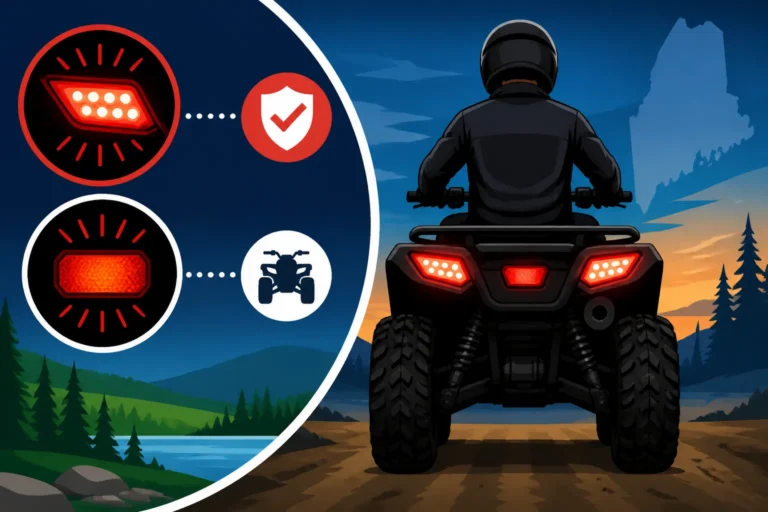
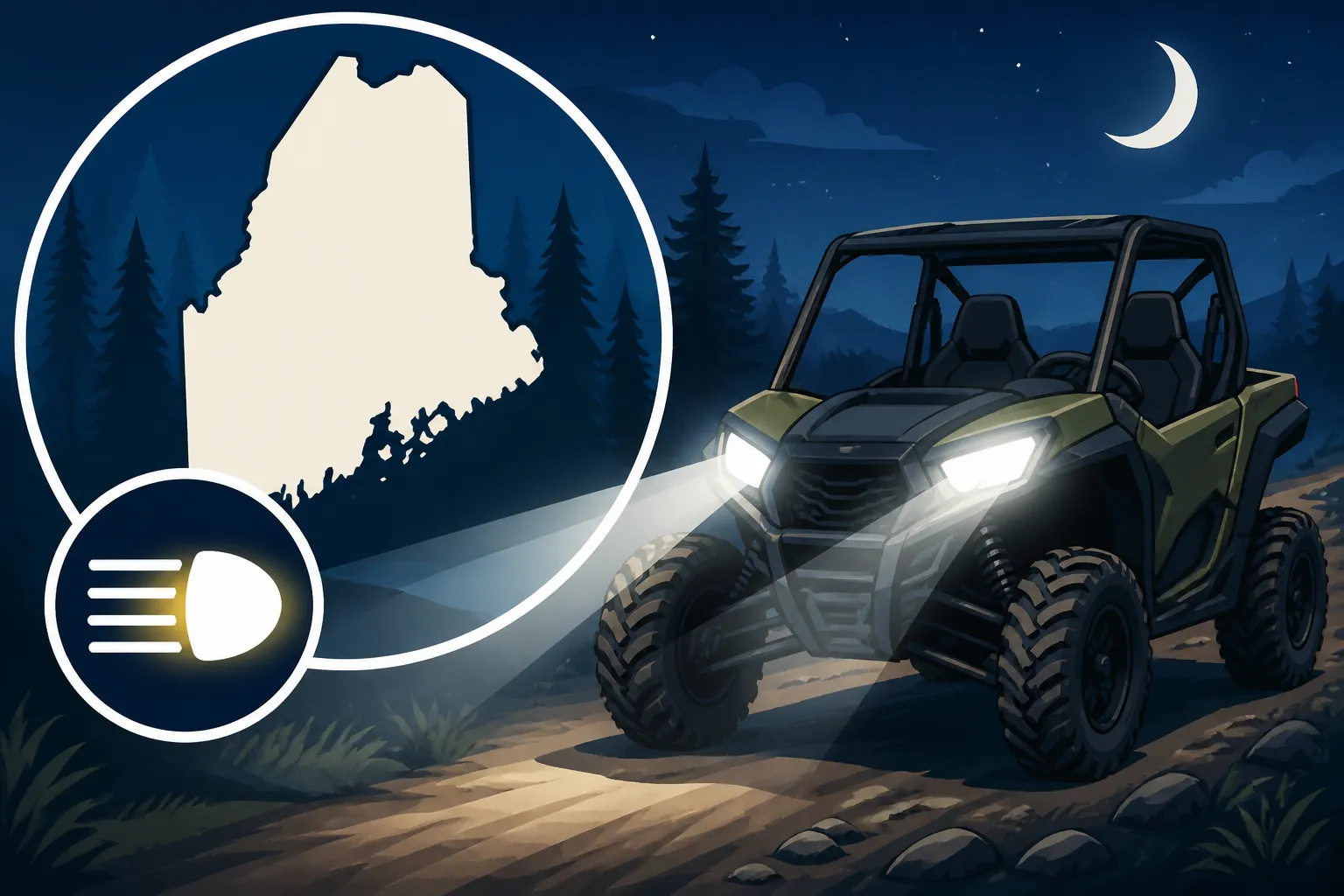
Under Maine law, if you're operating an ATV or UTV at any time from 1/2 hour after sunset to 1/2 hour before sunrise, you must have working headlights and taillights. Specifically, your machine needs to display one or two headlights that are capable of projecting a white light for a distance of at least 150 feet ahead. In addition, you must have at least one taillight that displays a red light to the rear, visible from a distance of at least 200 feet. This isn't just a suggestion; it's a mandatory requirement.
This means a single, dim headlight that barely cuts through the gloom won't suffice. The intent is to ensure you can clearly see obstacles and hazards well in advance, and that others can clearly see you. This is especially vital when you're operating on shared trails or when [Maine Lighting Requirements for Night Riding] apply more broadly, such as on designated sections of public way. These aren't just rules for aesthetic purposes; they're foundational for safe night operation.
When "After Dark" Officially Begins and Ends
The definition of "after dark" isn't a vague concept of when the stars come out; it's precisely defined in Maine law. It's the period from one-half hour after sunset to one-half hour before sunrise. This specific timeframe is important because it aligns with civil twilight, where visibility starts to significantly diminish and then gradually returns.
This means you can't just rely on your own subjective judgment. It's always a good idea to know the official sunset and sunrise times for your location in Maine, especially if you plan an evening ride. A quick check on your phone or a weather app can give you these times. Many riders carry a small headlamp just in case, but that's no substitute for proper machine-mounted lights. If you're heading out for an extended evening ride, perhaps from Greenville to Kokadjo, planning your return before this 1/2 hour window becomes crucial, or ensuring your lights are fully functional.
Special Rules for Road Crossings and Access Routes
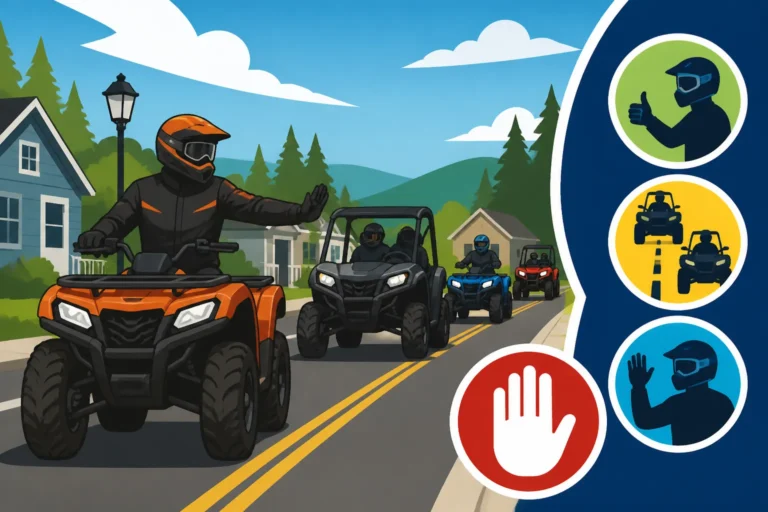
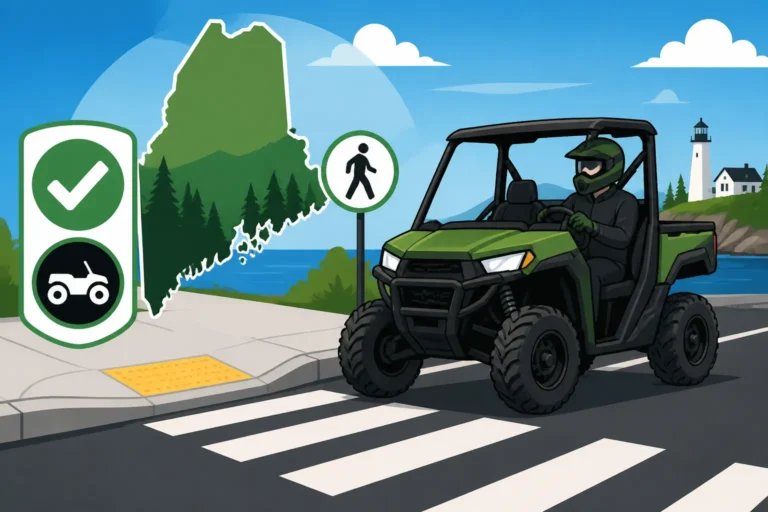
While the general headlight rules apply to all night riding, there are heightened considerations when your ride takes you onto or across public ways. Many Maine towns have embraced ATV tourism by establishing [Maine ATV-Access Routes and How Towns Post Them], allowing riders to connect trails or access services. However, when you're on these routes or making a simple road crossing, your visibility to other motorists becomes paramount.
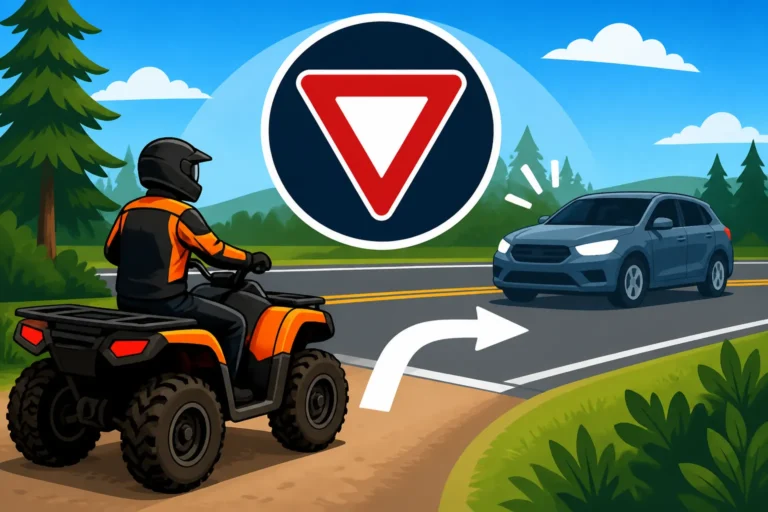
The requirement for lights to project 150 feet is designed so that oncoming traffic or vehicles behind you have ample warning of your presence. When performing a [Complete Stop Before Entering a Maine Public Way] or riding along the [Maine's 500-Yard Limit on a Public Way], the bright, functional headlights and taillights become even more critical. Wardens are particularly vigilant in these areas because of the increased risk of collision with cars or trucks. Some riders even add auxiliary lights for these situations, ensuring they are seen from all angles without blinding oncoming traffic. It's a delicate balance, but one that ensures everyone's safety.
Upgrading Your ATV/UTV Lighting for Maine's Night Rides
If your machine's stock headlights feel more like flashlights than proper illuminators once the sun goes down, you're not alone. Many riders find that factory lighting, while meeting minimum legal standards, doesn't always provide the confidence or visibility needed for serious night riding in Maine's varied terrain. Upgrading your lighting system can be a game-changer for safety and enjoyment.
Assessing Your Current Lighting Setup
Before you start adding new lights, take an honest look at what you already have.
- Brightness: Do your existing headlights adequately illuminate the trail for at least 150 feet? Can you clearly see potential hazards like rocks, roots, or holes from that distance?
- Beam Pattern: Do your lights offer a good spread of light, or is it just a narrow tunnel? A wider beam helps with peripheral vision, crucial for spotting wildlife or navigating turns.
- Condition: Are your lenses clear and free of cracks or yellowing? Is the wiring secure? Even the best bulbs won't perform well through dirty or damaged lenses.
- Power Draw: Are your stock lights already pushing the limits of your machine's charging system? Adding more lights without considering your stator and battery capacity can lead to electrical issues down the line.
A simple test ride on a dark section of trail you know well can be incredibly revealing. Pay attention to blind spots, how far you can see ahead, and whether you feel truly safe at your intended riding speed. This assessment will help you determine if you need to replace existing lights, add auxiliary lighting, or both.
Types of Aftermarket Lighting to Consider
The world of aftermarket ATV/UTV lighting is vast, offering solutions for every need and budget.
- LED Light Bars: These are incredibly popular for their powerful illumination, energy efficiency, and durability. LED light bars come in various sizes, from small spot beams for distance to wide flood beams for broad coverage. Many riders mount a combination spot/flood bar on the front bumper or roof. Brands like SuperATV offer a wide range of LED light bars that can drastically improve your night vision, turning night into a much more manageable experience. They often come with robust housings designed to withstand trail abuse.
- Auxiliary Pod Lights: Smaller, more focused LED pods can be strategically placed to fill in blind spots, act as ditch lights, or provide additional spot illumination. They're versatile and can be aimed precisely where you need extra light.
- Headlight Replacements: For some machines, you can replace the entire factory headlight assembly with a brighter, more efficient LED unit. This often involves a plug-and-play installation, giving you a significant boost in performance without adding extra external fixtures.
- Work Lights/Scene Lights: While not for driving, these can be invaluable for setting up camp, loading/unloading your machine, or performing trailside repairs after dark. They cast a broad, even light around your immediate area.
When selecting lights, think about the kind of riding you do most. Are you on wide-open trails that need distance vision, or tight, winding woods trails requiring a broad spread?
| Lighting Type | Primary Benefit | Common Placement | Energy Efficiency | Durability (Typical) |
|---|---|---|---|---|
| LED Light Bar | High output, versatile beam | Bumper, roof, grill | Excellent | High |
| Auxiliary Pods | Focused light, fill gaps | A-pillars, lower bumper | Excellent | High |
| LED Headlights | Direct replacement, brighter | Factory headlight housing | Excellent | Medium to High |
| Work/Scene Lights | Area illumination | Sides, rear, roll cage | Excellent | Medium |
| Halogen Upgrades | Inexpensive, moderate boost | Factory headlight housing | Good | Medium |
Installation Tips and Best Practices
Installing aftermarket lighting isn't overly complex, but a proper installation ensures reliability and safety.
- Plan Your Wiring: Map out where you'll run your wires, ensuring they're protected from heat, abrasion, and pinch points. Use appropriate gauge wire for the length and current draw. Many aftermarket lighting kits, including those from SuperATV, come with comprehensive wiring harnesses that simplify this process, often including a switch, relay, and fuse.
- Mount Securely: Lights should be mounted firmly to withstand vibrations and impacts from trail riding. Use robust brackets and hardware. Avoid flimsy mounts that could break or allow lights to shift out of alignment.
- Fuse Protection: Always wire auxiliary lights through a fused circuit to protect your machine's electrical system from shorts or overloads.
- Relay for High-Draw Lights: For high-wattage light bars, use a relay. This allows a low-current switch to control a high-current circuit, protecting your switch and ensuring full power delivery to the lights.
- Aim Properly: Once installed, aim your lights. Generally, you want the main beam to illuminate the trail well ahead without pointing too far up (blinding other riders or yourself with glare) or too far down (creating a bright spot right in front of your machine). If you regularly use [Maine's 500-Yard Limit on a Public Way], ensure your lights are aimed to avoid blinding oncoming traffic. Some riders even install separate switches for different light banks, allowing them to use less powerful lights in certain situations.
- Battery Management: If you add significant lighting, monitor your battery voltage. Consider upgrading to a higher-capacity battery or adding a dual-battery setup if your machine struggles to keep up with the electrical demand.
Remember, a well-lit machine isn't just about adhering to regulations; it's about making your night rides in Maine as safe and enjoyable as possible.
Common Mistakes and How to Avoid Them
Even with the best intentions and the latest lighting technology, it's easy to fall into common pitfalls that can diminish your visibility or land you in trouble after dark in Maine. Being aware of these mistakes is key to avoiding them and ensuring your night rides are always safe and compliant.
Overlooking Maintenance and Battery Life
It's easy to get excited about new lights, but the most common mistake is neglecting the ongoing maintenance of your entire electrical system. Those shiny new LEDs are only as good as the power supply.
- Failing Batteries: A weak or dying battery can cause your lights to dim, flicker, or even fail completely, especially at lower RPMs or when other accessories are running. Before a night ride, always check your battery's charge and condition. Consider getting a battery tender for off-season storage.
- Corroded Connections: Water, mud, and dust are constant companions on Maine trails, and they love to wreak havoc on electrical connections. Regularly inspect wiring harnesses, switches, and light connections for corrosion. A tiny bit of green fuzz can lead to a significant voltage drop and dim lights.
- Blown Fuses: Sometimes, a light simply stops working because of a blown fuse. Always carry spare fuses of the correct amperage, especially for your lighting circuits. Knowing [What to Carry on a Remote Trail Ride] often includes these small but critical items.
- Dirty Lenses: It might seem obvious, but dusty or muddy lenses can drastically reduce the output of even the most powerful lights. A quick wipe down before heading out after dark can make a huge difference.
A proactive approach to electrical maintenance ensures your lights are always ready to perform when you need them most, whether you're navigating a remote logging road or just riding to a gas station for a refill.
Misinterpreting "Adequate" Lighting
Maine law specifies that headlights must project a white light at least 150 feet ahead. This isn't just an arbitrary number; it's a safety standard. Many riders make the mistake of assuming "if I can see, it's good enough," which can be a dangerous misinterpretation.
- Underestimating Speed: At higher speeds, 150 feet of visibility is covered very quickly. If you're riding at 30 mph, you cover that distance in just under 3.5 seconds. That's not a lot of reaction time if an obstacle suddenly appears. Your lights need to allow you to see far enough ahead to stop or maneuver safely given your speed.
- Spot vs. Flood: Some lights are great for projecting a narrow beam a long way (spot), while others offer a wide, diffused light (flood). Relying solely on one type can leave you with blind spots. A spot beam might let you see 150 feet, but what about the deer stepping out just off to the side? A combination of both is often ideal.
- Comparing to Cars: ATV/UTV headlights are not designed to illuminate the road like a car's high beams. While upgrading can significantly improve visibility, don't expect the same performance as a full-size vehicle. Understanding the specific [Maine Lighting Requirements for Night Riding] helps set realistic expectations.
It's about having sufficient light to safely operate, not just to dimly see your immediate path. If you constantly feel like you're "outrunning" your lights, it's time for an upgrade.
The Pitfalls of Riding in Maine's Remote Areas Without Proper Lights
Maine is known for its vast, undeveloped wilderness, particularly in areas like Aroostook County or the Moosehead Lake region. Riding these remote [Maine's 6,000 Miles of ATV Trails] after dark without robust, reliable lighting is perhaps the most serious mistake a rider can make.
- Getting Lost: Without clear vision of trail markers or landmarks, it's incredibly easy to become disoriented, especially if you're [Navigating Trails Without Cell Service]. A strong headlight helps you identify trail signs and stay on course.
- Trail Hazards: Remote trails are less maintained and often feature more challenging terrain, including large rocks, washouts, and deep mud. These become exponentially more dangerous in the dark without adequate illumination.
- Wildlife Encounters: Maine is home to abundant wildlife. Moose, in particular, are a significant hazard, and they are much harder to spot at night. Bright, wide-beam lights increase your chances of seeing them before they become an immediate danger.
- Breakdowns Far from Help: A breakdown on a remote trail is bad enough in daylight, but in pitch black, it can be terrifying. Reliable lighting, including auxiliary work lights, is crucial for trailside repairs or simply waiting for help. Many riders carry extra light sources as part of their [What to Carry on a Remote Trail Ride] kit.
- Warden Encounters: Maine Wardens patrol these remote areas, and they are quick to spot and address machines not in compliance with lighting regulations. This is not only for legal compliance but for your own safety and the safety of others using the trails. They're well aware of the dangers of under-lit machines on trails like the ones that run through the Katahdin Region or around Jackman.
To truly enjoy the magic of Maine's night trails, invest in and maintain a lighting system that goes beyond the minimums. It's an investment in your safety, your enjoyment, and your peace of mind.
Disclaimer
This article is for general informational purposes only and does not constitute professional advice. Laws, prices and regulations vary by location and change over time. Consult a qualified professional for guidance on your specific situation.