Where Maine ATV Registration Fees Are Spent
Maine ATV registration fees are not simply a charge for a sticker: a substantial share supports the trail system riders use. Knowing where that money goes can help explain why registration matters, how local clubs and municipalities fit in, and why trail access depends on more than public funding alone.
The main destination is the ATV trail maintenance fund
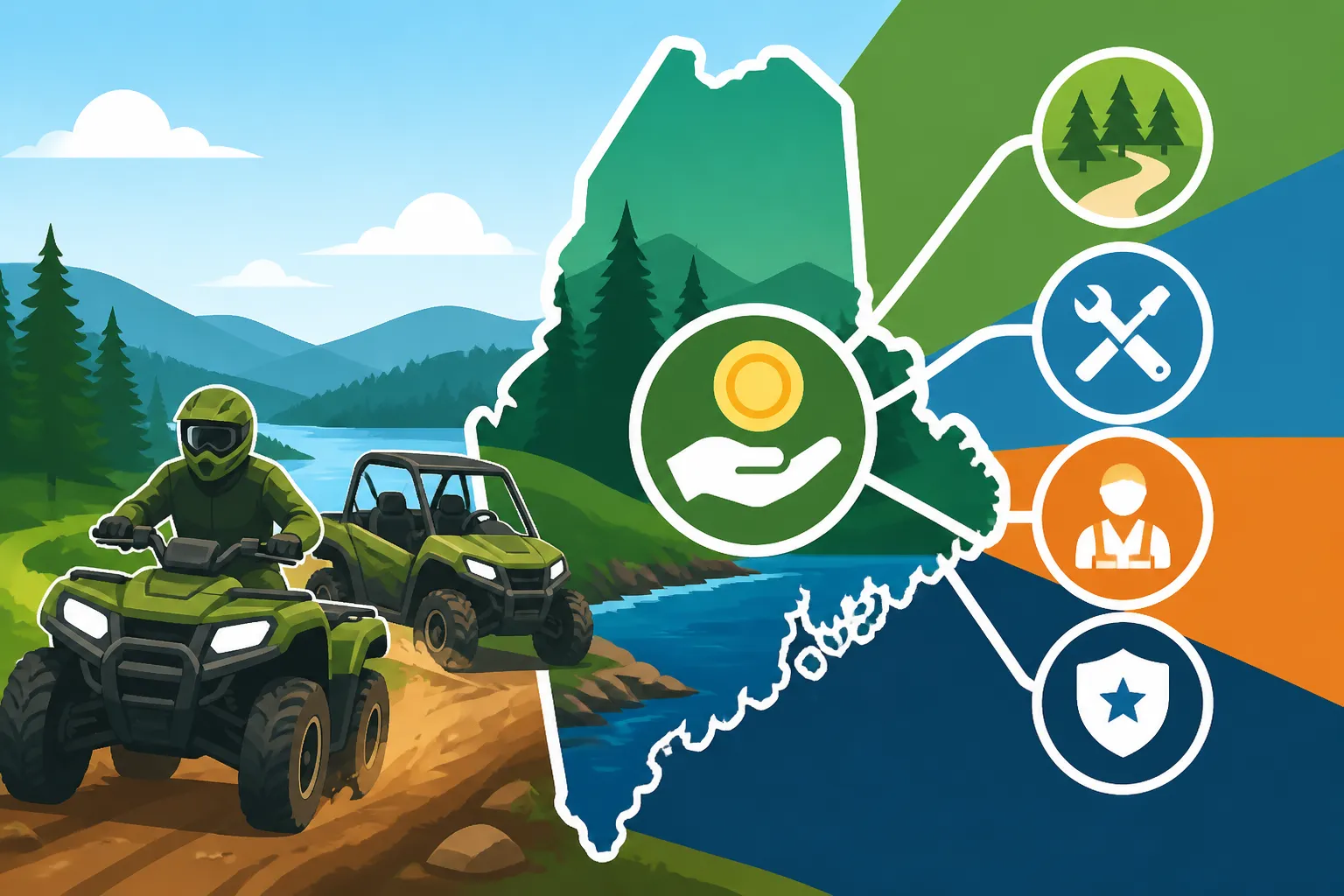
According to the Maine Department of Inland Fisheries and Wildlife, over two-thirds of every ATV registration fee goes directly into the trail maintenance fund. That is the clearest answer to the question of where registration money goes: a large share is dedicated to maintaining Maine’s ATV trail system.
The Maine ATV Program, administered through the Bureau of Parks and Lands, provides grants to clubs and municipalities. Those grants help put trail funding to work locally, where organizations maintain trails and complete trail projects. The Bureau of Parks and Lands says local clubs maintain Maine ATV trails.
The exact work can depend on a project and the local trail system. The key point for riders is that registration revenue supports trail maintenance through a state fund and a grant program, rather than being only a general fee with no connection to trails.
| Grant recipient | How reimbursement works | What it means for trail work |
|---|---|---|
| ATV club | According to the Maine Department of Inland Fisheries and Wildlife, club grants reimburse 100% of completed trail work. | A club can seek reimbursement for eligible work after it is completed. |
| Municipality | According to the Maine Department of Inland Fisheries and Wildlife, municipal grants reimburse 90% of completed trail work. | A municipality can seek reimbursement for most of the cost of eligible completed work. |
The reimbursement structure matters because trail work is often organized and carried out locally. A club or municipality applies for support, completes eligible work, and seeks reimbursement through the program. It is not the same as an automatic payment to every club or a promise that every project will be funded. Riders interested in local participation can also read Maine ATV Trail Fund and Club Grants and Maine ATV Club Membership and Dues.
Why local trail work matters so much
Maine’s trail system has a particular access challenge: according to the Maine Department of Inland Fisheries and Wildlife, 80% of the state-supported ATV trail system is located on private land. The Bureau of Parks and Lands also says most ATV trails in Maine are on private property.
That means trail access is not guaranteed just because a route appears on a map or has been open before. Landowners make an important contribution by allowing trails to cross their property, while clubs and municipalities help maintain the routes riders are permitted to use. Registration funding can support that maintenance, but it cannot replace the relationships and permissions that make access possible.
This is why the condition of a trail and the continued availability of a route are connected. Local groups need to keep trails in usable condition, and riders need to respect the property and conditions attached to access. Staying on marked trails and following local directions are practical ways to help protect access. For more on this relationship, see Maine Trails That Cross Private Land and Landowner Relations on Maine ATV Trails.
Trail work can involve more than keeping a route passable. The grant program is intended to support completed trail work, while clubs handle maintenance on the ground. Riders who want to understand the practical side of that work can read Maine ATV Trail Grooming and Bridges and Maine ATV Trail Signs and Markers. Those topics also show why maintenance is an ongoing task rather than a one-time improvement.
The grant program also makes landowner-relations support available. According to the Maine Department of Inland Fisheries and Wildlife, a reimbursement for landowner-relations initiatives or events is available through either grant type. That feature recognizes that trail access requires communication as well as physical work.
How registration money moves from fees to trails
It helps to separate the individual registration transaction from the trail funding process. A rider pays to register an ATV, and a large share of the registration fee goes into the trail maintenance fund. The Maine ATV Program then provides grants to clubs and municipalities. Local recipients carry out qualifying work and seek reimbursement through the grant program.
This does not mean that every registration fee is set aside for a specific trail, club, or town. The funding supports a broader maintenance system, and grants give clubs and municipalities a way to obtain support for completed work. A rider who wants to know whether a particular local project received funding should look for information from the relevant club or municipality, or ask the Maine ATV Program.
The distinction between grant reimbursement and a direct payment is important. Reimbursement is tied to completed work, so local groups need to organize projects and follow the program’s requirements. A listed reimbursement rate describes how qualifying work may be reimbursed; it is not a guarantee that every expense qualifies or that an application will be approved.
Riders can use the program’s information to understand the process without assuming that their registration payment directly funds the trail nearest their home. Trail systems can involve multiple landowners, clubs, and municipalities, and funding is administered through the wider program. For more on the program itself, see Maine ATV Trail Grant Program and Maine ATV Registration Revenue and Trail Grants.
There is also a useful distinction between ATV registration funding and enforcement funding. The Maine Department of Inland Fisheries and Wildlife says the ATV Enforcement Grant and Aid Program is funded from gas tax dollars. That is a separate funding source from the share of ATV registration fees directed to the trail maintenance fund. So when discussing where registration fees go, it is more accurate to focus on trail maintenance and the trail grant program, rather than treating all ATV-related public spending as registration-funded.
What registration fees can and cannot promise riders
A strong contribution to trail maintenance helps support the system, but it does not guarantee that every trail will be open, maintained to the same standard, or suitable for every machine. According to the Bureau of Parks and Lands, many ATV trails are not open during mud season, and riders should call ahead before riding in spring.
Seasonal closures are not evidence that registration funding has failed. Trail conditions can make use unsuitable, and local access can depend on landowner permission and trail status. Before setting out, check current information for the route and community you plan to visit. The Bureau of Parks and Lands provides information on Maine ATV trails, and the Maine Department of Inland Fisheries and Wildlife points riders to current trail maps and information through Maine ATV Trails.
Registration also does not give a rider permission to travel wherever an ATV can physically go. Trail access depends on marked routes and landowner permission. A registered machine still needs to be operated in accordance with applicable rules and local trail directions. For broader planning, Where Maine Lets You Ride an ATV and Checking Maine Trail Status Before You Drive cover questions that a registration receipt alone cannot answer.
In practical terms, the fee supports a shared system, while riders, clubs, municipalities, and landowners each play a different part. Registration contributes money; grants help local organizations carry out work; clubs maintain trails; and landowners provide access. The system works best when those roles complement one another.
For a rider deciding whether registration is worthwhile, this is the most useful takeaway: the fee is not just administrative. According to the Maine Department of Inland Fisheries and Wildlife, over two-thirds goes directly to the trail maintenance fund. That funding helps support the trail network, but maintaining access also depends on responsible riding, local work, and continued cooperation with private landowners.
Frequently Asked Questions
Does all of an ATV registration fee go to trails?
No. According to the Maine Department of Inland Fisheries and Wildlife, over two-thirds of every ATV registration fee goes directly into the trail maintenance fund. That is a substantial share, but not the entire fee.
Who can receive ATV trail grants?
The Maine ATV Program provides grants to ATV clubs and municipalities. Grant reimbursement is tied to completed trail work and program requirements.
Why do private landowners matter to Maine ATV trails?
According to the Maine Department of Inland Fisheries and Wildlife, 80% of the state-supported ATV trail system is located on private land. Continued access depends in part on landowner cooperation and riders staying on authorized trails.
Does paying for registration mean a trail will be open?
No. Trail status can change with conditions, landowner decisions, and local access arrangements. The Bureau of Parks and Lands advises riders to call ahead before riding in spring, when many trails are not open during mud season.
Sources
- Maine Dept of Inland Fisheries and Wildlife — All-Terrain Vehicles: ATV & Snowmobile: Maine Dept of Inland Fisheries and Wildlife (checked November 3, 2026)
- Bureau of Parks and Lands — Maine ATV Program: About Us: Bureau of Parks and Lands: Maine DACF (checked November 3, 2026)
- Maine Dept of Inland Fisheries and Wildlife — Laws & Rules: All-Terrain Vehicles: ATV & Snowmobile: Maine Dept of Inland Fisheries and Wildlife (checked November 3, 2026)
- Maine Dept of Inland Fisheries and Wildlife — ATV Law Enforcement Grants: Grants: Programs & Resources: Maine Dept of Inland Fisheries and Wildlife (checked November 3, 2026)
- Maine Dept of Inland Fisheries and Wildlife — Trails: ATV & Snowmobile: Maine Dept of Inland Fisheries and Wildlife (checked November 3, 2026)
Disclaimer
This article is for general informational purposes only and does not constitute professional advice. Laws, prices and regulations vary by location and change over time. Consult a qualified professional for guidance on your specific situation.