Maine Rules for Riders Aged 10 to 15
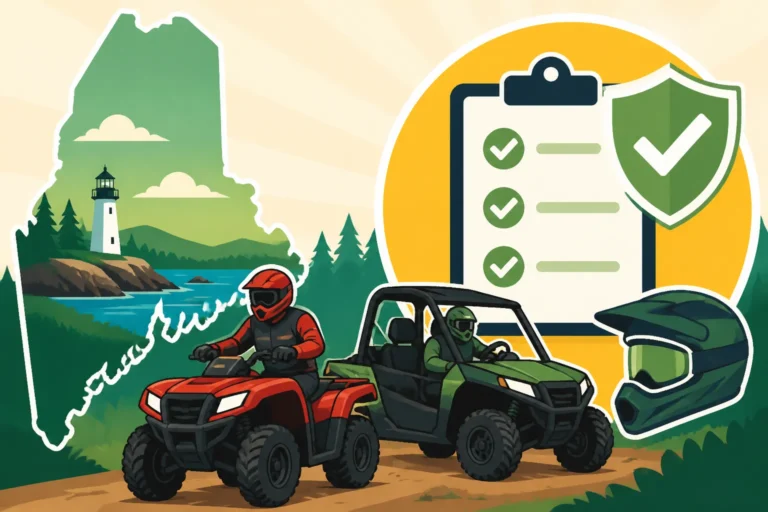
Maine riders aged 10 to 15 face extra rules that don’t apply in the same way to adults. Before a young rider heads onto a trail, families need to sort out safety education, adult supervision, helmets, machine fit and registration. The details can depend on where the ATV is used, so a plan for private land may not work for a club trail or public way.
What Maine Requires of Riders Aged 10 to 15
A rider’s age matters, but it is only one part of the rules. Where the machine is being operated, whether an adult is present, and whether the rider has completed an approved safety course can all affect what is allowed. A safety certificate does not replace supervision rules, and an adult nearby does not automatically make every location or machine appropriate.
For riders under 16, plan on completing a Maine-approved ATV safety course before riding. The course helps young operators build basic skills and understand trail hazards, but families should confirm the current legal requirements and any applicable exceptions with Maine’s official ATV program. The details are covered further in Maine ATV Safety Course Requirements and Maine Safety Course Minimum Age.
A course certificate is also not the same as permission to ride. A trail may be closed, a landowner may not have granted access, or a town may restrict ATV use on a public way. Riders still need to follow the rules for the place they are riding and the machine they are using.
Adult supervision is another key part of youth riding. Check the requirements that apply to the specific riding location before setting out, and do not assume that being in the same group is enough if the adult is too far away to supervise. For more detail, see Adult Supervision Rules for Maine Youth Riders and What Counts as an Accompanying Adult.
A quick planning table can help keep the separate requirements straight:
| Issue | What families should plan for | What to check before riding |
|---|---|---|
| Safety education | An approved ATV safety course for a youth rider | Whether the rider’s certificate meets Maine’s requirements |
| Adult supervision | A responsible adult who can supervise as required | Whether the location has additional rules |
| Helmet | A properly fitting helmet for the young rider | The applicable helmet standard and condition of the helmet |
| Machine | A size and power level the rider can control | Manufacturer guidance and Maine youth-use rules |
| Registration | A valid registration when required | Whether the machine’s registration is valid for the riding situation |
| Trail access | Permission to use the route | Current trail status, landowner permission and town restrictions |
A certificate does not make a rider ready for every situation
A course provides a foundation, not a guarantee that a young rider can handle every trail. Gravel, loose soil, steep grades, mud, water crossings and traffic can change the level of difficulty quickly. A rider who can control a machine in an open yard may still need practice before attempting a narrow or busy trail.
Build skills gradually in a suitable, permitted area. Start with basic controls, smooth stopping, turning, throttle control and scanning ahead. Move on to more difficult terrain only when the rider can manage the machine without rushing or relying on an adult to correct every decision.
If a rider is nervous, fatigued or struggling to control the ATV, stop and reassess. Taking a break or ending the ride is safer than trying to keep up with a group.
Where Young Riders Can Ride and What Registration Covers
Permission to ride and registration are separate issues. A registered ATV is not automatically allowed on every trail or road. Likewise, a landowner’s permission to ride on private property does not necessarily remove other requirements that apply to the machine or rider.
Before leaving home, identify the route and confirm that it is open to the type of ATV you plan to use. Maine trails often cross private land, and access can depend on landowner permission and club arrangements. Use current local information rather than assuming that a route shown on an old map is still open. The article Maine Landowner Permission Rules explains why permission matters.
Public ways need particular care. An ATV cannot be treated as a road vehicle simply because it is registered or because an adult is riding with the young operator. Route access and crossing rules depend on the road and local designations. Do not let a youth rider use a road segment or make a crossing unless you have confirmed that it is permitted and that the rider meets the requirements for doing so. See Maine ATV Rules for Riders Under 16 on Roads for road-specific considerations.
Registration is generally tied to the machine and its use, not to the rider’s age. Check the ATV’s registration before the trip, and make sure the paperwork and decals are in order. If the machine belongs to a parent or another adult, that does not by itself answer whether the youth may operate it or whether it is properly registered. For questions about whose name appears on the registration, see Whose Name Goes on a Youth ATV Registration.
Out-of-state visitors should check Maine’s rules before travelling with an ATV. Registration in the home state does not necessarily settle every Maine requirement, and reciprocity rules can be different from what riders expect. Start with Out-of-State Safety Certificates Accepted in Maine if a young rider’s safety training was completed elsewhere, and confirm the machine’s registration status for Maine use.
A simple pre-ride check helps separate the questions:
- Confirm that the ATV has the registration required for the planned use.
- Check that the route is open to ATVs and that any needed landowner permission is in place.
- Review local rules for any public-way access or crossing.
- Confirm the youth rider’s course and supervision requirements.
- Make sure the machine and protective gear are suitable for the rider.
- Carry the required documents and a way to contact the supervising adult.
If any part of the route is unclear, choose a different route until you can confirm access. A trail closure or unclear road designation is a reason to stop, not to guess.
Choosing a Machine, Helmet and Riding Plan
A machine that is too large or powerful can be difficult for a young rider to control, even if the rider is tall enough to sit on it. The rider should be able to reach and operate the controls, hold a stable position, turn the handlebars through their full range, and stop the ATV smoothly. They should also be able to get on and off without help and understand how to shut the machine down.
Use the manufacturer’s age and size guidance as a starting point, not as a substitute for supervision or a skills assessment. Avoid choosing a machine based only on what a rider’s friends use or on how quickly the rider may grow. A smaller, manageable ATV can be a better learning machine than a full-size model that leaves little room for error. For more on this decision, see Youth Machine Size Limits for Maine Riders.
A young rider should wear a helmet that fits securely and meets the applicable standard. A loose helmet can shift during a ride, while one that is too tight can make the rider uncomfortable and less likely to keep it on. Check the fit before the first trip and again as the rider grows. Replace a helmet if it has been damaged in a crash or has another reason to be considered unsafe. The general requirements are covered in Helmet Requirements by Age.
Protective clothing matters too. Long sleeves, long pants, gloves, sturdy footwear and eye protection help reduce exposure to dust, branches and debris. Clothing should fit closely enough that it will not catch on controls or moving parts. When shopping online, including on Amazon, check the helmet’s certification and fit information rather than relying on a product title or appearance alone.
A pre-ride check should include the machine as well as the rider. Inspect the tires, brakes, throttle, lights and controls. Make sure the ATV is in working order and appropriate for the terrain. If the machine has a passenger seat, do not assume it is suitable for carrying a passenger simply because a second person can sit there; follow the manufacturer’s instructions and Maine’s passenger rules.
Set expectations before the engine starts. A young rider should know:
- The route and where the group will stop.
- Which adult is supervising and how the rider should signal if they need help.
- What to do if the ATV stalls, tips or becomes stuck.
- How to keep a safe distance from other machines.
- That riding fast to catch up is not acceptable.
- That leaving the marked or approved route is not allowed.
Keep the first outings short and choose a route that matches the rider’s ability. Let the youth rider lead only when it is safe and appropriate; adults should maintain a position that allows them to see and assist. On a group ride, keep the pace steady and avoid pressuring a young rider to continue when they are tired or uncomfortable.
Conditions can change during a ride. Rain can make surfaces slippery, trail traffic can increase, and a route that seemed easy in one direction may be harder on the return. Agree on a turnaround point and be willing to use it. A good ride is one the young operator can finish safely, not the longest ride the group can manage.
Before each outing, confirm current course, supervision, registration and access requirements with the relevant official or local source. Rules and trail conditions can change, and permission for one property or route does not carry over to another.
Disclaimer
This article is for general informational purposes only and does not constitute professional advice. Laws, prices and regulations vary by location and change over time. Consult a qualified professional for guidance on your specific situation.