Riding Under Adult Supervision on the Trail
A youth rider may be ready to ride but still need an adult close by, and “supervision” can mean more than following along at a distance. Maine’s age, safety-course, equipment, and trail-access rules all matter. Here’s how to plan a supervised ride, what the adult should watch for, and where to check the rules before you head out.
What adult supervision means on a Maine ATV trail
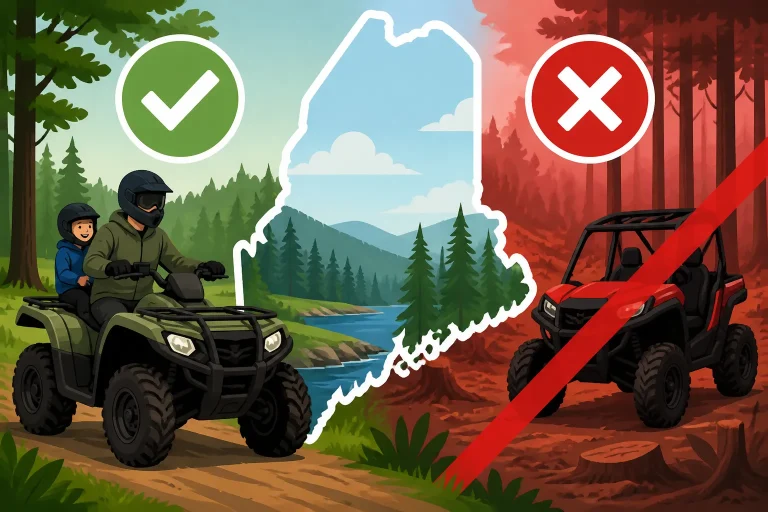
For a young rider, having an adult on the trip is not a substitute for meeting the rules that apply to the rider and machine. Maine has age-related operating requirements, including rules for riders under 16. Depending on the rider’s age and circumstances, a safety course and an accompanying adult may be required. Check current state requirements before riding; don’t assume that a child can operate a machine simply because a parent or other adult is present.
The practical meaning of supervision is more demanding than being somewhere on the same trail system. The adult should be close enough to see what the young rider is doing, communicate promptly, and respond if the rider has trouble. Following far behind, riding a different route, or relying on a phone call does not provide useful on-trail oversight.
Maine’s rules refer to an accompanying adult for youth riders. For a safe ride, treat “accompanying” as staying together and maintaining direct oversight, not just meeting at the trailhead. Review What Counts as an Accompanying Adult before the trip if you need to understand how the term applies to your situation. A youth rider’s age and training requirements are covered in Maine ATV Age Rules for Riders Under 16 and Maine ATV Safety Course Requirements.
In practice, effective supervision usually means:
- The adult knows the exact route and is riding with the youth, not sending them ahead out of sight.
- The adult can communicate with the youth without depending on cell service.
- The pace leaves room to stop safely and deal with hazards.
- The adult is prepared to shorten or end the ride if the young rider becomes tired, anxious, or distracted.
- The group stops together at intersections, trail junctions, and other places where riders might separate.
A supervising adult should also be ready to make decisions for the group. A young rider may not recognize when a route is too difficult, when weather is changing, or when a machine is developing a problem. The adult’s job is not only to explain the rules at the start; it is to keep reassessing the ride as conditions change.
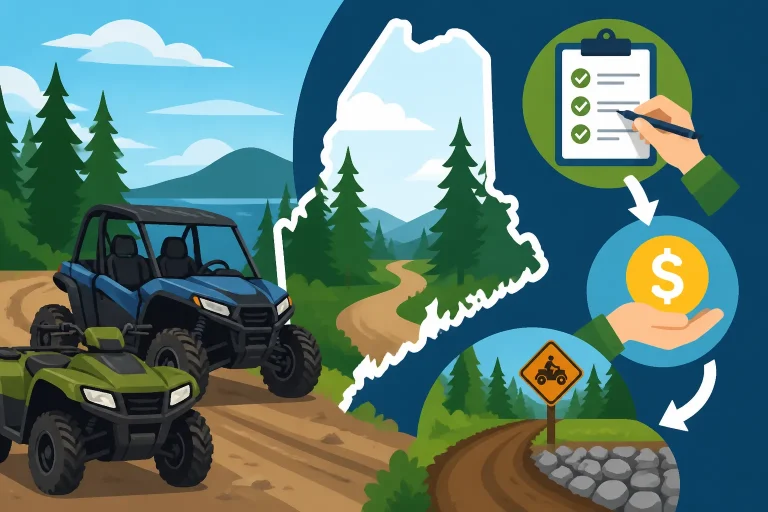
Supervision does not remove other requirements. Registration, permission to use the trail, safety equipment, and machine suitability still matter. A parent’s permission to ride does not create access to private land, and a registration does not grant permission to use every trail. For the broader youth rules, see Maine Rules for Riders Aged 10 to 15.
Prepare the young rider and machine before leaving
A successful supervised ride starts with choosing a suitable outing. A short, familiar trail is usually a better first step than a long route with busy road crossings, steep sections, water, or unfamiliar junctions. Ask the local club or land manager about current trail conditions and machine restrictions. Trail access can change, and a route that is open to one type of machine may not be appropriate for another.
Before the ride, confirm that the young rider is legally eligible to operate the machine and has completed any required safety training. A safety certificate is not a replacement for supervision, but a trained rider is more likely to understand basic controls, trail etiquette, and safe decisions. If the rider has not practiced recently, spend time on an appropriate practice area before going onto a trail.
Choose a machine the rider can control. The rider should be able to reach and use the controls, steer confidently, and stop without struggling. A machine that is too powerful, heavy, or physically large can overwhelm a young operator even on an easy route. Follow the machine manufacturer’s age and size guidance, and do not treat an adult-sized machine as suitable just because a rider can sit on it.
Use a pre-ride check for both the youth’s machine and the adult’s machine:
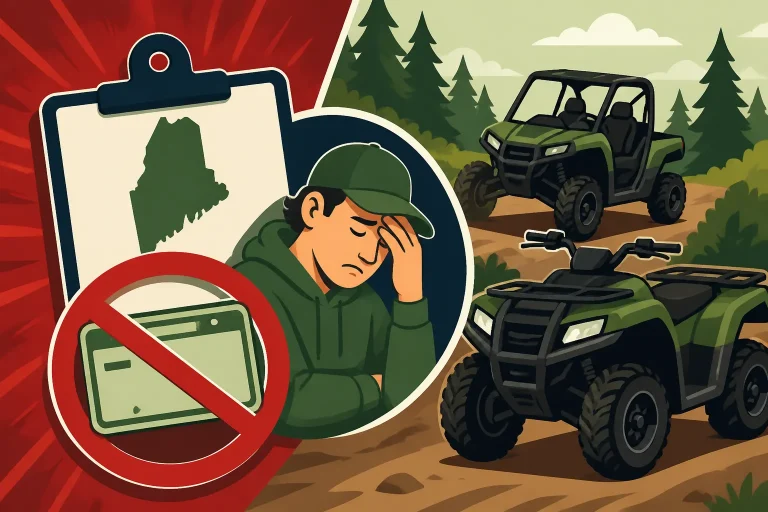
- Confirm the registration is current and the required documents are available.
- Inspect tires, controls, brakes, lights, and the throttle before departure.
- Check fuel, fluids, and the machine’s general condition.
- Make sure the rider has a properly fitting helmet and other suitable protective gear.
- Confirm that any passenger is allowed and that the machine is designed for that passenger.
- Review the route, trail closures, and any road sections or crossings.
Helmet rules vary by age, and helmets should fit securely rather than simply look close to the right size. Check Maine Helmet Requirements by Age and confirm that the helmet meets the applicable standard. Eye protection, gloves, long sleeves, sturdy footwear, and weather-appropriate clothing also help reduce the consequences of ordinary trail hazards.
| Before the ride | What the adult should confirm |
|---|---|
| Rider eligibility | The rider’s age, training, and supervision requirements are satisfied |
| Machine choice | The youth can control the machine and it is suitable for the rider |
| Trail access | The route is open, permitted, and appropriate for the machine |
| Safety gear | Helmet and protective equipment fit and are in good condition |
| Route plan | The adult and youth know the route, turnarounds, and meeting plan |
| Emergency plan | The group has basic supplies and a way to get help if needed |
Agree on simple ride signals before starting. Everyone should know what “stop,” “slow down,” and “problem” mean, whether those signals are hand gestures, lights, or spoken instructions. Establish that the youth should stop when the adult signals, and that the adult will not leave a rider alone at a junction or roadside.
If the young rider is new, have them demonstrate the controls and stopping ability in a safe area first. The adult should observe whether the rider can start, turn, brake, and maintain a steady pace without coaching every moment. If those tasks are not comfortable yet, keep practicing off-trail rather than using a public trail as a training ground.
Keep the ride manageable and stay together
On the trail, the adult should set a pace the youth can maintain without pressure. Riding fast to keep up can lead to poor line choices, missed turns, and delayed braking. Leave enough space between machines to avoid dust and allow each rider to react, but keep the youth close enough to supervise. In a group, place an experienced adult where they can observe the youth and make sure the group does not split.
Stop before decisions, not after someone has become separated. At a junction, pause where the group is visible and out of the way, check the route, and make sure the young rider understands which direction to take. Avoid assuming the rider will follow another machine automatically; dust, noise, and traffic can make a turn easy to miss.
Road sections and crossings call for extra caution. Do not assume that a trail crossing or a town road is safe just because other riders use it. Review the current rules for riding on public ways, follow posted signs and local restrictions, and make sure the youth understands where to stop and how to cross safely. If the route includes a road segment that the young rider is not permitted to use, choose a different route.
Conditions can change during a ride. Mud, loose gravel, water, ruts, fallen branches, and other trail users can make a familiar route more difficult. The adult should watch for fatigue as well as hazards. A rider who is getting tired may become quiet, make slower decisions, or have trouble keeping a steady line. Stop for breaks, offer water, and turn back before fatigue affects control.
Good supervision includes managing the group’s behavior. Keep riders in control, avoid racing, and give other trail users room. Slow down near homes, businesses, and people walking or working along the route. Dust and noise can affect landowners and neighbors, and careless riding can threaten trail access for everyone. Review Maine Trail Etiquette With Landowners before riding on a network that crosses private land.
A simple ride plan helps everyone know what to do if the group separates:
- Agree on the route and the places where the group will stop.
- Tell the youth not to continue alone if they lose sight of the adult.
- Choose a known meeting point, such as the last trail junction or trailhead.
- Decide how the adult will check that everyone is accounted for after each stop.
- Carry a map or offline navigation option in case phone service is unavailable.
Do not rely on a phone as the only safety plan. Remote trails may have weak or no service, and a battery can run down. Carry a map, water, basic first-aid supplies, and any tools or emergency equipment appropriate to the route. For more on planning a remote outing, see What to Carry on a Remote Trail Ride.
When to turn around and how to check the rules
The adult should be willing to end the ride early. Turn around if the youth is struggling to control the machine, becoming upset, repeatedly missing instructions, or showing signs of fatigue. Also reconsider the route if the trail is rougher than expected, the weather worsens, a crossing feels unsafe, or the machine develops a problem. Completing a planned loop is never more important than staying in control.
Before riding, check the trail’s status and access conditions with the organization responsible for the route. Maine trails often depend on landowner permission, and access may change because of weather, maintenance, or a landowner’s decision. Do not ride around a closure or assume that a route remains open because it was open on a previous visit. If the route crosses land that is not part of an established trail, get permission rather than treating the absence of a sign as permission to ride.
Also check whether the planned ride enters a special area with different restrictions. Some public lands and managed properties have their own access rules. Maine ATV Rules on Public Reserved Land is useful when the route may cross that kind of property. For a local trail network, a club map or current notice can clarify which routes are open and whether machine-width limits apply.
For visiting families, don’t assume that an out-of-state registration or safety certificate answers every question about riding in Maine. Registration and reciprocity rules are separate from youth supervision requirements, and trail permission is a separate issue again. Check the current requirements for your own situation before traveling.
A reliable pre-ride check has four parts: rider eligibility, machine readiness, legal access, and a route the youth can manage. If any one of those is uncertain, pause and confirm it before setting out. That small delay is much easier than discovering the problem at a remote junction or after a rider has become separated from the group.
Disclaimer
This article is for general informational purposes only and does not constitute professional advice. Laws, prices and regulations vary by location and change over time. Consult a qualified professional for guidance on your specific situation.