What Counts as an Accompanying Adult
A youth rider may have a helmet, a safety certificate and a registered ATV, but Maine’s supervision rule raises another question: who counts as the accompanying adult? The practical answer is about more than age or being somewhere on the same trail. Here’s how to think about supervision, what can make it inadequate, and how to plan a ride so an adult can respond if something goes wrong.
What “Accompanying Adult” Means in Practice
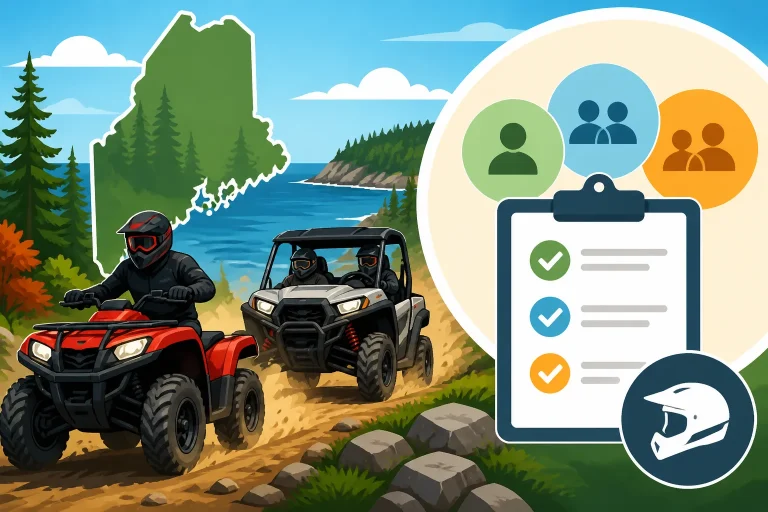
For a rider under 16, Maine’s ATV rules require adult accompaniment in situations covered by the youth supervision requirement. An adult generally means someone who is at least 18. The adult does not have to be the rider’s parent or guardian, but being an adult in the group is not, by itself, enough to make supervision effective.
Treat “accompanying” as active supervision. The adult should be close enough to see and communicate with the young rider, follow what is happening, and step in promptly. A rider far ahead, out of sight around a bend, or separated by other machines is not being meaningfully supervised just because an adult is somewhere in the party.
The law’s application can depend on the rider’s age, where the ATV is being operated, and the circumstances. Do not assume that one informal arrangement covers every setting. Before a ride, check the current requirements in Maine Rules for Riders Aged 10 to 15 and Adult Supervision Rules for Maine Youth Riders. If a rule is unclear for your situation, ask the Maine agency responsible for ATV rules or a qualified local authority.
A practical accompaniment setup looks like this:
- The supervising adult is old enough to qualify as an adult.
- The adult stays with the youth rider rather than sending them ahead or trailing far behind.
- The adult can see the rider, communicate clearly, and respond quickly.
- The route and pace are appropriate for the young rider’s experience and machine.
- The adult is attentive and able to supervise—not distracted, impaired, or occupied with another task.
This is a useful standard even when a ride is on private property. Permission to ride on land does not automatically remove safety responsibilities, and rules can differ by location or use. For details about a particular age or land situation, see Can a 10-Year-Old Ride an ATV in Maine? and Maine ATV Rules on a Family Woodlot.
Who Can Supervise, and What the Adult Needs to Do
An accompanying adult does not necessarily have to be a family member. A parent, relative, family friend, or other responsible adult may be able to supervise, provided the person meets the age requirement and can genuinely accompany the rider. The adult should understand the route, the machine’s controls, and the limits of the young operator.
The key distinction is between being present and being responsible for supervision. For example, an adult who is riding with a group but cannot see or communicate with a child at the back may not be in a position to supervise that child effectively. Nor is it enough for an adult to tell a young rider to follow the group and then ride well ahead.
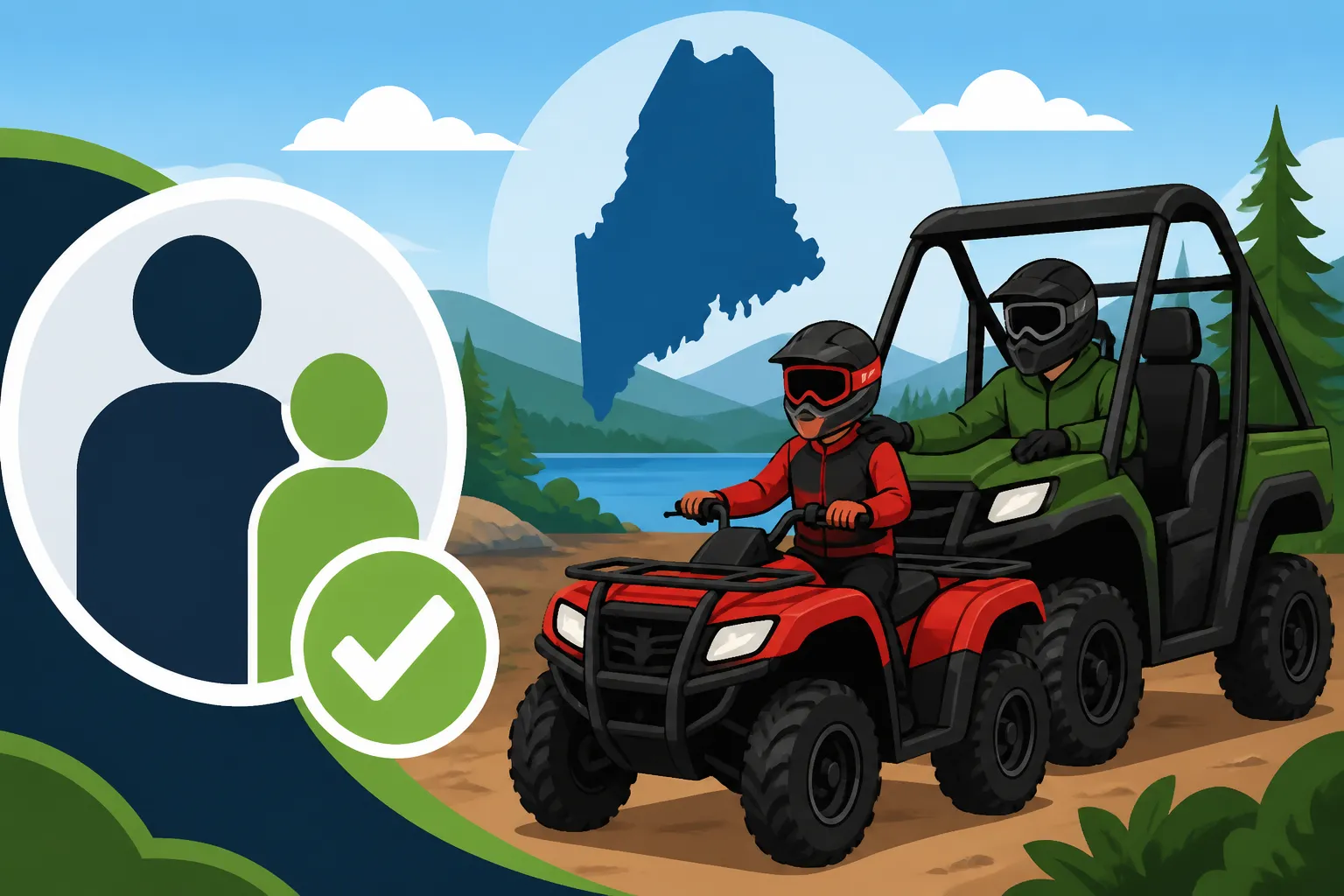
A good arrangement puts the youth rider within the adult’s attention throughout the ride. Depending on the trail and group, that may mean the adult rides directly with the youth, or that the group uses a clear lead-and-sweep plan with the young rider staying close to the responsible adult. Avoid relying on a phone signal, a promised meeting point, or a radio as a substitute for keeping the group together.
| Ride setup | Why it may work or fall short |
|---|---|
| Adult rides near the youth and can see and communicate with them | Supports close, active supervision |
| Adult is elsewhere in a large group and cannot keep track of the rider | Presence in the same group may not provide effective supervision |
| Youth rides ahead beyond sight or communication | Adult may be unable to intervene promptly |
| Adult supervises several youth riders at once | Can work only if the adult can keep each rider in view and respond safely |
| Adult is distracted, impaired, or operating beyond their ability to supervise | Not a responsible supervision plan |
The adult’s job is not simply to be a passenger or trail companion. Before setting off, agree on who is supervising each young rider, where everyone will stop, and what to do if the group becomes separated. If the supervising adult is also responsible for multiple children or machines, keep the pace conservative and the group small enough to manage.
A radio can help a group communicate where cell service is unreliable, but it is a backup—not permission to spread out beyond visual contact. A family might compare basic two-way radios through retailers such as Amazon, but equipment does not replace adult attention or a safe riding plan.
Supervision is not the same as permission
A landowner’s permission lets you use that land subject to its conditions; it does not necessarily satisfy the rules for supervising a youth rider. Likewise, an adult’s presence does not grant permission to ride on a closed trail, posted property, or a route where ATV use is not allowed. Review Landowner Permission on Maine ATV Trails before assuming a route is open to your group.
Plan the Ride Around the Youngest Rider
The adult’s ability to accompany a youth depends partly on how the ride is planned. A route that is manageable for an experienced adult may be too fast, rough, crowded, or long for a beginner. Choose a route the young rider can handle comfortably, and be willing to turn back if conditions change.
Before leaving, check that the youth has completed any required training and understands basic controls, stopping, spacing, and trail signals. Maine’s age-related requirements are separate from the question of who accompanies the rider. See Maine ATV Safety Course for Riders 10 to 15 and Riding Under Adult Supervision on the Trail for related details.
A simple pre-ride check can prevent common problems:
- Confirm the age and training requirements. Check the rules that apply to the youth’s age and riding location. Do not rely on a friend’s account of what is required.
- Assign one supervising adult. Make it clear who is responsible for the young rider, especially when several adults and children are riding together.
- Choose a suitable route and pace. Consider the rider’s experience, the machine, terrain, weather, and expected traffic.
- Agree on group spacing and stops. Keep the youth near the supervising adult, and decide what everyone will do at road crossings, junctions, and unexpected stops.
- Check essential equipment. Make sure the machine is appropriate and in working order, and that the rider has the required protective gear. Review Maine Helmet Requirements by Age and Maine ATV Safety Course for Riders 10 to 15.
- Set a clear stop rule. The young rider should know to stop in a safe place and wait if they lose sight of the adult, become unsure of the route, or notice a problem.
Do not let group pressure set the pace. A youth rider who needs frequent stops or a slower speed should get them. The adult should be prepared to shorten the ride rather than leave a child struggling to keep up. On a busy trail, around unfamiliar riders, or in poor visibility, close supervision matters even more.
Road crossings and trail sections need extra attention
A trail ride can include intersections, road crossings, narrow bridges, and sections where the surface changes quickly. These are not good places to let a youth rider follow from a distance. The supervising adult should explain the plan before the group reaches the hazard and make sure the young rider is ready before proceeding.
ATV registration and adult accompaniment are separate issues. A current registration does not establish that a youth is being supervised properly, and supervision does not make an unregistered machine lawful to operate where registration is required. For that distinction, see [What a Maine ATV Registration Does Not Cover].
Common Misunderstandings and Safer Alternatives
“An adult is riding somewhere in the group, so the child is covered.”
Not necessarily. If the adult cannot see, communicate with, and respond to the youth, the arrangement may not provide meaningful accompaniment. Keep the rider close and agree in advance who is responsible.
“A parent has to be the adult.”
Do not assume that only a parent or guardian can supervise. The important questions are whether the supervisor meets the adult age requirement and whether they are actually accompanying the rider. Check the current rule for the specific situation rather than relying on a family’s informal interpretation.
“A radio means the rider can go ahead.”
A radio can help coordinate a group, but it cannot see a hazard, provide immediate physical help, or guarantee a clear connection. Use it as a supplement to close supervision, not a replacement.
“The rule is only about public trails.”
Do not assume that private land automatically settles the matter. The applicable requirements may depend on the rider’s age and the circumstances, while landowner permission and other safety rules remain separate. Confirm the requirements for the location where you intend to ride.
“The adult can supervise while doing something else.”
Effective supervision requires attention. An adult who is distracted, impaired, or unable to keep up cannot reliably monitor a youth rider. If the adult cannot give the ride their attention, choose another qualified supervisor or postpone the ride.
If you are unsure whether your planned arrangement qualifies, the safer choice is straightforward: keep the youth rider within the adult’s sight and communication, choose a manageable route, and verify the current rule before departing. For a wider overview of youth limits and related requirements, see Maine ATV Age Rules for Riders Under 16 and Youth Riders on Club Trails.
Disclaimer
This article is for general informational purposes only and does not constitute professional advice. Laws, prices and regulations vary by location and change over time. Consult a qualified professional for guidance on your specific situation.