Helmet Standards That Meet the Law
Maine’s helmet rule can be confusing because a label may say DOT, Snell, or ANSI, while a product listing may simply call a helmet “safe.” Here’s how to identify a helmet that meets the rule for young ATV and UTV riders, what to check on the helmet itself, and why adults may still want to wear one even when the law doesn’t require it.
What Maine’s ATV helmet rule requires
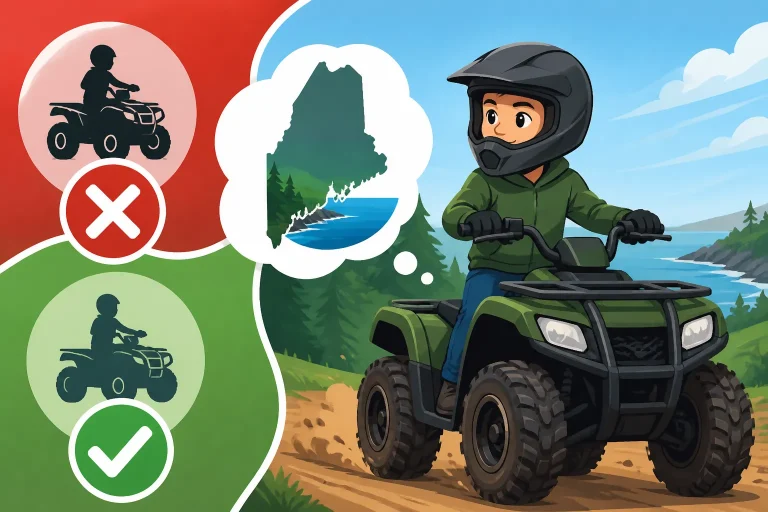
Maine requires people under 18 to wear a helmet when operating or riding as a passenger on an ATV. The helmet must meet an accepted safety standard. This applies to young riders on ATVs and, where the machine is classified as an ATV, UTVs as well. A parent or group leader should check both the rider’s age and the vehicle’s classification rather than assume that a side-by-side is exempt.
The rule is about the person wearing the helmet, not just the person driving. A young passenger needs a compliant helmet too. For age-specific details, see Maine Helmet Requirements by Age and Helmet Rules for a Maine Passenger Under 18.
For riders 18 and older, Maine does not generally require a helmet for ordinary ATV riding. That legal distinction is not a safety recommendation: a crash, rollover, branch strike, or collision can injure an adult rider just as seriously. The rules for adults are covered in Maine Helmet Law for Riders Over 18.
The practical takeaway is straightforward: if a rider under 18 will be on an ATV, choose a properly fitted helmet with credible certification markings—not a bicycle helmet, novelty helmet, or product supported only by a vague safety claim.
Which helmet standards to look for
Helmet standards can be confusing because several organizations and labels appear in product descriptions. Maine materials refer to helmets meeting recognized standards, including the U.S. Department of Transportation standard, ANSI, or Snell. When shopping, check the actual helmet and its documentation; a seller’s description alone is not enough.
| Marking or standard | What it indicates | What to check |
|---|---|---|
| DOT, FMVSS No. 218 | The manufacturer certifies the helmet meets the U.S. motorcycle helmet safety standard | Look for the DOT marking and required manufacturer identification on the helmet, not just in the listing |
| Snell certification | A helmet has been tested against a Snell Foundation standard | Confirm that the specific model is certified and that the label or documentation belongs to that model |
| ANSI standard | The helmet is represented as meeting an applicable American National Standards Institute standard | Check the exact standard cited and confirm it is suitable for motorized ATV use |
A DOT-marked helmet is a common, practical choice for ATV riding. FMVSS No. 218 is the federal motorcycle helmet standard, and manufacturers—not a retailer’s marketing copy—are responsible for certifying that their helmets comply. A DOT label is not proof that the federal government individually tested that particular helmet. Still, a correctly marked helmet from a traceable manufacturer is a stronger basis for choosing than a product page that merely says “DOT approved.”
Snell certification can be another meaningful safety indicator, but do not assume that any helmet with “Snell” in a listing is certified. The certification should apply to the particular model, and the helmet should carry the relevant label or be supported by documentation from the manufacturer. The same care applies to ANSI claims: identify the exact standard rather than relying on an unexplained acronym.
Rules and accepted standards can be revised, and helmet models change. If you are unsure whether a particular marking qualifies under Maine’s current requirements, confirm with the Maine agency responsible for ATV rules before riding. For a closer comparison of the labels, see DOT vs ANSI Helmet Standards for Riders and Maine Helmet Standards: ANSI and FMVSS 218.
How to check a helmet before buying
Start with the helmet, not the headline on a shopping page. Online listings—including listings on Amazon—can use broad phrases such as “meets DOT standards” without making it easy to see which model, certification, or label the claim refers to. Ask the seller for clear photos of the helmet’s markings and check the manufacturer’s own information if anything is unclear.
Use this checklist:
- Identify the exact model. Make sure the product name, model number, and size match the manufacturer’s records. A certification claim for one model does not automatically apply to every helmet sold under the same brand.
- Inspect the certification marking. For a DOT-marked helmet, check for the DOT symbol and manufacturer identification on the helmet. For Snell or ANSI claims, check the specific certification or standard cited and confirm it applies to that model.
- Check that it is a motorized-vehicle helmet. A bicycle helmet or casual novelty helmet is not a substitute for a helmet intended for ATV or motorcycle use.
- Avoid damaged or questionable used helmets. A helmet may have hidden impact damage even if the outer shell looks fine. Be cautious with used helmets, especially if their crash history, age, storage conditions, or certification cannot be verified.
- Confirm the size and fit in person if possible. A correctly certified helmet that moves around, pinches badly, or cannot be fastened properly is a poor choice.
- Read the manufacturer’s care and replacement guidance. Follow its advice about cleaning, storage, and what to do after an impact.
When comparing models, prioritize a verifiable safety marking, a secure fit, and a design suited to the way the machine will be used. Extra features may improve comfort or visibility, but they do not make up for an uncertain certification or poor fit. For more shopping checks, see Buying a Helmet That Meets the Standard.
Fit, riding conditions, and UTV use
A helmet should sit level and snug, with the front edge positioned correctly rather than tipped far back. It should not slide around when the rider moves their head. Fasten the chin strap as the manufacturer directs; an unfastened strap can allow the helmet to come off in a crash. If the rider is between sizes, try more than one size or model instead of choosing a loose helmet for comfort.
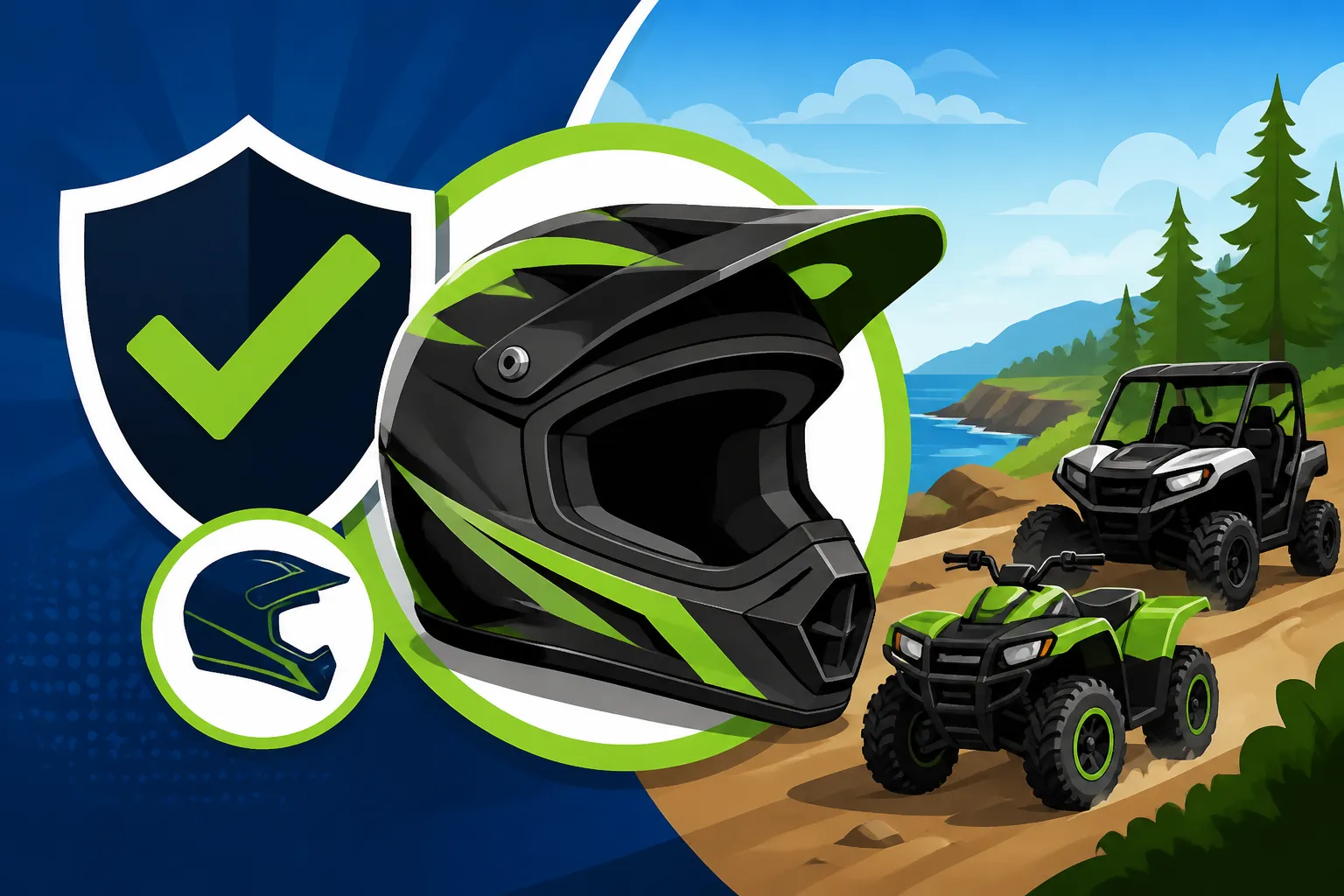
The helmet must also suit the vehicle and ride. Many ATV riders use a full-face helmet or an off-road design with a visor and room for goggles. Whatever style you choose, it should be intended for motorized riding and carry the required safety certification. Eye protection matters too: dust, branches, and debris can make a trail ride unsafe even when the helmet itself is compliant.
For a UTV, do not treat the roll cage or seat belt as a replacement for a helmet when the rider is under 18 and the law requires one. Check the machine’s classification, use the restraint system as directed by its manufacturer, and make sure each occupant has equipment suited to the vehicle. A helmet should not interfere with a properly positioned seat belt, head restraint, or safe seating posture.
Adults who are not legally required to wear a helmet should still consider one, especially on unfamiliar trails, at higher speeds, or when riding with passengers. Helmets also need to be replaced when they have been involved in an impact or show damage, and they should be inspected regularly for loose parts, worn straps, or deterioration. A helmet is only one part of safe riding: supervision, appropriate speed, visibility, and following trail rules still matter.
Before heading out, make sure every young rider has a compliant helmet that fits, is fastened, and is appropriate for the machine. If you need to review other age-related requirements, see Maine ATV Age Rules for Riders Under 16.
Disclaimer
This article is for general informational purposes only and does not constitute professional advice. Laws, prices and regulations vary by location and change over time. Consult a qualified professional for guidance on your specific situation.