What a Dealer Files for You
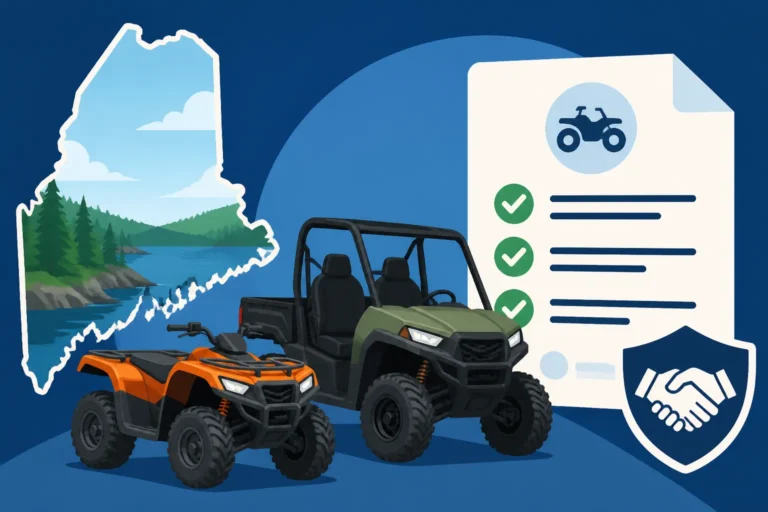
Buying a new or used ATV or UTV from a dealership in Maine can feel like a whirlwind of paperwork, signatures, and handshakes. It’s easy to get swept up in the excitement of getting a new machine and wonder what exactly the dealer is doing behind the counter with all those forms. This guide will walk you through the typical documents and processes your Maine ATV dealer handles for you, so you can ride off with confidence and a clear understanding of the nitty-gritty details.
The Initial Sales Paperwork: Getting the Deal Down on Paper
When you decide to purchase an ATV or UTV from a dealer, the first flurry of activity revolves around formalizing the sale. This isn't just a casual agreement; it's a legal contract that protects both you and the dealership. It's often the most detailed part of the process, laying out every aspect of your purchase, from the specific machine to the final cost.
The Sales Agreement and Bill of Sale
Every dealer will have a sales agreement or purchase contract. This is the cornerstone document that details the specific ATV or UTV you're buying, its Vehicle Identification Number (VIN), the agreed-upon price, any trade-in allowances, and the total amount due. It outlines the terms of the sale, including any warranties, disclaimers, and payment schedules. While it might look intimidating with all its fine print, it's designed to be comprehensive. Take your time to read it, ensuring all the figures match what you've discussed and agreed upon. This document transitions into a bill of sale, which legally transfers ownership from the dealer to you once payment is complete. For those who ever find themselves in a private sale, drafting a clear bill of sale can be crucial, and resources like LawDepot can offer templates to ensure all necessary details are included.
Odometer Disclosure Statement
For most motorized vehicles, including ATVs and UTVs, an odometer disclosure statement is a required federal document. This form states the mileage of the machine at the time of sale. While ATVs and UTVs might not accumulate miles like a car, accurately reporting the odometer reading is still a legal requirement, especially for used machines. The dealer will complete this form, and you, as the buyer, will acknowledge the reported mileage by signing it. It's a small but significant detail that adds transparency to the sale, especially important when considering the lifespan and usage of off-road vehicles.
Warranty and Manufacturer Information
If you're buying a brand-new ATV or UTV, the dealer will provide you with all the manufacturer's warranty information. This typically includes a booklet detailing what's covered, for how long, and any limitations. They'll also register your machine with the manufacturer, ensuring that your warranty coverage is activated and that you receive any important recall notices or product updates directly from the factory. For used machines, the dealer might offer their own limited warranty or sell the machine "as-is," which will also be clearly stated in the sales agreement. Understanding these warranty details before you sign is key to knowing what support you can expect should an issue arise with your new ride.
Handling the Maine Sales Tax
One of the biggest conveniences of buying from a licensed dealer is that they handle the sales tax for you. You don't have to worry about calculating it or sending a separate check to the state; it's all rolled into the transaction. This simplifies the process immensely compared to a private sale where you'd typically have to handle the use tax yourself.
Collecting and Remitting Sales Tax to Maine Revenue Services
In Maine, there's a sales tax on most retail purchases, and ATVs and UTVs are no exception. The dealer is legally obligated to collect this sales tax from you at the point of sale. They will calculate the sales tax based on the purchase price of the machine (after any trade-in deductions) and include it in your final bill. After collecting it, the dealer will then remit these funds to Maine Revenue Services on your behalf. This means that once you've paid the dealer, your sales tax obligation for that purchase is fulfilled, taking a significant burden off your shoulders. This entire process is typically completed electronically or through regular filings the dealer makes. For a deeper dive into how this works, you can check out [Maine Sales Tax on an ATV Purchase].
Accounting for Trade-Ins and Tax Reduction
If you're trading in an old ATV, UTV, or even another vehicle towards the purchase of your new machine, this can significantly impact the sales tax you pay. In Maine, when you trade in an item of value to a dealer, the taxable amount of your new purchase is reduced by the trade-in value. For example, if you're buying a new UTV for $15,000 and trading in your old ATV for $5,000, you'll only pay sales tax on the $10,000 difference. The dealer will meticulously document this trade-in on your sales agreement and calculate the sales tax accordingly, ensuring you get the correct reduction. It's a substantial benefit to trading in with a dealer versus selling privately, as it directly lowers your tax liability.
Facilitating Your Maine ATV Registration
This is perhaps the most crucial service a dealer provides after the sale itself – getting your machine legally ready for the trails. Maine requires all ATVs and UTVs to be registered with the Maine Department of Inland Fisheries and Wildlife (IF&W) before they can be operated on public lands or trails. Dealers are authorized agents for this process, saving you a trip to your town office or the IF&W.
Completing the Registration Application
When you buy your ATV or UTV, the dealer will have you fill out the necessary registration application form. This form collects all the vital information about you (the owner) and the machine (VIN, make, model, year, engine size). They'll ensure all fields are correctly completed, reducing the chance of your application being rejected. It's important to provide accurate information here, as this is what will be on your official registration certificate. You'll typically pay the registration fees directly to the dealer, along with the sales tax and the purchase price of the machine. These fees cover your annual registration and contribute to trail maintenance and programs across the state.
Submitting Documents to Maine IF&W
Once the application is complete and you’ve signed on the dotted line, the dealer doesn’t just hand you a form and wish you luck. They will take your completed application and any supporting documentation (like the original Certificate of Origin for a new machine, or the bill of sale for a used one) and submit it to the Maine IF&W on your behalf. This is a huge convenience, as it means the dealer handles the administrative legwork, saving you from having to mail documents or visit an IF&W office yourself. They act as an intermediary, ensuring your paperwork gets to the right place efficiently. For more on what documentation proves ownership, see [Proof of Ownership for a Maine ATV Registration].
What About Titles?
This is a common point of confusion for many new ATV and UTV owners, especially those accustomed to registering cars. In Maine, ATVs and UTVs are not titled. This means there is no state-issued title document like there would be for a car or truck. The primary proof of ownership for a new machine is its Manufacturer's Certificate of Origin (MCO), and for used machines, it's typically a clear bill of sale from the previous owner. Since Maine doesn't title ATVs, your dealer will not file for a title on your behalf because one simply doesn't exist for these types of vehicles in our state. Your registration certificate serves as your official permission to operate the machine. This is a critical distinction, and you can learn more about it in [Does Maine Title ATVs?].
Receiving Your Temporary Registration and Permanent Stickers
Immediately after you complete the registration process at the dealership, they will usually issue you a temporary registration confirmation page. This is a printout that serves as your legal registration until your official stickers and card arrive in the mail from IF&W. This means you can often ride your new machine right away! This temporary confirmation is vital for immediate trail access. The actual, permanent registration card and stickers are typically mailed directly to you from IF&W, usually arriving within a couple of weeks. For specifics on how long this typically takes, check out [Maine ATV Registration Sticker Delivery Time]. Make sure to keep your temporary registration accessible on your machine until the permanent ones arrive.
Financing and Lienholder Paperwork
If you're financing your ATV or UTV purchase, the dealer plays a significant role in coordinating all the financial paperwork. This involves more than just signing a loan agreement; it's about securing the lender's interest in your new machine.
Coordinating with Your Lender
When you finance an ATV or UTV through a dealership, whether directly with their in-house financing or through a third-party bank or credit union they partner with, the dealer acts as a central hub. They will communicate directly with the lender to get the loan approved, prepare all the necessary loan documents, and ensure they are signed by you. This includes the promissory note, which is your promise to repay the loan, and a security agreement, which grants the lender a lien on the ATV or UTV until the loan is paid off. The dealer will typically submit all required paperwork to the lender to finalize the loan disbursement.
Ensuring the Lien is Recorded
Since Maine doesn't issue titles for ATVs and UTVs, the way a lien is recorded for these vehicles differs from cars. For ATVs and UTVs, the lienholder's information (the bank or credit union that provided the loan) will typically be noted on your registration application and subsequently recorded on the state's registration system. The dealer will ensure that all the necessary information about your lender is correctly included on the registration paperwork submitted to IF&W. This alerts the state that there's a financial interest in the machine, protecting the lender's investment. This means if you ever decide to sell the machine before the loan is paid off, the lien will need to be satisfied first.
Your Responsibilities After the Dealer's Work
While dealers handle a considerable amount of the heavy lifting, you still have some important roles and responsibilities to ensure everything goes smoothly and stays legal.
Reviewing and Retaining Your Documents
It’s tempting to just sign where you’re told and rush out to the trails, but it’s crucial to thoroughly review every document before you sign. This includes the sales agreement, registration application, and any financing paperwork. Make sure all names, addresses, VINs, and financial figures are correct. Once signed, the dealer will provide you with copies of all executed documents. Keep these in a safe, accessible place. This includes your copy of the bill of sale, the temporary registration, and any warranty information. These are your proof of purchase and compliance. A checklist can be very helpful; for what to include, check out [Maine ATV Purchase Paperwork Checklist].
Following Up on Your Permanent Registration and Stickers
While the dealer submits everything, the Maine IF&W sends out your permanent registration card and stickers. It’s a good idea to keep an eye on your mailbox for these. If more than a few weeks pass and you haven't received them, you should follow up. You can typically contact the Maine IF&W directly, or sometimes the dealer can help you track the status of your registration. It's your responsibility to ensure you eventually receive and affix these stickers correctly to your machine. For guidance on where they go, consult [Where Maine ATV Stickers Go and When They Arrive].
Understanding Ongoing Compliance
Once you have your machine and its registration, remember that proper operation and maintenance are ongoing responsibilities. This includes renewing your registration annually (which you can often do online via [Renewing a Maine ATV Registration Online]), carrying your registration certificate with you while riding, and adhering to all Maine ATV laws and regulations. The dealer gets you started, but keeping your machine legal and safe on the trails is up to you.
| Document/Action | Dealer's Role | Your Role |
|---|---|---|
| Sales Agreement | Drafts, explains terms, presents for signature, provides copies. | Reads, understands, signs, retains copies. |
| Bill of Sale | Creates, provides for signature, formally transfers ownership. | Reviews for accuracy, signs, retains as proof of ownership. |
| Odometer Disclosure | Completes, presents for buyer's signature. | Acknowledges, signs. |
| Manufacturer Warranty | Provides documentation, registers machine with manufacturer. | Reads, understands coverage, retains documents. |
| Sales Tax Collection | Calculates, collects from buyer, remits to Maine Revenue Services. | Pays to dealer as part of total purchase price. |
| Registration Application | Helps complete, reviews for accuracy, submits to Maine IF&W. | Provides personal & machine info, signs, pays registration fees. |
| Temporary Registration | Issues immediately upon registration completion. | Keeps on person/machine, uses for riding until permanent arrives. |
| Permanent Registration | Submits necessary paperwork to IF&W to trigger mailing. | Receives in mail from IF&W, affixes stickers, carries card while riding. |
| Lien Recording (if financing) | Ensures lender info is included on registration paperwork for IF&W. | Understands lien implications, fulfills loan terms. |
This table provides a quick overview of who does what in the typical dealership transaction. Remember, open communication with your dealer is key. Don't hesitate to ask questions if anything is unclear – they're there to help you navigate the process and get you out on the beautiful Maine trails!
Disclaimer
This article is for general informational purposes only and does not constitute professional advice. Laws, prices and regulations vary by location and change over time. Consult a qualified professional for guidance on your specific situation.