Can a UTV Be Made Street Legal in Maine?
Many UTV owners in Maine dream of the day they can legally drive their side-by-sides on public roads, enjoying the freedom and convenience of seamlessly transitioning from trail to pavement. The reality, however, is often a frustrating maze of regulations, interpretations, and significant limitations. This guide aims to demystify the complex question of making a UTV street legal in Maine, exploring the current legal landscape, the practical hurdles, and the limited avenues for road use that currently exist.
Understanding Maine's UTV Laws and Road Access
Before we dive into the nitty-gritty of "street legal," it's crucial to understand how Maine currently views UTVs and where they are permitted to operate. Unlike passenger vehicles designed for road use from the factory, UTVs (and ATVs) are primarily categorized for off-road recreational use under Maine law, and this fundamental distinction shapes everything.
How Maine Defines a UTV
In Maine, a UTV, or utility terrain vehicle, is often grouped with ATVs under the broader definition of "all-terrain vehicles" for registration and operational purposes. The law generally defines them by their intended use: off-highway recreational travel. This classification is important because it dictates the regulations that apply, specifically that they are largely excluded from general public road use. While UTVs offer side-by-side seating, a steering wheel, and often a small cargo bed, they are not automatically granted the same privileges as cars or trucks. They're built for the woods, fields, and designated trails, not for cruising down Route 1. [Maine UTV Registration and How It Differs] explains more about their basic registration status.
You might look at your UTV, with its headlights, seatbelts, and roll cage, and think, "This looks perfectly safe for the road!" And in many ways, you'd be right. But the law isn't always about perceived safety; it's about legislative categories and federal compliance. The state sees it as an off-road machine, and until specific legislation changes that, its road-going status remains heavily restricted. This can be a huge point of confusion and disappointment for new UTV owners who assume their capable machine can go anywhere.
Current Registration vs. General Road Use
Registering your UTV in Maine is a mandatory step for operating it on any land other than your own property. This registration process is relatively straightforward, typically handled through the Maine Inland Fisheries & Wildlife (IF&W) or a town office. However, registering your UTV simply means it's legal to operate on designated ATV trails and private land with permission; it absolutely does not grant you blanket permission to drive it on public roads.
This distinction trips up many riders. They've paid their fees, received their decals, and have valid paperwork, so why can't they drive to the store? The registration is for off-road recreational use, period. It doesn't transform your UTV into a street-legal vehicle like a car or motorcycle. The state has separate systems for vehicle registration that meet federal highway safety standards, and UTVs simply don't fall into that category as manufactured.
The Difference Between ATV/UTV Trails and Public Ways
Maine boasts an incredible network of ATV and UTV trails, maintained by dedicated clubs and facilitated by generous landowners. These trails are specifically designed and approved for off-road vehicle use. Public ways, on the other hand, refer to paved or public gravel roads maintained by the state or municipalities for conventional motor vehicle traffic. The rules for operating on these two types of surfaces are dramatically different.
On ATV trails, you're generally permitted to ride your registered UTV, following all state and club rules. On a public way, however, your UTV is largely prohibited from operation except for very specific and limited circumstances. This distinction is paramount to understanding why true "street legality" for a UTV in Maine is such an elusive concept. The infrastructure and legal framework for ATV and UTV use are distinct from those governing street-legal vehicles, leading to the ongoing frustration for riders who want more flexibility.
The "Street Legal" Hurdle: Why It's Tricky in Maine
The idea of truly making a UTV street legal in Maine isn't just about adding a few accessories; it's about navigating a complex legal and regulatory environment that fundamentally views these machines as off-road vehicles. Maine's laws, coupled with federal standards, create a significant barrier to full street legality.
Lack of State-Wide Legislation for UTV Road Use
Maine currently lacks comprehensive state-wide legislation that would allow UTVs to be registered and operated as street-legal vehicles across all public roads. Unlike some other states that have enacted specific laws to permit UTVs on certain classes of public roads (often with speed limits or time-of-day restrictions), Maine has not taken this step. This means there isn't a clear path or process for an individual owner to convert their off-road UTV into a vehicle that meets the requirements for general public road use under Maine law.
This absence of specific legislation creates a vacuum where riders might hope for a loophole, but often find themselves facing ambiguity or outright prohibition. The state's default position is that if a vehicle doesn't explicitly meet the definition and requirements for street-legal operation, it simply isn't allowed. This is a common point of contention for UTV enthusiasts who see their machines as capable and safe, yet remain confined to trails and very specific road segments.
Manufacturer Certification vs. State Law
When you purchase a new UTV, it comes with a manufacturer's certificate of origin (MCO) or title. This document typically classifies the vehicle as an "off-road use only" machine. This classification is crucial because it indicates that the UTV, as manufactured, does not comply with the Federal Motor Vehicle Safety Standards (FMVSS) required for vehicles driven on public highways. Maine's vehicle registration system relies heavily on this initial manufacturer classification.
Even if you modify your UTV with various street-legal accessories, the original manufacturer's designation often remains a sticking point. Unless the vehicle goes through an incredibly rigorous (and usually prohibitively expensive) re-certification process to prove it meets FMVSS standards – a process typically only undertaken by manufacturers, not individual owners – it's unlikely to be reclassified by the state for general road use. This gap between what a UTV could be and how it's legally categorized is a primary barrier.
The Federal Motor Vehicle Safety Standards (FMVSS) Challenge
The biggest hurdle for UTVs achieving true street legality lies in the Federal Motor Vehicle Safety Standards (FMVSS). These are a set of minimum performance requirements for motor vehicles and equipment established by the National Highway Traffic Safety Administration (NHTSA) to ensure the safety of road-going vehicles. Everything from crumple zones and airbag deployment to braking distances, lighting requirements, and emissions standards falls under FMVSS.
UTVs are not designed or manufactured to meet FMVSS. They lack features like impact-absorbing bumpers, specific occupant protection systems, and often the advanced emissions controls found in street vehicles. Retrofitting a UTV to genuinely comply with every FMVSS standard would be an engineering nightmare, costing far more than the machine itself, if it were even possible for an individual. Because Maine's vehicle registration system is tied to federal standards for highway use, any vehicle not originally certified by the manufacturer as FMVSS-compliant faces an almost insurmountable barrier to being deemed "street legal" for general public roads. This is the core reason why most UTVs remain off-road only machines in Maine.
What Equipment You'd Theoretically Need for Road Use
While a UTV can't be truly street legal for general public roads in Maine without a major legislative shift or manufacturer re-certification, it's helpful to understand what equipment is generally considered essential for any vehicle operating on public ways. For the limited road access currently permitted for UTVs in Maine (such as crossing public ways or on designated municipal access routes), some of these items are already required or highly recommended for safety.
Essential Lighting and Reflectors
For any road use, visibility is paramount. A truly street-legal vehicle would need headlights with high and low beams, turn signals both front and rear, brake lights, and a taillight that is continuously illuminated. These lights would need to meet specific photometric standards for brightness, beam pattern, and visibility from various angles. Most modern UTVs come with headlights and taillights, but turn signals are often an aftermarket addition. [Street-Legal UTV Equipment Lists] often detail these.
Beyond active lighting, reflectors are also critical. Retroreflective materials on the sides and rear of the vehicle help ensure visibility when lights aren't active or from specific angles. While many UTVs have some basic reflectors, a street-legal setup would typically require more comprehensive placement and specific types of reflective material to comply with regulations. Companies like SuperATV offer extensive lighting kits and accessories that can dramatically improve a UTV's visibility, even if they don't fully achieve street-legal status.
Mirrors, Horn, and Safety Belts
To safely operate on a public road, a driver needs to be aware of their surroundings. This means a rearview mirror (or multiple mirrors for wider fields of view) is essential. A horn is also a fundamental safety device, allowing a driver to alert others to their presence or potential hazards. Most UTVs come standard with safety belts, typically three or four-point harnesses, which are crucial for occupant safety in an off-road environment and would be non-negotiable for road use.
The specific placement and size of mirrors, the decibel level of the horn, and the certification of safety belts (e.g., DOT approval) would all fall under street-legal requirements. While UTVs are equipped with many of these components, they might not meet the precise specifications required for a vehicle to be fully compliant with highway safety standards. Riders often add larger mirrors or louder horns from brands like SuperATV to enhance safety, particularly if they frequently ride on multi-use trails or perform legal road crossings.
Windshields, Wipers, and Tires
A proper windshield made of safety glass (laminated or tempered) is usually required for street-legal vehicles, along with functional windshield wipers to ensure clear visibility in all weather conditions. Many UTVs have optional polycarbonate windshields, which are excellent for off-road durability but may not meet the same shatter-resistance standards as automotive safety glass. Wipers are also often optional or less robust than those found on cars.
Tires are another key component. Street-legal vehicles typically require DOT-approved tires designed for highway speeds and pavement traction, with specific tread patterns and load ratings. UTV tires, while incredibly capable off-road, often have aggressive knobby treads that wear quickly on pavement and may not be rated for sustained highway speeds. Swapping to DOT-approved tires is a common modification for UTV owners seeking more road capability, and SuperATV offers various tire options, including more road-friendly patterns. However, even with all these modifications, the UTV itself would still not be considered fully street-legal for general operation in Maine without legislative changes.
Licensing, Registration, and Inspection
If UTVs were to become truly street legal in Maine, they would undoubtedly require a standard motor vehicle operator's license (not just an ATV safety course certificate) to drive on public roads. Their registration process would likely shift from the IF&W to the Bureau of Motor Vehicles, with different fee structures and plate requirements, similar to cars and trucks. Furthermore, annual vehicle inspections, ensuring all safety equipment is functional and compliant, would almost certainly become mandatory.
Currently, for the limited road access that does exist, your standard UTV registration and typically a valid driver's license (for public road sections) are what's needed. The absence of a state inspection program for UTVs also highlights their non-street-legal status; inspections are a cornerstone of ensuring highway safety compliance for passenger vehicles.
The Reality of Maine's UTV Road Access
Given the challenges of full street legality, it's important to focus on the existing, albeit limited, avenues for UTV road use in Maine. These exceptions are specific and come with strict rules that riders must understand and follow to avoid penalties.
Maine's 500-Yard Limit on a Public Way
One of the most common and often misunderstood provisions for ATV and UTV road use in Maine is the 500-yard limit. State law permits a registered ATV or UTV to operate on a public way for a distance not to exceed 500 yards for the sole purpose of gaining access to another trail or private property where ATV/UTV operation is permitted. This is a very specific exception, not a general allowance for road travel. [Maine's 500-Yard Limit on a Public Way] delves into the specifics.
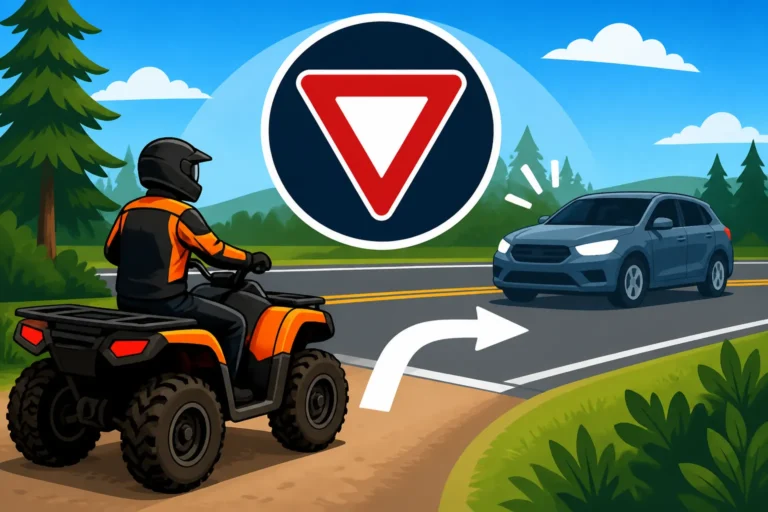
When exercising this privilege, you must operate on the extreme right of the traveled way, face oncoming traffic if on the shoulder, and yield to all motor vehicle traffic. You cannot simply drive 500 yards down the road just because you feel like it; there must be a genuine, necessary connection to another trail or private land where you have permission to ride. Misinterpreting this rule is a frequent reason riders find themselves in trouble with the Maine Warden Service.
Designated ATV-Access Routes in Towns
A more expansive form of limited road access comes through municipal action. Maine law allows towns to designate specific public ways, or portions thereof, as ATV/UTV access routes. These are usually clearly marked and are intended to connect trails, allow access to gas stations, restaurants, or other services, or simply facilitate travel within the town. These routes are decided by local select boards or town councils and often reflect the specific needs and desires of the community. [Maine ATV-Access Routes and How Towns Post Them] provides detailed information on how towns establish these.
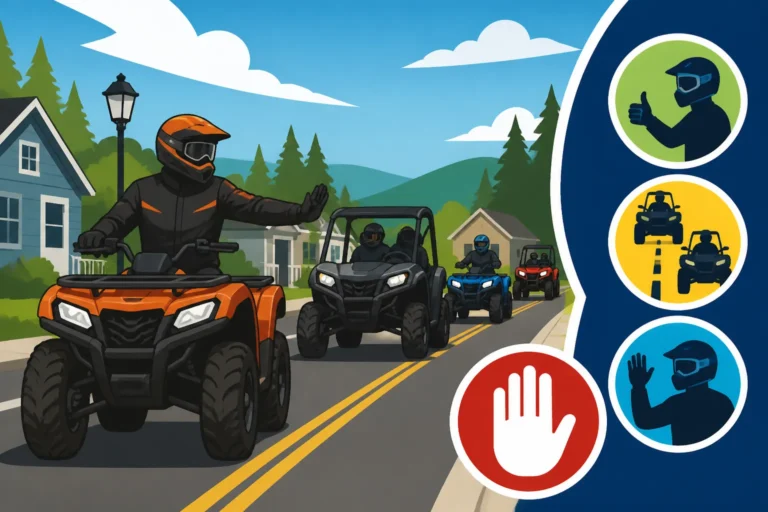
When riding on a designated ATV-access route, you must still adhere to specific rules, which often include speed limits (sometimes lower than the posted vehicle speed limit), operating on the extreme right, and yielding to other traffic. It's crucial for riders to research and understand which towns have designated these routes and exactly where they are. What's legal in one town might be illegal just a mile down the road in another.
Riding on Private Roads and Dirt Town Roads
Many miles of Maine's landscape are crisscrossed with private roads, logging roads, and unmaintained dirt town roads. The rules for UTV use on these roads can vary significantly. On private roads, you generally need explicit permission from the landowner to operate your UTV. Without it, you are trespassing, even if the road appears open and publicly accessible. Many landowners, especially those managing active woodlots, may restrict ATV or UTV use for safety or maintenance reasons.
For dirt town roads, especially those that are not maintained year-round or are clearly not primary public thoroughfares, the legal status can be a bit murkier. Generally, if it's a "public way" in the eyes of the municipality, even if unpaved, the same restrictions for UTVs apply as to paved roads, unless it has been specifically designated as an ATV access route. [Maine ATV Rules on Dirt Town Roads] provides more insights here. Always assume it's restricted unless explicitly stated otherwise by town ordinance or signage.
Insurance and Legalities Beyond Equipment
Even if a UTV somehow met every physical equipment requirement for road use, there are crucial legal and insurance considerations that are often overlooked. These aspects are designed to protect both the operator and the public on shared roadways.
Liability Insurance Considerations
For any vehicle operating on a public road, liability insurance is a fundamental requirement. It protects you financially in the event you cause an accident, covering damages to other vehicles, property, and injuries to other people. While Maine does not generally mandate liability insurance for off-road ATV/UTV use, if a UTV were to be considered street-legal, it would absolutely fall under the state's mandatory motor vehicle insurance laws. [Insurance for a Road-Ridden UTV] explains the complexities.
The challenge here is that most standard ATV/UTV insurance policies are designed for off-road use and may not provide adequate (or any) coverage for liability incurred while operating on public roads. Trying to adapt an off-road policy for street use, or even finding an insurer willing to write a policy for a modified UTV as a street-legal vehicle, would likely be incredibly difficult and expensive, if not impossible. This financial and legal protection aspect is just as critical as having functional headlights and a horn.
Driver's License Requirements
If a UTV were to gain street-legal status, operators would undoubtedly need a valid Class C driver's license (the standard automobile license) to operate it on public roads. The current ATV/UTV safety course certificate, while important for young riders and recommended for all, is not a substitute for a driver's license when operating on public ways. This is a point of confusion, especially for younger riders or those accustomed to only off-road environments.
The distinction is clear: a driver's license proves you've met the state's requirements for safely operating a motor vehicle on public roads, including knowledge of traffic laws. An ATV safety course focuses on safe off-road operation. Until a UTV is recognized as a street-legal vehicle, requiring a driver's license for its operation on public roads, any operation beyond the very limited exceptions risks significant penalties, including citations for operating an unregistered vehicle or without a proper license.
Penalties for Non-Compliance
The penalties for operating an unregistered or improperly equipped UTV on public roads in Maine can be severe. These can range from significant fines to having your UTV impounded. Wardens and local law enforcement are well-versed in ATV/UTV laws and regularly patrol areas where illegal road use might occur. They are particularly vigilant about protecting the safety of the public and the integrity of the trail system. [Maine Warden Service ATV Patrols] often includes information on common violations.
Beyond fines, there's the very real risk of liability in an accident. If you're operating a UTV illegally on a public road and are involved in a collision, your insurance may not cover you, leaving you personally responsible for substantial medical bills, vehicle repairs, and potential lawsuits. This financial risk alone should make any UTV owner think twice before attempting to operate their machine on general public roads without clear legal authorization.
The "Montana LLC" Debate and Maine Risks
Many UTV owners, frustrated by restrictive state laws, often hear about the "Montana LLC" strategy as a way to circumvent their home state's street-legal requirements. While this approach has gained some traction in other parts of the country for certain types of vehicles, it carries significant risks and is generally not advised for Maine residents seeking to make their UTV street legal.
How the Montana LLC Strategy Works
The Montana LLC strategy involves forming a limited liability company (LLC) in Montana and then registering your UTV (or other recreational vehicles) through that LLC. Montana has more lenient laws regarding the street legality of certain vehicles and does not levy sales tax on vehicle purchases. The idea is that by registering the vehicle in Montana under the LLC, you can bypass your home state's stricter registration and sales tax rules, and potentially operate a vehicle that wouldn't be street legal where you live.
Proponents argue that since the LLC owns the vehicle, and the LLC is based in Montana, the vehicle is legally registered there. They then operate the vehicle in their home state, relying on reciprocity laws that typically honor out-of-state registrations. This approach primarily targets the registration and sales tax aspects, aiming to exploit differences in state laws to achieve desired outcomes for vehicle ownership and operation.
Why Maine Views It Differently
Maine's Bureau of Motor Vehicles (BMV) and tax authorities are generally aware of the Montana LLC strategy. They view it as a tactic to avoid Maine's sales tax, excise tax, and registration laws, particularly if the vehicle is primarily garaged or operated in Maine by a Maine resident. If you are a Maine resident, and your UTV is stored, used, and primarily operated within the state, Maine law typically dictates that it should be registered in Maine and subject to Maine's sales and excise taxes, regardless of which state's LLC "owns" it. [The Montana LLC Route and What Maine Owners Risk] offers a deeper dive into these pitfalls.
Maine's laws are designed to capture revenue from vehicles used within the state and to ensure all vehicles operating on its roads comply with its safety and registration standards. Simply registering a UTV through a Montana LLC does not magically make it compliant with Maine's definition of a street-legal vehicle for general road use. It only means it's legally registered in Montana; it does not change its classification or operational permissions in Maine.
The Risks and Potential Consequences
The risks of using the Montana LLC strategy for a UTV primarily operated in Maine are substantial. Firstly, you could be cited for failure to register your vehicle in Maine, operating an unregistered vehicle, or even tax evasion. This can result in significant fines, back taxes, penalties, and potentially impoundment of your UTV. Local law enforcement and wardens are increasingly aware of this strategy and are trained to identify vehicles that appear to be circumventing local laws.
Secondly, in the event of an accident on a public road, your insurance coverage could be jeopardized. If the insurer determines you misrepresented the vehicle's primary operating location or circumvented state laws, they could deny your claim, leaving you personally responsible for all damages and injuries. The legal complexities of owning a vehicle through an out-of-state LLC, coupled with operating it in a state with different laws, can lead to a legal quagmire that far outweighs any perceived benefits. It's simply not a viable or safe pathway to "street legal" status in Maine for a UTV.
Practical Steps for Limited Road Use in Maine
While true street legality for UTVs remains out of reach in Maine, there are legitimate, legal ways to incorporate limited road use into your riding experience. These steps involve understanding and respecting local ordinances and state statutes regarding ATV/UTV operation.
Researching Local Ordinances
The most crucial step for any UTV owner hoping to use their machine on any public road is to thoroughly research the specific ordinances in the towns where they plan to ride. As mentioned, Maine law allows municipalities to designate specific roads or sections of roads as ATV/UTV access routes. These routes are not universal; they vary significantly from town to town. What's allowed in one town might be strictly prohibited in its neighbor. [Maine Towns That Register ATVs] often have information about local rules.
You can usually find this information on a town's official website, by contacting the town office, or by consulting local ATV clubs. Many clubs work closely with towns to establish and maintain these access routes, and they are an invaluable resource for current and accurate information. Don't assume anything; always verify the local rules before venturing onto a public road. A quick phone call can save you a significant fine and a lot of headaches.
Riding to a Gas Station or Restaurant on Designated Routes
One of the primary benefits of designated ATV/UTV access routes is the ability to connect to essential services and amenities. Many towns, particularly in popular riding regions like Aroostook County or the Moosehead Lake area, have established routes that allow riders to legally access gas stations, restaurants, general stores, and lodging establishments. This capability dramatically enhances the overall trail riding experience, allowing for multi-day trips and reducing the need to trailer your UTV to town.
When using these routes, remember to treat them with the same respect you would any public road. Obey all traffic laws, speed limits (which may be lower for UTVs than for cars), and yield to conventional traffic. The continued success of these routes depends heavily on responsible rider behavior. Abuse of these privileges can lead to towns rescinding access, which is a loss for everyone. For example, [Riding to Dinner on an ATV Route] describes this convenient aspect of trail riding.
Crossing a Public Way Safely
Even if you're not on a designated access route, Maine law allows for specific, limited crossings of public ways. The 500-yard rule discussed earlier is one example, but even shorter, direct crossings of a road to get from one section of a trail to another are permitted under certain conditions. These conditions are strict: you must come to a complete stop, yield to all traffic, cross at a right angle, and proceed directly across the road. You cannot ride along the road for any distance beyond what is necessary for the crossing.
Safety is paramount during any road crossing. Visibility is key, so make sure you can see oncoming traffic clearly in both directions, and that drivers can see you. Avoid crossing at blind curves or over hills. While your UTV may have bright lights, consider wearing reflective gear, especially during dawn, dusk, or adverse weather conditions. Always remember that the burden of safety and compliance rests squarely on the UTV operator.
The Future of Maine UTV Road Legalization
The landscape of UTV regulations is not static, and ongoing discussions and legislative efforts could potentially alter how these vehicles are viewed and operated on Maine roads in the future.
Legislative Efforts and Advocacy
There is a consistent, underlying desire among many UTV owners and clubs in Maine for more expansive road access. This often translates into legislative efforts at the state level. Bills are periodically introduced in the Maine Legislature seeking to expand the definition of what constitutes a "street-legal" UTV or to create new categories of vehicles that could operate on certain public roads. These efforts often aim to strike a balance between rider access, public safety, and local control.
However, such legislation faces significant hurdles, including concerns from law enforcement, environmental groups, and some members of the public regarding safety, noise, and environmental impact. The process is slow, deliberate, and often requires extensive debate and compromise. For example, [Maine Select Board ATV Route Votes] demonstrates the local-level legislative process that is already in place.
How to Get Involved as a Rider
If you're passionate about seeing greater road access for UTVs in Maine, getting involved is key. The most effective way to advocate for change is through organized groups like local ATV clubs and statewide organizations such as ATV Maine. These groups actively monitor legislation, lobby lawmakers, and work to educate the public and policymakers about the benefits and responsible use of UTVs. [Maine ATV Registration for Clubs and Businesses] shows how important these groups are.
You can also contact your state representatives and senators directly to share your views, offer practical suggestions, and highlight the economic and recreational benefits that expanded, responsible UTV road access could bring to Maine. Attending public hearings or town meetings where these issues are discussed also provides an opportunity to voice your opinion.
What Other States Are Doing
Looking at what other states have done can provide valuable insights and potential models for Maine. Many states have implemented varying degrees of UTV road legality, often categorizing them as "low-speed vehicles," "recreational off-highway vehicles (ROVs)," or establishing specific classes with equipment requirements, speed limits, and restricted road types. For example, some states allow UTVs on roads with speed limits under 35 mph, provided they meet certain equipment standards like turn signals, horns, and mirrors.
These varied approaches demonstrate that solutions exist that balance access with safety. However, each state's legal framework and local culture differ. What works seamlessly in Arizona might face different challenges in Maine's unique landscape and regulatory environment. Studying these models helps inform local advocacy efforts and provides examples of how a UTV could potentially be made street-legal within a specific framework, even if not for general highway use. [What Maine Riders Need Before They Ride] provides context for current requirements.
Special Considerations for Specific UTV Uses
Beyond recreational riding, some UTV owners have specific needs that might involve limited road use, such as farm work, logging, or commercial activities. Maine law often has specific exemptions or provisions for these functional uses that differ from general recreational riding.
Farm and Woodlot Use Exemptions
Maine law often provides specific exemptions for ATVs and UTVs when used for legitimate farm or woodlot activities. These exemptions typically allow registered machines to be operated on public roads for short distances necessary to transport equipment, move between fields, or access parts of a woodlot. These are not blanket permissions for road use, but rather targeted allowances for agricultural and forestry operations. [Maine ATV Registration for Farm and Woodlot Use] details these exemptions.
For example, a farmer might use their UTV to cross a public road to get from one parcel of land to another, or to haul firewood from their woodlot to their home, even if that involves a short stretch of public road. However, these operations must be directly related to the farm or woodlot work and not for recreational purposes. The UTV must still be registered, and safe operating practices must be observed, including yielding to all traffic.
Commercial and Business Use
Businesses, such as guide services, construction companies, or utility crews, might also use UTVs in ways that occasionally involve public road travel. Similar to farm and woodlot exemptions, specific provisions or permits may exist for these commercial uses. For instance, a registered guide service might have specific permissions to use UTVs on certain roads to access remote hunting or fishing areas, provided they are operating within the scope of their commercial license.
However, these are typically very narrow exemptions tied to the nature of the business and often require specific licensing or permits beyond a standard UTV registration. Simply owning a business does not automatically grant a UTV street-legal status. Any commercial entity relying on UTVs for road use must meticulously research and comply with all applicable state and local regulations, including any specific insurance requirements for commercial operation.
Street-Legal UTV Conversion: A Table of Common Modifications
While full street legality for general public roads is largely unattainable for UTVs in Maine, many riders choose to equip their machines with accessories that enhance safety and meet requirements for limited road use (like designated routes or crossings). This table outlines common modifications and their general purpose.
| Category | Common Modifications | Purpose for "Street Legal" Intent (or enhanced safety) | Maine Legality (for designated routes/crossings) |
|---|---|---|---|
| Lighting | Turn signal kit, Horn, License plate light, Hazard lights | Essential for signaling intentions, alerting others, legal plate illumination, emergency visibility | Required (horn, adequate lighting for night); turn signals highly recommended |
| Visibility | Side mirrors, Rearview mirror, Wider view mirrors, Reflectors | Provides view of traffic behind and to the sides; enhances visibility to other drivers | Required (one rearview mirror or two side mirrors if operating on public way) |
| Safety & Control | DOT-approved windshield (safety glass), Windshield wiper kit, Seatbelts | Clear forward visibility, functional wiping, occupant restraint | Recommended (windshield); Seatbelts Required by federal law |
| Tires | DOT-approved tires (e.g., all-terrain, radial street tires) | Designed for highway speeds and pavement traction, less wear on road | Not specifically mandated for off-road use, but important for pavement |
| Documentation | License plate bracket, Updated registration, Proof of insurance | Proper display of registration, readiness for potential street-legal classification, liability proof | Required (registration decals, valid driver's license for public way use) |
| Emissions/Noise | Aftermarket exhaust (often quieter, spark arrested), Catalytic converter | Compliance with noise limits, cleaner emissions (not typically an issue for UTVs) | Required (spark arrestor); Muffler must meet noise standards |
Remember, adding these items from brands like SuperATV makes your UTV safer and better equipped for the limited road use allowed in Maine, but it does not automatically make it street legal for general public road travel. Always refer to current Maine laws and local ordinances.
Disclaimer
This article is for general informational purposes only and does not constitute professional advice. Laws, prices and regulations vary by location and change over time. Consult a qualified professional for guidance on your specific situation.