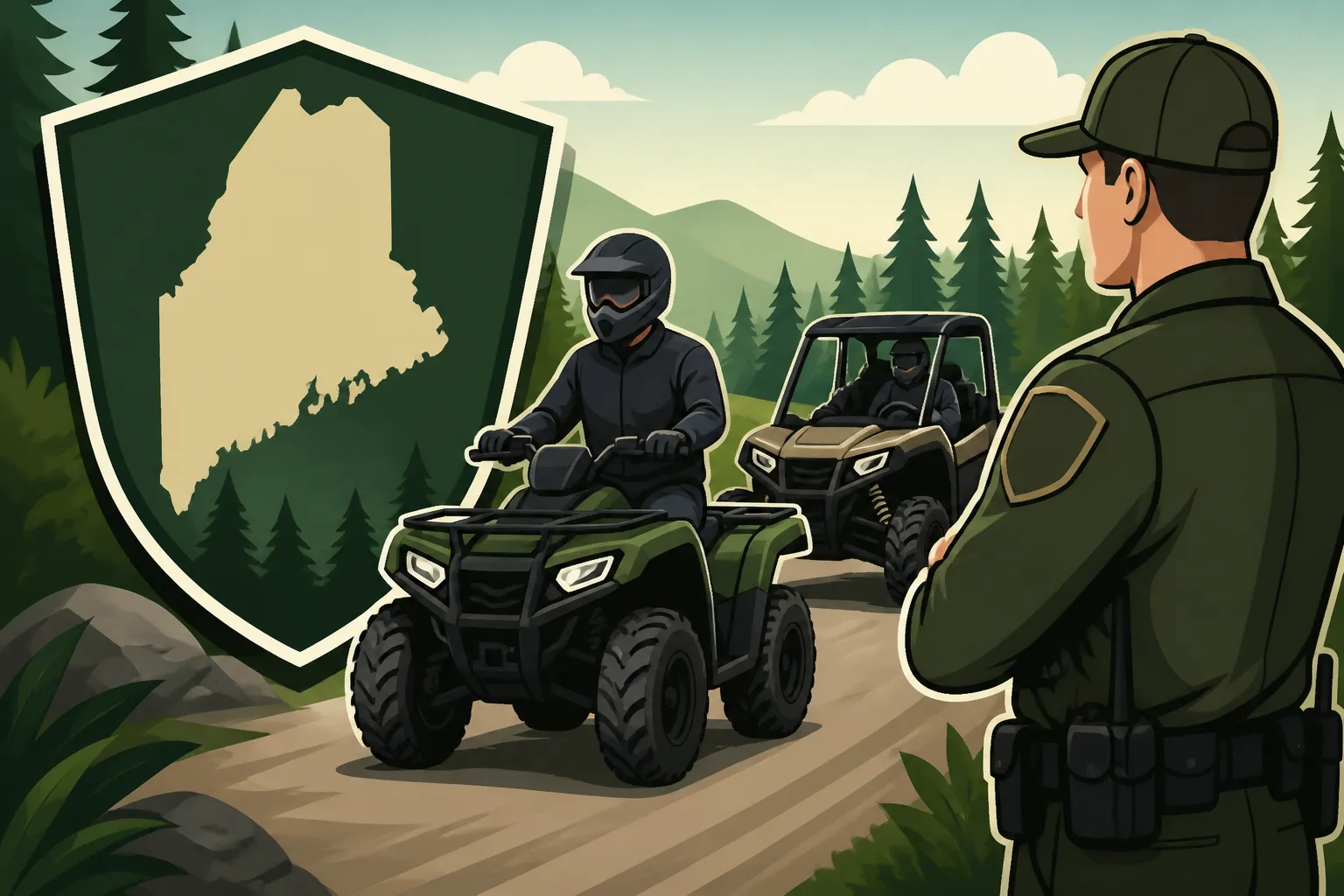
Maine Warden Enforcement on Public Ways
Riding your ATV or UTV in Maine offers unparalleled access to incredible scenery and vast trail networks, but crossing or utilizing public ways often feels like navigating a minefield of rules. Many riders grapple with anxiety when approaching a paved road crossing or designated access route, wondering if they're about to unwittingly break a law and invite a chat with a Maine Warden. This guide aims to demystify the Maine Warden Service's role in enforcing ATV and UTV regulations on public ways, providing you with clear insights into what wardens look for, how to avoid common pitfalls, and what to do if you're stopped, ensuring your ride through Maine's beautiful landscape remains as enjoyable and trouble-free as possible.
The Maine Warden Service's Role on Public Ways
Why Wardens Focus on Road Segments
It's common to think of the Maine Warden Service primarily patrolling remote woods and waterways, focusing on hunting and fishing violations. However, their jurisdiction and patrol efforts extend directly to how ATVs and UTVs interact with public ways. When your machine touches a paved road, a gravel town way, or a designated ATV access route, you're entering a highly visible and often sensitive area where different rules apply. These regulations aren't arbitrary; they are meticulously crafted to safeguard riders, protect other motorists, and crucially, maintain public support for ATV access.
A single incident—a rider speeding on a town road, an underage operator without proper gear, or a loud machine disturbing residents—can have far-reaching negative consequences. Such events can trigger complaints, erode trust with local communities and private landowners, and potentially lead to the closure of vital access routes. Wardens are acutely aware of this delicate balance. They often prioritize enforcement on public ways precisely to prevent accidents and preserve the goodwill that underpins Maine's extensive trail system. Understanding [Maine's 500-Yard Limit on a Public Way] and local town ordinances is not just about avoiding a ticket; it's about protecting the future of riding for everyone. They are the frontline in managing the intersection of recreational off-road use and everyday road traffic, a point of interaction that demands vigilant oversight.
Balancing Access with Safety and Landowner Relations
Maine's incredible ATV trail network exists largely thanks to the generosity of private landowners and the cooperation of towns that designate access points. When ATVs operate on public ways, even those legally designated for such use, they become highly visible to the general public, drawing increased scrutiny. In this context, wardens play a pivotal role as guardians of the sport's reputation. They enforce regulations that mitigate nuisance, protect private property, and ensure riders uphold the standards necessary to maintain positive community relations. This includes everything from ensuring proper safety equipment to promoting respectful operating practices.
Consider the impact of a noisy aftermarket exhaust, which, while perhaps thrilling in a remote setting, can become a significant source of complaint when an ATV passes through a residential area on an access route. Similarly, excessive speed on these shared routes poses a direct danger and casts a negative shadow on all ATV enthusiasts. Wardens are empowered to address these issues, often responding to calls from concerned citizens. Maintaining a harmonious relationship with the public and landowners is absolutely vital for the continued growth and enjoyment of ATV riding in Maine, and the Warden Service is instrumental in upholding the operational standards that make this possible. Their training equips them to identify and address potential conflicts before they escalate, preventing situations that could lead to broader restrictions on trail access.
Key Violations Wardens Actively Patrol For
Registration, Equipment, and Age Compliance
When a Maine Warden initiates a stop on a public way, their immediate focus will almost invariably be on validating the core legal requirements: Is your machine properly registered and the registration visible? Do you possess the mandatory safety equipment? Is the operator of legal age and appropriately certified? Operating an unregistered ATV, especially on a public way, is one of the quickest ways to attract a warden's attention. Your registration sticker must be prominently displayed, and you should always carry your paper registration with you. Wardens will also meticulously check that your machine adheres to fundamental equipment standards, particularly if you are operating during low-light conditions or on designated road sections. This includes fully functional headlights, taillights, and effective brakes. If you’ve added aftermarket components, perhaps from a brand like SuperATV, it’s crucial to ensure these modifications still meet Maine's specific legal stipulations for lighting, mirrors, or other safety features, especially for any public way travel.
Age compliance is another paramount area of enforcement, particularly concerning younger riders who might be traversing or riding on public roads. Maine has specific regulations regarding youth operators. For instance, [Maine Helmet Rules for Riders Under 18] are rigorously enforced, and wardens will verify that young operators have successfully completed the mandatory ATV safety course and are operating a machine that is appropriately sized for their age. Picture a scenario where a group of exuberant young riders, eager to reach the next section of trail, crosses a busy paved road without helmets or on machines clearly too powerful for them. A warden witnessing this will undoubtedly intervene, not only for the immediate safety of the children but also to ensure strict adherence to laws designed to prevent serious injury. Wardens are highly attuned to these critical details, understanding that a moment of oversight can lead to severe and lasting repercussions. For more detailed insights into specific youth riding regulations on roads, refer to [Maine ATV Rules for Riders Under 16 on Roads].
Operating Under the Influence OUI and Reckless Operation
Among the most serious violations that Maine Wardens vigilantly patrol for on public ways are Operating Under the Influence (OUI) and reckless operation. Just as with conventional motor vehicles, operating an ATV or UTV under the influence of alcohol or drugs, whether on a public way or even within the trail system, carries severe legal penalties. The laws governing [Maine ATV Operating Under the Influence] are as stringent as those for cars, and wardens are extensively trained to identify impaired operators. They recognize that combining the inherent challenges of off-road vehicle operation with the added complexities of public roads dramatically elevates the risk of catastrophic accidents.
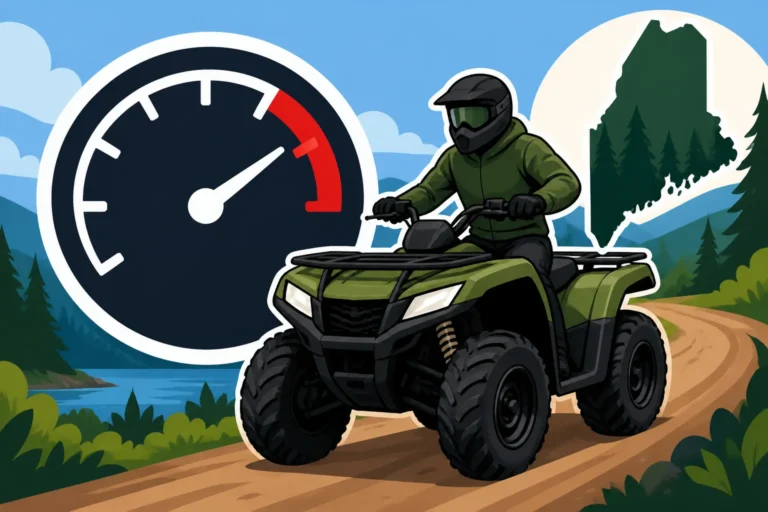
Reckless operation, encompassing behaviors such as excessive speed, blatant disregard for traffic signs (including ATV-specific signage), or performing dangerous maneuvers, is also a significant red flag for law enforcement. Specific rules, such as [Maine ATV Speed Limits Near Buildings] and designated access routes, are not mere suggestions; they are enforceable statutes designed to protect pedestrians, private property, and other motorists. A group of riders engaging in what they perceive as harmless "horseplay" by speeding through a town on an access route, is viewed by a warden as a dangerous act that endangers others and severely undermines the public's acceptance of ATV use. Wardens frequently receive complaints from concerned citizens regarding such conduct, making these areas prime targets for enforcement. The consequences for OUI or reckless operation can range from substantial fines and mandatory license suspension to vehicle impoundment and even criminal charges, reflecting the gravity of these offenses.
Trespass and Misuse of Designated Access
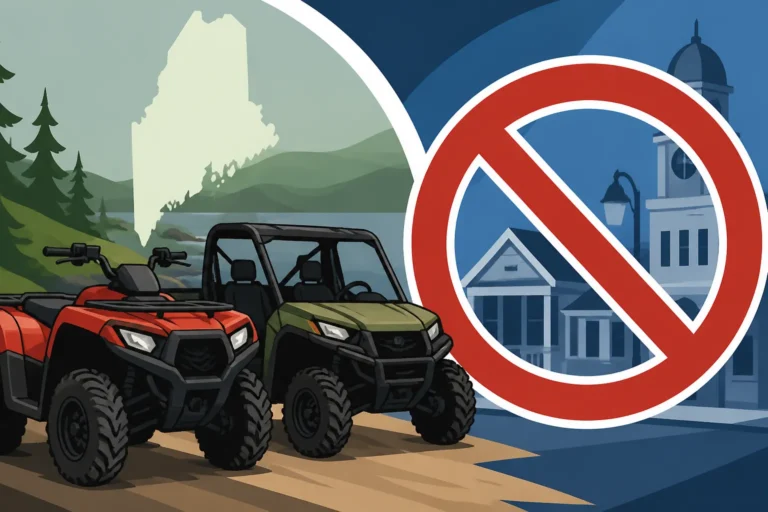
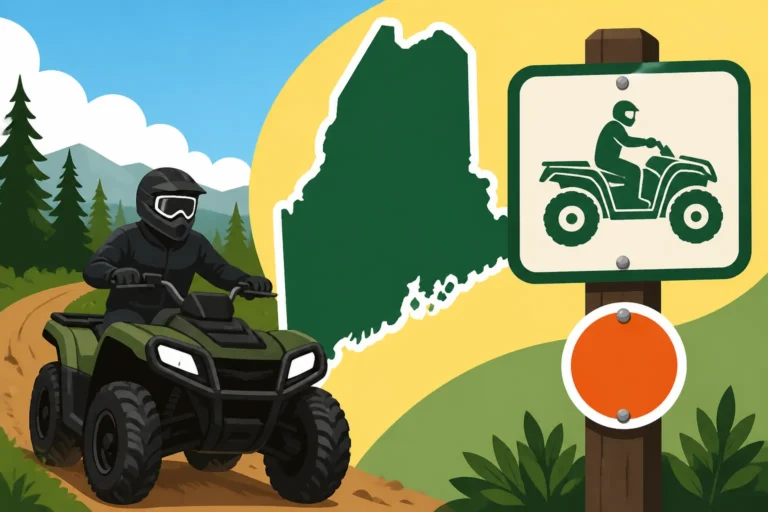
Another critical aspect of enforcement on public ways concerns trespass and the proper utilization of designated ATV access routes. It is a common misconception that every public way is open to ATV traffic. Wardens dedicate significant resources to ensuring that riders respect posted restrictions and understand the specific areas where ATVs are permitted. Many [Maine Towns That Restrict ATVs on Public Ways], and it is the rider's explicit responsibility to ascertain which routes are approved and which are unequivocally closed. Merely observing a path or dirt road and assuming it is open is a perilous gamble. Designated access routes are always clearly marked, and any deviation from these approved paths onto private property or restricted municipal roads constitutes illegal trespass.
Wardens frequently respond to direct complaints from landowners about ATVs operating where they are forbidden, particularly near residential areas, active farms, or environmentally sensitive zones adjacent to public roads. Even if a trail appears to seamlessly continue just beyond a public way, if it lacks official markings as an approved route, you could be trespassing. For instance, taking a shortcut across a private field that borders a town-approved ATV road is an action a warden could easily observe and address. Such unauthorized actions directly erode the vital trust between landowners and the ATV community, leading to swift and serious intervention from law enforcement. Wardens are mandated to protect the rights of property owners with the same diligence they apply to ensuring rider safety, making this a high-priority enforcement area.
What to Expect During a Maine Warden Stop
The Initial Interaction and Documentation
The sight of green flashing lights behind you, even when on a remote ATV trail, can certainly be unsettling. However, understanding the standard protocol for a Maine Warden stop can significantly ease the interaction. A stop typically commences with the warden signaling you to pull over to a safe location. Emulating the procedure for a car, you should pull your machine safely to the side of the trail or road, turn off your engine, and ensure your hands are clearly visible. The warden will then approach, generally identifying themselves and clearly stating the reason for the stop. This could range from a routine check for valid registration to an inquiry based on suspected specific violations. You will then be asked to produce your ATV registration, proof of ownership (such as a bill of sale), and a valid form of personal identification.
It is paramount to maintain a polite, cooperative, and truthful demeanor throughout the interaction. Maine Wardens are trained professionals whose primary objective is to ensure safety and adherence to regulations. Engaging in arguments or uncooperative behavior will only escalate the situation and complicate matters unnecessarily. It is advisable to have all your required documents readily accessible, perhaps stored in a waterproof bag that is easy to retrieve. Keeping a copy of your [Maine ATV Bill of Sale: What to Include] with your registration paperwork is a sound practice. If you have recently registered your machine online and are awaiting the physical stickers, presenting your printed [Maine ATV Registration Confirmation for Immediate Riding] is absolutely essential. Wardens are familiar with the online registration process but require tangible proof of your compliance. Remember, while their role is enforcement and public safety, a respectful interaction on your part can significantly contribute to a smoother experience.
Machine Inspection and Questioning
During the course of a stop, the warden may also perform a visual and sometimes more detailed inspection of your ATV or UTV, especially if there is a suspicion of an equipment violation. This inspection could include checking the functionality of your lights, assessing your muffler for excessive noise, verifying the presence of a spark arrestor, and examining the condition of your tires. Should your machine feature aftermarket modifications, perhaps specific components from a manufacturer like SuperATV, the warden might inquire about their compliance with existing state regulations. This is particularly relevant if the modifications appear to substantially alter the vehicle’s original specifications in a manner that could potentially compromise safety or legal operation on public ways. Their objective is to identify any aspect of the machine that might render it unsafe or non-compliant for operation, especially where public safety is a concern.
The warden might pose a series of questions regarding your travel plans, such as your intended destination, your starting point, the duration of your ride, and whether you have consumed any alcoholic beverages. If multiple riders are present, they may inquire about ownership of individual machines and who is operating each. Furthermore, during specific periods like hunting season, they might ask if you are carrying any firearms. It is advisable to provide honest and concise answers. If you are uncertain about a particular question, it is perfectly acceptable to state your uncertainty. It is important to remember that all statements made during an enforcement stop can be used in subsequent actions. This is a formal interaction, and maintaining a respectful and composed attitude is key to navigating it effectively. For an idea of the questions you might encounter regarding your machine's documentation, you might find it helpful to review [What Maine Town Clerks Ask For at the Counter], as this provides insight into the type of information officials expect riders to possess.
Penalties, Fines, and Consequences for Violations
Understanding Fines and Enforcement Actions
The repercussions for ATV and UTV violations on public ways in Maine span a considerable range, directly correlated to the severity and specific nature of the offense. For minor infractions, such as a registration sticker that is improperly displayed or the absence of a non-critical piece of safety equipment, you might receive a verbal warning or a relatively modest fine. However, more serious violations are met with substantially stiffer penalties. For instance, operating an unregistered ATV on a public way can lead to a significant financial penalty, as explicitly detailed in [Fine for an Unregistered ATV in Maine]. These are not merely token fees; they are designed to be deterrents against illegal activity and to compel adherence to established regulations.
Fines levied for Operating Under the Influence (OUI) are particularly severe, often necessitating mandatory court appearances, the suspension of both your ATV registration privileges and potentially your standard driver's license, and in cases of repeat offenses, even incarceration. Trespass fines can also be substantial, especially if any damage to private property has occurred. Wardens possess the authority to issue court summonses for more serious offenses, extending beyond simple on-the-spot citations. It is not uncommon for wardens to organize and participate in [Maine Warden Service ATV Checkpoints] specifically to intercept these types of violations, underscoring the importance of being fully compliant. A thorough understanding of the specific regulations governing public way use, such as those outlined in [Riding an ATV on the Road in Maine], is your strongest defense against encountering these penalties.
Potential for Impoundment and Loss of Privileges
Beyond monetary fines, Maine Wardens wield the significant authority to impound your ATV or UTV under certain conditions. This extreme measure is typically reserved for serious offenses such as Operating Under the Influence (OUI), repeated instances of operating an unregistered machine, or when operating a vehicle confirmed as stolen. Should your machine be impounded, you will incur additional, often considerable, costs for towing and storage. These charges can accumulate rapidly, adding to any fines and legal fees you may face. The process of reclaiming an impounded machine can be both protracted and financially draining.
Even in scenarios where your machine is not impounded, severe violations can lead to the suspension or outright revocation of your ATV registration privileges. This means you would be legally prohibited from registering any ATV in Maine for a specified period. For younger riders, violations can adversely affect their ability to obtain their mandatory ATV safety certificate or operate an ATV in the future. These consequences extend well beyond the immediate interaction with the warden; they can have profound and lasting impacts on your ability to partake in the sport. The State of Maine treats these offenses with utmost gravity due to their direct bearing on public safety and the collective reputation of responsible riders. It is therefore critical to approach every ride, particularly those involving public ways, with an unwavering commitment to respecting and adhering to all applicable laws.
Riding Responsibly on Maine's Public Ways
Pre-Ride Checks and Knowing Local Ordinances
Before you even consider setting out on Maine's trails, especially if your planned route includes segments on public ways, conducting a thorough pre-ride check is your initial and most crucial defense against potential enforcement issues. This routine should involve meticulously verifying that your ATV or UTV's registration is current and conspicuously displayed, that all essential lighting (headlights, taillights, and brake lights) is fully functional, that your muffler is equipped with a spark arrestor, and that your braking system operates effectively. Ensure that your helmet is DOT-approved and in excellent condition, particularly if you or any passenger is under the age of 18. If your machine incorporates aftermarket parts, perhaps from a reputable brand like SuperATV, it is incumbent upon you to confirm that these modifications strictly comply with all Maine state safety standards for operation on public ways.
Equally vital is a comprehensive understanding of the specific local ordinances applicable to the towns or regions you intend to traverse. Maine's diverse municipalities often maintain varying regulations concerning ATV access on their public ways. What might be explicitly sanctioned as a designated access route in one town could be unequivocally prohibited in another. To avoid issues, proactively consult online maps, leverage resources provided by local ATV clubs, and visit town office websites to accurately identify approved routes. Never proceed on an assumption; ignorance of the law is not considered a valid defense, and a warden will not hesitate to issue a citation for operating on a prohibited public way. Meticulously planning your route to utilize clearly designated [Maine ATV-Access Routes and How Towns Post Them] is a fundamental step toward responsible and legal riding.
Best Practices for Public Way Operation
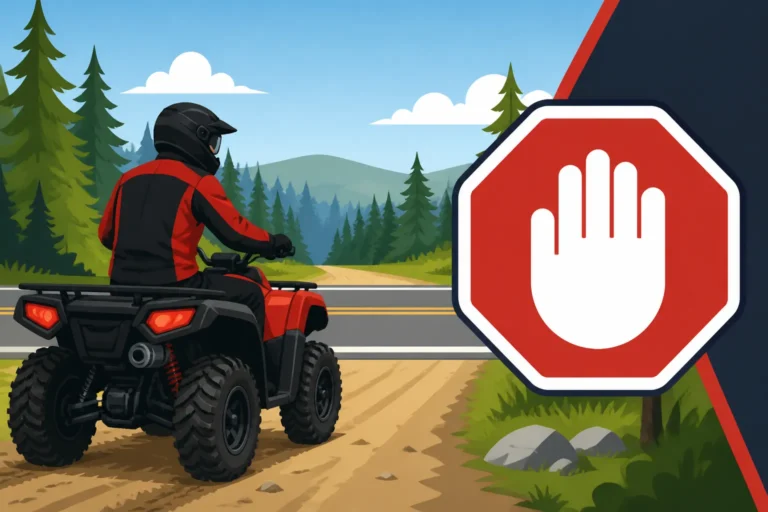
When you find yourself operating on a public way, whether it's for a brief crossing or an extended ride on a designated access route, it is imperative to adopt a highly defensive and conspicuous riding posture. Always execute a complete stop before entering any public way, diligently check for traffic from both directions, and unfailingly yield to all vehicular traffic. If your machine lacks integrated turn signals, utilize clear and unambiguous hand signals. Adhere strictly to posted speed limits, which are frequently lower on designated ATV routes than on the primary road itself, and exercise particular caution when operating near residences, businesses, and pedestrians. The directive for a [Complete Stop Before Entering a Maine Public Way] is not merely a recommendation; it is a critical safety imperative and a legal requirement.
Ride in single file, stay consistently to the extreme right of the travel lane where permitted, and conscientiously avoid creating excessive noise or dust. Cultivate a courteous and respectful demeanor toward all other road users, whether they are in automobiles, on bicycles, or walking. A simple, friendly wave can significantly contribute to fostering positive community relations. If you are riding as part of a group, ensure that every member fully comprehends and rigorously adheres to these best practices. The imprudent judgment or actions of a single rider can unjustly cast a negative light on the entire ATV community. Always remember that wardens are observant, and your conduct on public ways directly shapes the public perception of ATV use throughout Maine.
When to Seek Further Clarification
Despite your diligent efforts, the nuances of regulations can occasionally be complex, or you might encounter an unusual riding scenario where clarity is elusive. In any instance of uncertainty regarding specific regulations governing ATV or UTV use on public ways, always prioritize seeking accurate information rather than making assumptions. It is highly advisable to contact the Maine Department of Inland Fisheries and Wildlife (IF&W), the state agency responsible for ATV registration and regulatory oversight. Local ATV clubs are also invaluable resources; their members often possess up-to-date knowledge of local ordinances, designated routes, and practical advice. They may even offer specific guidance on ensuring aftermarket equipment, such as components purchased from SuperATV, remains compliant with Maine’s laws when used on public roads.
Your local town office, particularly the clerk’s department, can also provide precise details on municipal ordinances that affect ATV access within their jurisdiction. Investing the time to ask questions proactively can save you considerable trouble, potential fines, and ensure that your riding experiences in Maine remain both safe and enjoyable. The Maine Warden Service appreciates riders who demonstrate a sincere commitment to understanding and adhering to the rules, as this proactive engagement reflects a dedication to responsible riding practices. This dedication is absolutely vital for the enduring health, growth, and continued accessibility of Maine's unparalleled ATV trail system.
| Violation Category | Specific Offense | Immediate Consequence | Potential Long-Term Impact |
|---|---|---|---|
| Registration & Paperwork | Unregistered ATV/UTV | Fine, potential impoundment, warning | Higher fines for repeat, registration suspension |
| No Paper Registration on Person | Warning, request to produce later, minor fine | Could lead to suspicion of unregistered machine | |
| Operator Requirements | Underage Operator (10-15) | Fine to parent/guardian, machine stopped | Safety course requirement, future riding restrictions |
| Youth without Helmet (under 18) | Fine to parent/guardian, machine stopped | Injury risk, negative public perception | |
| No ATV Safety Course (10-15) | Fine to parent/guardian, machine stopped | Unable to ride legally without certification | |
| Equipment & Operation | No Head/Taillights (after dark) | Warning, fine, required fix before further riding | Increased accident risk, safety concern |
| Excessive Noise (modified exhaust) | Warning, fine, order to fix | Trail access restrictions, negative public image | |
| Reckless Operation/Speeding | Fine, court summons, potential impoundment | License suspension, increased insurance, injury | |
| Operating Under Influence (OUI) | Arrest, significant fines, court, impoundment | Driver's license suspension, criminal record, jail | |
| Access & Trespass | Riding on Prohibited Public Way | Fine, order to leave | Future access denied, landowner complaints |
| Trespass on Private Land (from road) | Fine, court summons, civil liability | Loss of future trail access, damaged landowner relations | |
| Failure to Yield/Stop (at road) | Fine, accident risk | Serious injury, property damage |
Disclaimer
This article is for general informational purposes only and does not constitute professional advice. Laws, prices and regulations vary by location and change over time. Consult a qualified professional for guidance on your specific situation.