Measuring 500 Yards on a Maine Road
Navigating Maine's vast network of ATV trails is an incredible experience, but it comes with its own set of rules and regulations, some of which can feel downright perplexing when you're out on the dirt. One rule that often leaves riders scratching their heads and feeling anxious is the 500-yard limit for operating on a public way. It's easy to wonder, "How far is 500 yards, really?" and the stress of potentially getting it wrong can definitely take away from the joy of your ride. This guide is here to break down this sometimes-confusing regulation and offer practical, real-world strategies for estimating and managing that distance, so you can ride confidently and legally across the beautiful Pine Tree State.
The Frustration of the 500-Yard Rule for Maine ATV Riders
Let's be honest, the 500-yard rule isn't exactly intuitive when you're trying to enjoy a leisurely ride. It creates a mental hurdle, especially when you're simply trying to connect two trail sections or make a quick dash to a local convenience store for a cold drink or to top off your fuel tank. You're out there for the freedom and the adventure, not to become an expert in distance estimation on the fly. Many riders feel a palpable sense of anxiety trying to eyeball what 500 yards actually looks like on a winding country road or a long, straight stretch of pavement. It's a common point of discussion around the campfire: "Did we go too far?" or "Is this even legal?"
The rule's intent is clear – to minimize ATV travel on public roads, prioritize safety, and reduce potential conflicts with traditional vehicle traffic. However, its practical application can be a source of genuine frustration for even the most seasoned riders. It’s one thing to know the rule, and quite another to accurately apply it in diverse terrain and varying traffic conditions, especially when you’re unfamiliar with a particular area. The stress of potentially facing a warden and a penalty for misjudging a distance can really detract from what should be an enjoyable day on the trails. It's this very real-world challenge that makes understanding and applying the 500-yard limit so important for every Maine ATV enthusiast.
Why 500 Yards? Understanding the Intent
The 500-yard rule isn't some arbitrary number pulled from thin air; it serves a very specific purpose in Maine's outdoor recreation landscape. The primary goal is to allow ATV riders a practical way to bridge short gaps between sanctioned trail systems or to access essential services like gas stations, repair shops, or local eateries that might be just off a main trail. Imagine riding a fantastic trail system only to find it abruptly ends at a paved road, with the next section visible a short distance away. Without some allowance for road travel, riders would be forced to backtrack, find a different access point, or even trailer their machines for a very short distance, which would be incredibly inconvenient and stifle exploration. This rule provides that critical connector.
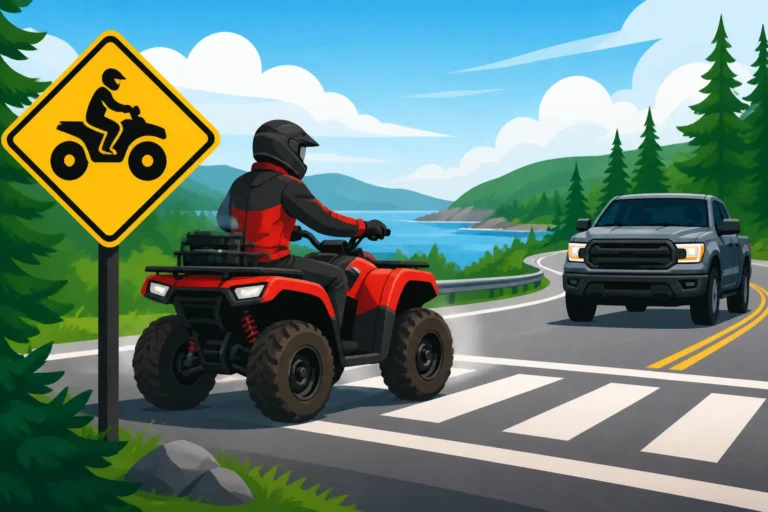
It's important to clarify that the 500-yard limit generally applies to "operating on" a public way, rather than simply "crossing" it. Maine law makes a clear distinction here. When you're crossing a public way, you need to come to a [Complete Stop Before Entering a Maine Public Way], yield to traffic, and cross at a right angle (or as close as safely possible) to minimize your time on the road. The 500-yard rule kicks in when you actually need to travel along the public way for a brief stretch. This distinction is crucial for understanding your rights and responsibilities. The intention isn't to open up public roads for extensive ATV use, but rather to facilitate reasonable and necessary connections within the larger trail network, without allowing extended periods of mixing ATV and road traffic. This balance aims to support both the recreational rider and public safety.
The Real-World Challenge of Eyeballing Distance
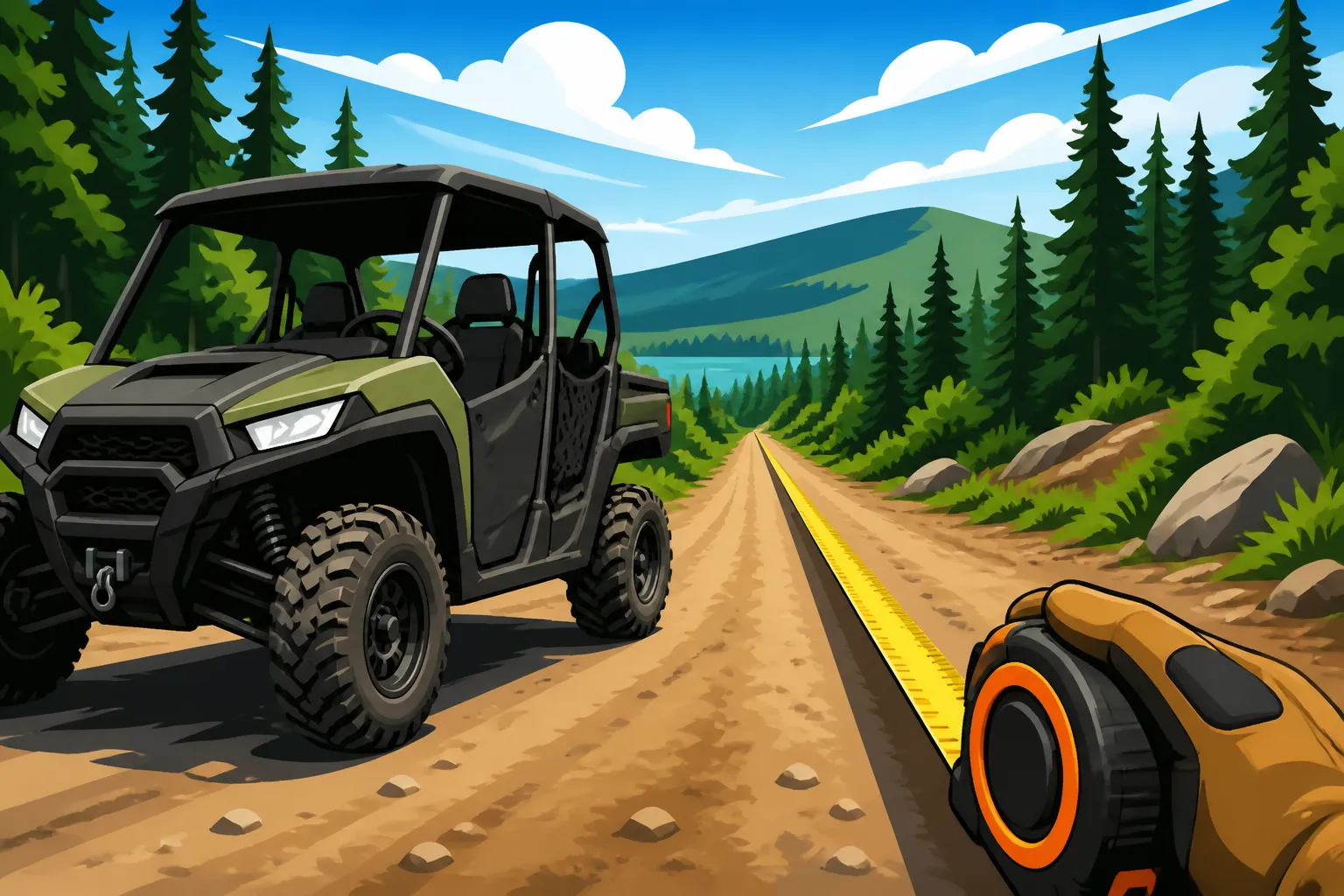
So, how far is 500 yards? For most of us, it's a lot farther than we think. Picture five football fields laid end-to-end, including the end zones. That's roughly 500 yards. When you're sitting on your quad, riding down a tree-lined dirt road or a straight stretch of pavement, that distance can feel incredibly vast or surprisingly short depending on the context, topography, and surrounding visual cues. It's easy to assume you're within the limit, only to realize later, with the help of a GPS or map, that you've significantly underestimated the distance.
The human eye is notoriously bad at accurately judging distances, especially in unfamiliar environments. A long, straight section of road might look like 200 yards, but in reality, it could be 600. A winding path through a residential area, on the other hand, might feel like a long journey but is actually quite short. Factors like hills, curves, tree cover, and even the time of day can play tricks on your perception. There's no convenient "500-yard marker" posted on most Maine roads, leaving riders to rely on guesswork. This reliance on subjective estimation is precisely what causes so much stress and potential for non-compliance. It's a fundamental challenge for [Maine ATV Road Rules for Young Riders] and experienced riders alike, as everyone is susceptible to these perceptual errors. Understanding these limitations is the first step toward adopting more reliable methods for ensuring you stay within the law.
Practical Methods for Estimating 500 Yards on the Trail
Given the difficulty of eyeballing distances, it's wise to equip yourself with more reliable methods. Whether you're a meticulous planner or prefer to ride by the seat of your pants, having a few tricks up your sleeve can make all the difference when it comes to the 500-yard rule. The goal isn't just to avoid a penalty, but to ride with the peace of mind that you're respecting the rules designed to keep everyone safe.
Using Your ATV's Odometer and GPS Features
This is, without a doubt, your most reliable friend when it comes to accurately measuring distances on a public way. Most modern ATVs and UTVs come equipped with a digital odometer and a trip meter.
Here’s how you can make the most of it:
- Zero Out Your Trip Meter: As soon as you enter a public way where you intend to travel a distance, hit the reset button on your trip meter. This will start a fresh count of the distance you travel from that precise point. Keep an eye on it as you ride. When it approaches 0.28 miles (which is roughly 500 yards), it's time to exit the public way.
- GPS Devices and Apps: Even better than a basic odometer, a dedicated GPS unit or a smartphone app can provide real-time distance tracking and visual mapping. Many riders use apps like [onX Offroad Maps for Maine Trails] to navigate, and these apps often display your current speed and distance traveled. Some riders even invest in robust, all-weather GPS units or smartphone mounts (like those offered by SuperATV, designed to withstand the rigors of off-road riding) to make viewing their progress easy and secure. Before you even head out, you can often use these mapping tools to pre-plan your route and identify where you might encounter public ways and estimate the distance you'll need to travel. This allows you to make informed decisions about whether a particular connection is viable within the 500-yard limit. Mark potential problem spots on your map and have a backup plan ready.
The beauty of using your odometer or GPS is that it removes the guesswork entirely. It provides an objective, verifiable measurement, which is exactly what a Maine Warden would be looking for if you were stopped. It turns a stressful guessing game into a simple matter of reading a display.
Pacing and Visual Cues for a Quick Estimate
While not as precise as an odometer or GPS, sometimes you're caught unprepared, or your tech fails. In these situations, knowing how to make a quick, rough estimate can be helpful. This is definitely more art than science, and it should only be used as a last resort or for very short, seemingly obvious distances.
- The "Pacing" Method: An average adult stride is roughly 2.5 to 3 feet. So, 100 yards (300 feet) would be about 100-120 paces. To estimate 500 yards, you'd need to pace out roughly 500-600 paces. This isn't something you'd do while riding, of course, but it's a way to train your eye or to get a rough idea on foot if you're scouting a route.
- Visual Cues: Look for landmarks.
- Utility Poles: In many rural areas, utility poles are spaced at relatively consistent intervals, often around 100 to 150 feet apart (30-50 yards). If you know the typical spacing in your area, you can count the poles. Five utility poles might be 150-250 yards, so you’d be looking at 10-15 poles for 500 yards. This is a very rough estimate and depends heavily on the specific utility company and terrain.
- Mailboxes/Driveways: Similarly, in residential or semi-rural areas, mailboxes or driveways can offer a sense of scale, but their spacing is far less consistent than utility poles.
- The "Football Field" Analogy: While 500 yards is indeed about five football fields, it's hard to visualize this accurately on a winding road. It's more of a conceptual tool than a practical measuring one.
The biggest drawback here is accuracy. These methods are highly subjective and prone to error. They don't account for curves, elevation changes, or varying densities of landmarks. Always err on the side of caution if you're using these methods, and if possible, find a way to verify with a more precise tool. Remember, these are quick "gut checks" and not legal defenses.
Consulting Trail Maps and Local Knowledge
Before you even hit the trails, doing a little homework can save you a lot of headache. Many excellent resources exist that can help you anticipate where you might encounter public ways and how long those stretches might be.
- Official Trail Maps: Many [Maine ATV Trail Maps and Club Boundaries] clearly mark designated ATV trails and where they intersect or run along public ways. Some maps even note permitted road sections. By studying these in advance, you can mentally (or physically with a marker) map out where the 500-yard rule will apply. Look for maps provided by the Bureau of Parks and Lands or local ATV clubs.
- ATV Clubs: Local ATV clubs are an invaluable resource. These dedicated volunteers maintain the trails and are intimately familiar with local regulations and nuances. They often know which stretches of road are designated for ATV travel beyond the 500-yard rule (as part of an access route) and which are strict 500-yard connections. Attending club meetings, checking their websites, or reaching out to members can provide hyper-local insights you won't find anywhere else. They might even have specific warnings about areas where wardens are particularly vigilant about the 500-yard rule. Don't be shy about reaching out to them; they're usually thrilled to share their knowledge and help keep riders legal and safe.
- Asking Locals: If you're stopping for gas or lunch in a trailside town, don't hesitate to ask local business owners or other riders about specific road sections. They can often tell you, "Oh, that stretch down by the old mill is fine for about a quarter-mile, but after that, you're on your own." This informal network of knowledge is part of the charm of riding in Maine and can be incredibly helpful for navigating the nuances of local rules. Keep in mind that not all local knowledge is 100% accurate, so cross-reference if possible.
By combining pre-planning with local insights, you can often avoid surprises and have a much clearer understanding of where the 500-yard limit comes into play on your ride. This proactive approach is always better than reacting to uncertainty on the trail.
What to Do When 500 Yards Isn't Enough
Sometimes, the next trail connector or your desired destination is simply farther than 500 yards down a public way. In these situations, attempting to "stretch" the limit is not only illegal but also risky. Maine law is quite specific, and wardens are equipped to measure distances accurately. Instead of gambling, it’s best to know your alternatives.
Designated ATV Access Routes and Town Ordinances
The good news is that not every stretch of road where an ATV operates is subject to the strict 500-yard rule. Many towns in Maine have recognized the economic and recreational value of ATV tourism and have worked to establish designated [Maine ATV-Access Routes and How Towns Post Them]. These routes are specifically approved by the town or local authorities, often in cooperation with ATV clubs, to allow ATVs to travel longer distances on certain public ways.
- How to Identify Them: These designated routes will always be clearly marked with official signage. You'll typically see bright orange signs with the ATV symbol, sometimes with an arrow, indicating an "ATV Access Route" or "ATV Route." These signs confirm that you can legally operate your ATV on that specific section of road for the distance indicated or until you see an "End ATV Route" sign.
- Checking Ordinances: Before you ride through a new town, it's a good idea to check for local ATV ordinances. Information on how a [How a Maine Town Designates an ATV-Access Route] is usually available through the town clerk's office or on the town's website. Some towns might have unique restrictions or expanded access that differs from the general state law. Always be aware that [Maine Towns That Restrict ATVs on Public Ways] also exist, and it's your responsibility to know these local rules. Rely on official signage and published information, not just hearsay.
Using designated access routes is the safest and most legal way to cover distances greater than 500 yards on a public way. Always keep an eye out for the signage, and if you don't see it, assume the 500-yard limit is in effect.
When You Have to Trailer or Turn Around
There will inevitably be times when the next trail section, the gas station, or the restaurant you're hoping to reach is too far down a public way and there's no designated access route. In these scenarios, the safest and most legal course of action is to avoid riding the ATV on the public way altogether.
- Plan Alternate Routes: Before your trip, consult your maps. If you see a long stretch of road separating two trail systems, look for an alternative route that might be longer but stays entirely on trails, or a different access point for the next trail section. Sometimes, avoiding a road entirely means exploring new, equally exciting trails.
- Trailer Your Machine: If you absolutely need to cover a significant distance on a public road that isn't a designated ATV access route, the most responsible solution is to trailer your machine. Load up your ATV or UTV onto a trailer, drive the necessary distance, and then unload it when you can safely and legally resume your ride on the trails. This might seem like an inconvenience, but it's far better than risking a citation, a fine, or, more importantly, a dangerous encounter with other traffic. Ensure your [Trailer Registration for Hauling ATVs in Maine] is up to date and your machine is securely tied down for highway travel.
It's a tough pill to swallow sometimes, especially when you're just a little bit over the limit, but adhering to the law is paramount. Making the responsible choice not only protects you from legal trouble but also helps maintain positive relationships with landowners and the public, which are vital for the continued access we enjoy on Maine's amazing trail system.
Common Misconceptions and Legal Considerations
Even with the best intentions, it's easy to get confused about the nuances of ATV laws, especially when it comes to operating on public ways. Let's clear up a couple of common misunderstandings that often trip up riders.
Crossing vs. Riding "On" the Public Way
This distinction is fundamental and often misunderstood. Maine law treats "crossing" a public way differently from "operating on" it.
- Crossing: When you simply need to go from one side of a public way to the other to access a continuing trail, the rules are stricter for safety but don't involve the 500-yard limit. You are required to:
- Come to a [Maine's Stop-and-Yield Rule Before a Public Way].
- Yield to all vehicular traffic.
- Cross the public way at a right angle (as close as safely possible). This minimizes the time your ATV is exposed to road traffic.
- You must ride to the [Riding the Extreme Right of a Maine Road] if you are moving along the road even for a few feet to cross.
- Always choose a crossing point that offers good visibility for both you and oncoming traffic. This type of maneuver is generally about quick, safe transit, not sustained travel.
- Operating On: The 500-yard limit specifically applies when you are traveling parallel to the public way's flow of traffic, even if it's just for a short distance to connect to the next trail or reach a service. This is where your odometer and GPS become crucial. The intent here is to allow limited utility travel, not extended road use. If you are operating on the public way, you must also ride on the extreme right, yielding to all other traffic. This is a critical legal difference that every ATV rider in Maine must understand to avoid unnecessary fines or dangerous situations.
Penalties and Enforcement
Maine Wardens are highly trained and well-equipped. They don't rely on guesswork when it comes to enforcing ATV laws. They have methods, including measuring wheels and GPS devices, to accurately determine distances travelled on public ways. If you are stopped for exceeding the 500-yard limit or for operating on a public way without a designated access route, the consequences can be significant.
- Fines: The specific [Fine for an Unregistered ATV in Maine] can vary, and while that link is about registration, any violation of ATV operating laws carries monetary penalties. These fines are designed to be a deterrent and can quickly add up, turning an enjoyable ride into a costly mistake.
- Loss of Privileges: Repeated violations or serious infractions could potentially lead to the suspension of your ATV registration or even your right to operate an ATV in Maine.
- Impact on Trail Access: Every violation, every negative interaction with a landowner or the public, erodes the goodwill that allows Maine's extensive trail system to exist. Many trails cross private land with the permission of landowners, and egregious or repeated violations of rules like the 500-yard limit can lead to landowners withdrawing their permission, resulting in trail closures. This is why adherence to the rules isn't just about avoiding a personal fine; it's about protecting access for the entire riding community.
The best defense against penalties is knowledge and proactive compliance. Take the time to understand the rules, use your tools (like your odometer or a quality GPS from a brand like SuperATV), and always err on the side of caution. Riding responsibly ensures not only your own safety and legal standing but also helps preserve the incredible opportunity we have to explore Maine's wilderness on our ATVs and UTVs.
Disclaimer
This article is for general informational purposes only and does not constitute professional advice. Laws, prices and regulations vary by location and change over time. Consult a qualified professional for guidance on your specific situation.