Stopping Before a Maine Public Way Crossing
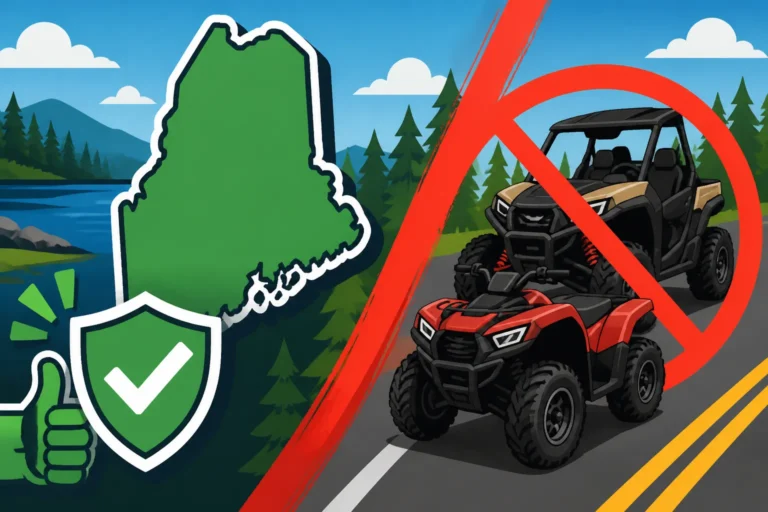
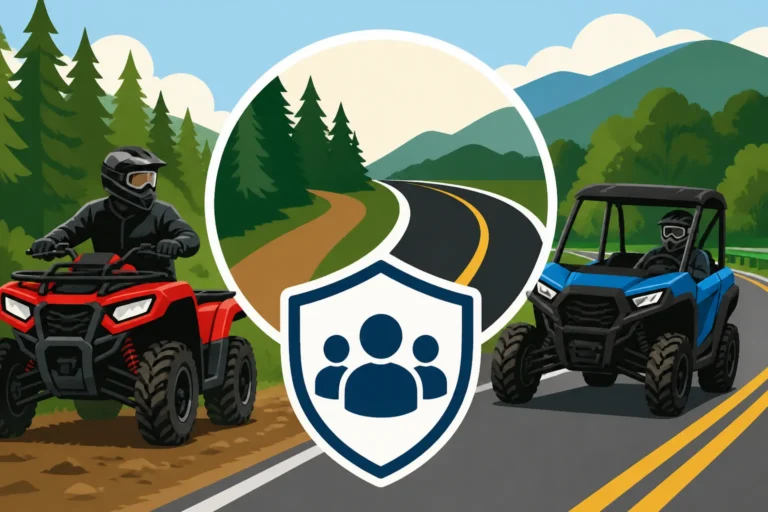
It’s a common scenario for many Maine ATV and UTV riders: you’re cruising along a beautiful trail, enjoying the peace and scenery, when suddenly, a public road looms ahead. The transition from winding woods trail to paved or gravel public way can be jarring, and not knowing the precise stopping rules for these crossings can lead to confusion, frustration, and even danger. This guide will meticulously break down exactly what Maine law expects from you when encountering a public way, ensuring you can navigate these intersections safely and legally.
Why a Complete Stop at Public Way Crossings is Non-Negotiable
Riding an ATV or UTV in Maine offers incredible freedom and access to some of the most stunning backcountry. However, with that freedom comes a serious responsibility, especially when your off-road machine encounters the more structured environment of public roads. The rule to stop before crossing a public way isn't just a suggestion; it's a critical safety measure and a direct legal requirement designed to protect riders, motorists, and pedestrians alike.
The Rationale Behind the Rule
Think about it from a common-sense perspective. When you're driving a car on a public road, you expect traffic from side roads or private drives to stop and yield to you. The same principle applies when an ATV or UTV approaches a public way. ATVs and UTVs, while fun and capable, are often less visible than cars, can accelerate quickly, and might not have the same braking capabilities as a street-legal vehicle, especially on loose trail surfaces leading up to pavement. Without a mandatory stop, the potential for collisions skyrockets. This rule isn't meant to inconvenience you; it's there to provide a clear, universal expectation of behavior that reduces hazards. It creates a predictable flow, ensuring that everyone knows what to do when an ATV trail intersects with a road, preventing guesswork that could lead to tragedy.
Furthermore, these rules are crucial for maintaining positive relationships between the riding community, landowners, and the general public. Reckless or careless riding, particularly at road crossings, can quickly erode trust and lead to calls for trail closures. Adhering to these simple yet vital rules helps ensure continued access to Maine's vast trail network. It's about demonstrating respect for other road users and the laws that keep everyone safe.
Maine's Legal Mandate for ATV Operators
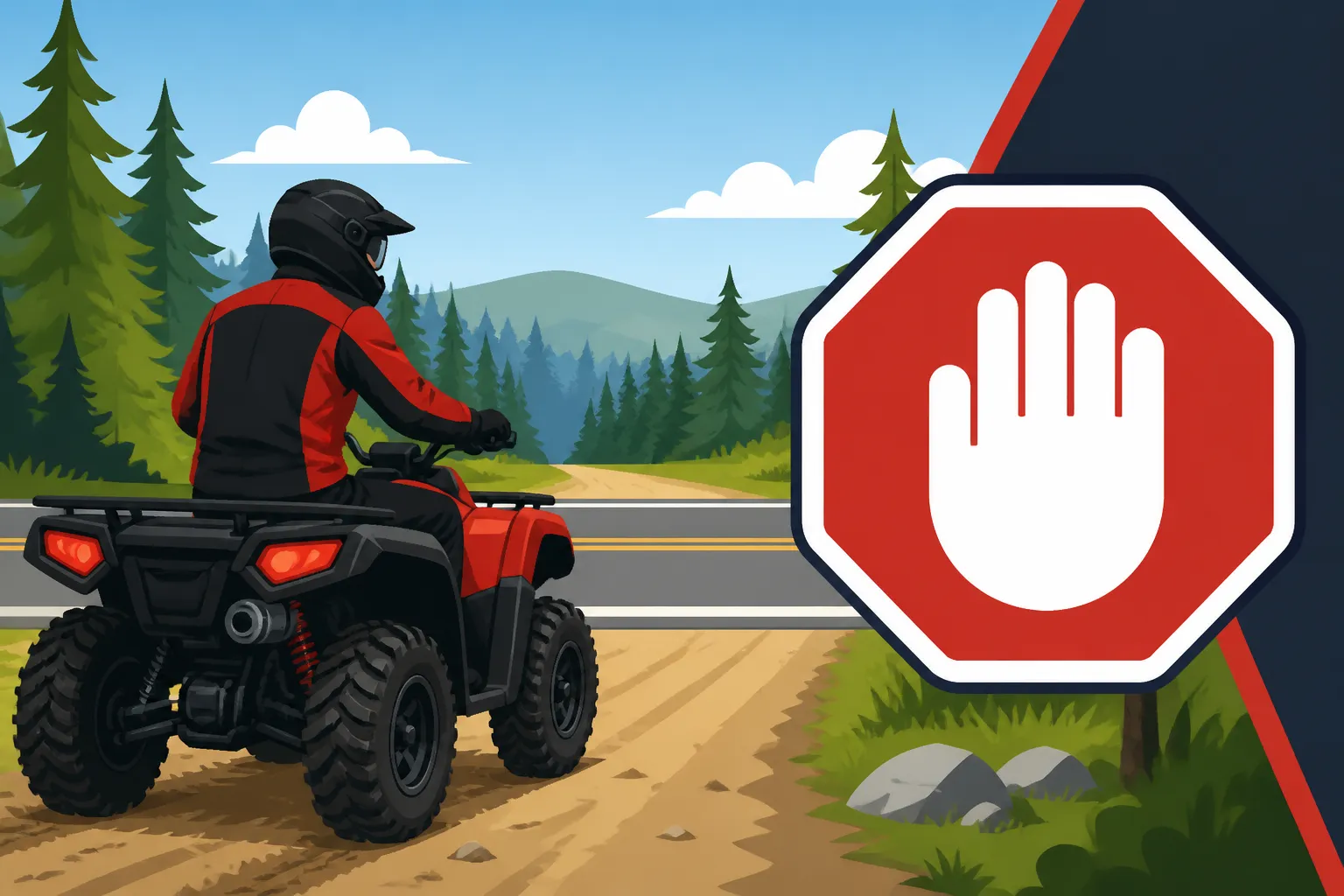
Maine law is quite explicit when it comes to ATVs and UTVs interacting with public ways. The core principle is enshrined in the state's statutes: an ATV or UTV operator must bring their machine to a complete stop before entering or crossing any public way. This isn't a "yield if traffic is coming" rule; it's an absolute "stop every time" rule. Regardless of whether you see oncoming traffic, regardless of how clear the visibility might seem, a full stop is required.
This legal mandate serves as the backbone of responsible ATV operation in the state. Ignoring it can have serious repercussions, from significant fines to the immediate suspension of your riding privileges. Enforcement by the Maine Warden Service is robust, and wardens are particularly vigilant at known trail-to-road crossing points. They understand that these intersections are high-risk areas, and compliance is paramount. For youth riders, the rules are even more stringent, often requiring adult supervision during such crossings, as detailed in articles like [Maine ATV Rules for Riders Under 16 on Roads]. Understanding and internalizing this legal requirement is the first step toward safe and responsible riding in Maine.
The Specifics: Where, When, and How to Stop
Knowing you have to stop is one thing, but understanding the nuances of where, when, and how to execute that stop correctly is vital. Misinterpreting these details can still put you at risk or in violation of Maine law.
Identifying a "Public Way" in Maine
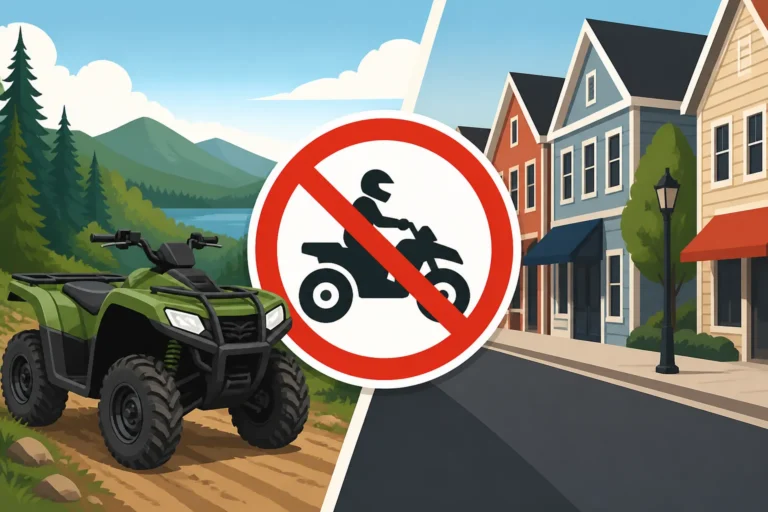
One of the biggest areas of confusion for ATV and UTV riders is often defining what exactly constitutes a "public way." It's not just paved state highways. In Maine, a public way is broadly defined and includes:
- Any paved road: This includes state routes, federal highways, and paved town roads. These are the most obvious examples.
- Gravel town roads: Many rural Maine towns maintain gravel roads that are considered public ways, even if they see less traffic. These are often integral parts of the trail network or connect different sections. You can often find information on specific town rules in resources like [Maine ATV-Access Routes and How Towns Post Them].
- Dirt roads maintained by the municipality: Similar to gravel roads, if a dirt road is maintained by a town or county for public use, it falls under this definition.
- Private roads with public access: While less common, some private roads, particularly those leading to public recreational areas or properties, might be designated as having public access by easement or historical use, which could bring them under the "public way" umbrella for ATV crossing rules. However, usually, if a private road doesn't explicitly have ATV access posted, you shouldn't assume it's part of an allowed crossing.
It's crucial not to assume that a less-traveled road doesn't require a stop. When in doubt, treat any road that isn't clearly a private drive or an explicitly designated ATV trail connector as a public way requiring a full stop. If you're riding with aftermarket accessories from brands like SuperATV that enhance visibility, such as brighter LED light bars or improved mirrors, you'll be better equipped to spot these intersections and potential traffic well in advance.
The Complete Stop: Defining What It Means
A "complete stop" isn't a suggestion; it's a specific action. Here's what it entails:
- Come to a full halt: Your ATV or UTV must cease all forward motion. This means zero miles per hour. A "rolling stop" where you slow down but don't quite stop is not a complete stop and can result in a citation.
- Stop before the road surface: You must stop before your tires enter the paved, gravel, or dirt surface of the public way. The ideal spot is usually at the edge of the trail where it meets the road, or at any designated stop sign or white stop line. Do not creep out onto the road to get a better look.
- Look both ways, thoroughly: Once stopped, you must actively scan for traffic approaching from both directions. Turn your head, don't just rely on peripheral vision. Traffic on public ways often moves at higher speeds than you're accustomed to on the trail.
- Wait for a clear opening: Only proceed when it is safe to do so. This means there are no oncoming vehicles close enough to pose a hazard. You must be able to cross the public way without interfering with the flow of traffic. This is a key component of [Maine's Stop-and-Yield Rule Before a Public Way].
Practicing this consistent behavior makes you a safer rider and a better ambassador for the ATV community. It's a fundamental part of responsible riding, ensuring you respect the rights of motorists on the public way.
Yielding and Proceeding Safely
After you've come to a complete stop and checked for traffic, the next step is yielding and proceeding safely. This part is critical for avoiding accidents and demonstrating proper trail etiquette.
- Yield to all traffic: The rule isn't just to stop; it's to stop and yield. This means that any vehicle on the public way has the right-of-way over your ATV or UTV. You cannot pull out in front of approaching traffic, even if you think you can "make it." Err on the side of caution. If there's any doubt about whether you have enough time to cross safely, wait.
- Cross at a right angle: When you do cross, do so as directly as possible, at or near a right angle to the public way. Do not attempt to ride along the public way unless it is explicitly marked as an [Maine ATV-Access Routes and How Towns Post Them] that allows such travel, and even then, understand the 500-yard limit as discussed in [Maine's 500-Yard Limit on a Public Way]. Crossing at an angle minimizes the time you spend exposed to traffic and makes your intention clear to other drivers.
- Be aware of road conditions: The surface of the public way might be very different from the trail you just left. Pavement or hard-packed gravel offers different traction than loose dirt or mud. Adjust your speed and steering accordingly to maintain control, especially if your tires are muddy.
- Don't cross in groups without individual stops: If you're riding with a group, each individual ATV or UTV must perform its own complete stop and yield. You cannot simply follow the rider in front of you across the road without first stopping yourself. This ensures everyone in the group has adequately assessed the traffic situation.
Remember, the goal is not just to comply with the letter of the law but to ensure your absolute safety and the safety of others. Taking that extra moment to make a proper stop and assessment can prevent a lifetime of regret.
| Type of Public Way | Required Stop | Yield to Traffic | Crossing Method | Key Consideration |
|---|---|---|---|---|
| Paved State Road | Yes | Yes | Right Angle | High-speed traffic, high visibility needed. |
| Paved Town Road | Yes | Yes | Right Angle | May have local traffic, school buses. |
| Gravel Town Road | Yes | Yes | Right Angle | Dust can obscure vision, variable road surface. |
| Dirt Town Road | Yes | Yes | Right Angle | Often looks like a trail, but still a public way. |
| ATV Access Route | Yes (at entry) | Yes | Travel Extreme Right | Specific rules for length of travel; often marked. |
| Private Camp Road | Generally No | Yes (courtesy) | Straight/Yield to Camps | Respect private property and residents. |
Common Pitfalls and Misconceptions
Even experienced riders can sometimes fall into traps or misunderstand certain aspects of public way crossings. Being aware of these common pitfalls can help you avoid problems.
Overlooking Less Obvious Public Ways
One of the most frequent mistakes riders make is failing to recognize a public way, particularly in rural or remote areas. A narrow, unpaved road winding through the woods might look exactly like another section of trail, but if it's maintained by a town or county, it's a public way. The signage might be minimal, or even non-existent, depending on how remote the area is. Don't assume that just because a road is quiet or looks like a "back road" that it's exempt from the stop-and-yield rule.
This often happens on what riders assume are solely logging roads. While many logging roads are private, some are part of the town or county road system. Always consult current maps and local ATV club information to understand the status of the roads you plan to cross. Apps like onX Offroad or detailed paper maps from local clubs can be invaluable. If you're outfitting your UTV with robust tires from SuperATV designed for aggressive terrain, remember those same tires will perform differently on pavement or packed gravel, emphasizing the need for a cautious approach at every crossing. When in doubt, always treat any unknown road intersection as if it were a public way, requiring a complete stop.
The "Rolling Stop" Myth
The idea of a "rolling stop" is a persistent myth, not just among ATV riders but drivers in general. This is the act of slowing down significantly, perhaps to 1-2 mph, but not actually bringing the vehicle to a full, complete halt. On an ATV or UTV, this can be particularly dangerous. The slightly elevated seating position and open nature of these machines can sometimes give a false sense of security or a better view, leading riders to believe they can gauge traffic accurately without fully stopping.
However, a rolling stop is not a legal stop. It doesn't give you adequate time to properly scan for traffic, especially fast-moving vehicles that can appear quickly, seemingly out of nowhere, on a rural Maine road. It also signals an ambiguous intent to oncoming drivers, who might not be sure if you're stopping or proceeding. The law is clear: a full, unequivocal stop is required. Wardens are well-aware of this common infraction and will issue citations for it. The only safe and legal stop is one where your machine's wheels come to a complete standstill before the public way.
When a Warden is Watching
It might sound obvious, but the presence of a Maine Game Warden can dramatically change rider behavior. However, relying on whether you see a warden to dictate your adherence to the law is a dangerous game. Wardens often patrol these crossing points, sometimes out of sight, specifically looking for violations. They know the popular trails and the junctions with public ways. Their job is not just to catch offenders but to promote safety and enforce the regulations that keep the trails open and safe for everyone.
Wardens take these violations seriously because of the high potential for serious injury or fatality when ATVs and UTVs collide with cars. A warden isn't looking to "trap" you; they're looking to ensure compliance with a rule designed for your safety. Getting a citation from a warden, as discussed in [Fines Maine Wardens Write Most Often], is far less severe than being involved in an accident. Always assume a warden could be watching, and more importantly, always ride as if your life depends on adhering to the rules, because at a road crossing, it truly might. Respect for the rules, whether a warden is visible or not, is the hallmark of a responsible rider.
Consequences of Failing to Stop
Ignoring the mandatory stop at a public way crossing carries a range of potential consequences, from immediate legal penalties to devastating personal and financial impacts.
Immediate Penalties: Fines and Citations
The most direct consequence of failing to stop before a public way crossing is a citation from the Maine Warden Service. Maine law is unambiguous, and wardens are equipped to enforce it rigorously. A typical fine for this type of violation can be substantial, often in the range of several hundred dollars, plus court fees. This isn't just a slap on the wrist; it's a significant financial hit that could easily pay for your annual ATV registration fee for years, or even cover a decent set of specialized tires from a company like SuperATV.
Beyond the immediate financial penalty, such a citation also goes on your record. While it's generally not a moving violation that impacts your driver's license, it's still a mark against your ATV operating history. Repeat offenses could lead to more severe penalties, including the suspension of your privilege to operate an ATV or UTV in Maine. This means you could lose access to the very trails you love to ride. Always prioritize that complete stop to avoid these frustrating and costly penalties. [Maine Warden Enforcement on Public Ways] highlights the seriousness with which these rules are treated.
The Risk of Accidents and Liability
Far more severe than any fine is the risk of an accident. Failing to stop, even for a split second, drastically increases your chances of colliding with a motor vehicle on the public way. ATVs and UTVs offer less protection than a passenger car; an impact at even moderate speeds can result in severe injuries, permanent disability, or worse. The consequences extend beyond physical harm. An accident on a public way can lead to:
- Property Damage: Your ATV or UTV could be totaled, and the other vehicle involved will likely sustain significant damage.
- Medical Bills: Even with good health insurance, the costs associated with serious injuries from an accident can be astronomical, leading to immense financial strain.
- Legal Liability: If you are found to be at fault for failing to stop, you could face civil lawsuits for damages, medical expenses, and pain and suffering from the occupants of the other vehicle. This could put your personal assets at risk. While [Maine ATV Insurance and When You Need It] can help, it may not cover everything if gross negligence is proven.
- Emotional Trauma: The psychological impact of being involved in a serious accident, or causing one, can be long-lasting and debilitating for all parties involved.
The momentary lapse of failing to stop simply isn't worth the immense risks involved. Your safety and the safety of others must always be the priority.
Losing Trail Privileges
There's a broader consequence to reckless riding, especially at road crossings: the potential loss of trail access for everyone. A significant portion of Maine's extensive ATV trail network relies on the generosity and goodwill of private landowners. When riders consistently disregard safety rules, such as failing to stop at public ways, it creates a negative perception of the entire ATV community. Landowners may become concerned about liability, property damage, or simply the disruption and danger posed by irresponsible riders.
This concern can lead to landowners withdrawing their permission for trails to cross their property, effectively closing sections of the trail system. This has happened in various parts of Maine over the years. Every time a trail is closed due to irresponsible rider behavior, it shrinks the overall network and limits opportunities for everyone who rides responsibly. Therefore, your actions at every public way crossing impact not just your own riding future but the future of ATV and UTV recreation in Maine for all enthusiasts. Protecting these privileges means always riding safely, courteously, and legally. This includes ensuring your machine is properly registered, as highlighted in [Penalties for Riding an Unregistered ATV in Maine], which also contributes to the sustainability of the trail system.
Disclaimer
This article is for general informational purposes only and does not constitute professional advice. Laws, prices and regulations vary by location and change over time. Consult a qualified professional for guidance on your specific situation.