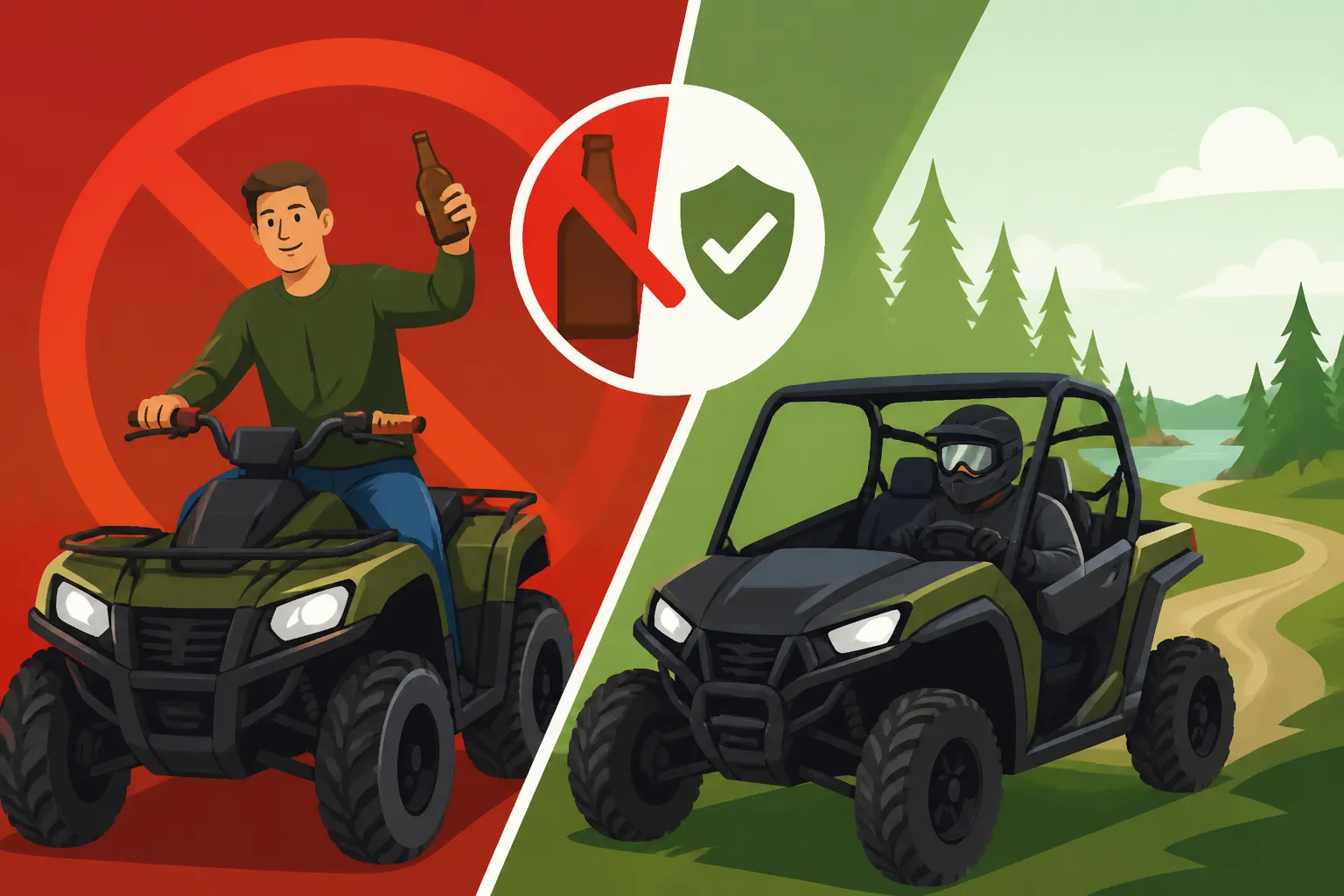
Open Container Rules on an ATV
It's easy to get caught up in the freedom of exploring Maine's vast trail networks on your ATV or UTV. The sun's out, the engine's humming, and you might be thinking about cracking open a cold one when you pull over for a break. But before you do, it's absolutely critical to understand Maine's open container laws, which are far more reaching than many riders realize. This guide will walk you through the nuances of these regulations, helping you stay on the right side of the law and avoid fines that could quickly sour your adventure.
Understanding Maine's Open Container Laws Beyond the Car
When we hear "open container laws," most of us immediately think about cars and trucks on paved roads. However, Maine's regulations extend well beyond traditional vehicles and highways, deeply impacting ATV and UTV riders. The rules are in place to ensure public safety, and while they might seem restrictive when you're out in what feels like the middle of nowhere, they're enforced with a clear purpose.
What "Open Container" Truly Means for ATV Riders
The legal definition of an "open container" is surprisingly broad. It's not just a half-empty beer can rolling around on the floorboard of your side-by-side. Essentially, any alcoholic beverage not in its original, factory-sealed container is considered open. This means if you've popped the top on a soda can and poured in a little rum, that's an open container. If you've opened a bottle of wine, taken a sip, and then recorked it, that's still an open container. Even a thermos filled with a mixed drink or a growler from your favorite local brewery that's been opened previously falls under this definition if it's accessible while you're operating your ATV or UTV.
Imagine you're taking a break on a picturesque section of trail, perhaps near Moosehead Lake. You grab a can of your favorite local craft beer from your cooler, crack it open, and take a sip. You're still sitting on your ATV, even if it's idling. In the eyes of the law, that's an open container in operation on a public way, which we'll get into next. The key is that the container has been opened, and the alcoholic beverage is accessible for immediate consumption. A cooler full of unopened cans and bottles, however, is perfectly legal. The problem arises the moment that seal is broken and the beverage is within reach while operating or even sitting on the machine in a specific legal context.
The Broad Scope of "Public Way" for ATV Operations
This is where many ATV and UTV riders get tripped up. It's easy to think that if you're not on a paved road, you're not on a "public way." In Maine, however, the term "public way" is far more expansive and includes many areas where ATVs legally operate. This can encompass designated ATV access routes, certain gravel or dirt town roads, bridges, and even specific sections of multi-use trails that intersect or run alongside public infrastructure.
Consider the reality of Maine's extensive trail system. Much of it relies on a patchwork of private landowner permissions, dedicated club trails, and publicly maintained corridors. When your trail ride takes you through a village center on a designated ATV-access route, or across a town-maintained gravel road, you are absolutely on a public way. Even brief crossings, like those covered in [Maine's Stop-and-Yield Rule Before a Public Way], bring you under the full weight of these laws. That means if you're pulling up to cross a paved road, or riding parallel to it for a short stretch within the [Maine's 500-Yard Limit on a Public Way], you are subject to the same open container rules as if you were driving your car. It's a common frustration for riders who feel like they're "off-road," but legally, these connections are vital for the trail system and thus come with responsibilities. A quick stop at a gas station for fuel, which involves riding on a short stretch of public road, also means you're under these rules.
Where the Rules Apply: Trails, Roads, and Private Land
Navigating Maine's open container laws for ATVs requires a clear understanding of exactly where you are riding. The distinction between public and private land, and designated access routes, dramatically changes how these rules apply. It's not always as intuitive as it seems when you're out enjoying the beautiful Maine wilderness.
Open Containers on Designated ATV Trails and Access Routes
Maine's vast network of ATV trails offers incredible opportunities for exploration, connecting towns, wilderness areas, and scenic viewpoints. While many of these trails traverse private land with landowner permission, a significant portion—especially the sections that link different trail segments or allow access to services—are legally designated as "public ways." This is where the open container rules become particularly relevant and often surprising to riders.
Many towns in Maine have thoughtfully created [Maine ATV-Access Routes and How Towns Post Them] to allow riders to reach gas stations, restaurants, or lodging. These routes are, by their very nature, extensions of the public road system, even if they're unpaved dirt roads. If you're riding your ATV down one of these routes, perhaps into a small town to grab a bite to eat, you are unequivocally on a public way. Having an open container in your hand or accessible on your machine in this scenario is a direct violation. The same goes for trail sections that utilize old railbeds that are now state-owned, or bridges maintained by a municipality.
Imagine you're part of a group enjoying a ride along a beautiful section of the ITS (Interconnected Trail System) in Aroostook County. You decide to take a break, pull over, and someone offers you a beer they've already opened. If that trail section is considered a public way – and many are, especially where they intersect or parallel existing roads – you're looking at a potential violation. It's crucial to remember that what feels like a remote forest path can still be legally classified as a public access route. Even if you're just paused, having an open container easily within reach on your ATV while on one of these designated routes can lead to trouble.
The Exemptions: Private Property and Designated Areas
Thankfully, there are situations where Maine's open container laws don't apply to ATV operation. The primary exemption revolves around private property. If you are on your own land, or on private land where you have explicit permission from the landowner to both ride and consume alcohol, the open container law generally won't apply to the operation of your ATV. This is where [Maine Landowner Permission Rules] become really important – you need to know whose land you're on and what their rules are.
For instance, if you're at a private hunting camp, parked your ATV for the evening, and are enjoying a cold beverage around a campfire, you're fine. The key distinction here is that the ATV is not being operated, and you are not on a public way or a designated access route. Similarly, if you're riding exclusively on your own expansive woodlot, away from any public roads or designated trails, you have more leeway with open containers.
However, even on private property, there's a critical caveat: operating an ATV while under the influence of alcohol is always illegal and extremely dangerous. [Maine ATV Operating Under the Influence] (OUI) laws apply regardless of whether you're on public or private land. The open container rule is about the presence of alcohol in an unsealed container while operating on a public way, but OUI is about your impairment no matter where you're riding. So, while you might not get an open container ticket on your private land, you could still face an OUI charge if your riding abilities are impaired. It's always best to separate drinking from riding. Park the machine, enjoy your refreshments responsibly, and save the riding for when you're clear-headed.
Consequences and Safe Riding Practices
Ignoring Maine's open container laws, whether by accident or intent, can quickly turn a fun day on the trails into a costly and frustrating experience. The penalties are real, and the Maine Warden Service is diligent in enforcing these regulations to ensure the safety of all outdoor enthusiasts.
Penalties for Violating Open Container Laws on an ATV
The consequences for an open container violation on an ATV or UTV in Maine can range from a fine to more serious legal repercussions, especially if combined with other infractions. Typically, you're looking at a monetary penalty, which can easily add hundreds of dollars to your day's expenses. While it might not result in points on your state driver's license in the same way a car violation would, it still creates a record, and you may be required to appear in court. These situations are rarely convenient and always stressful.
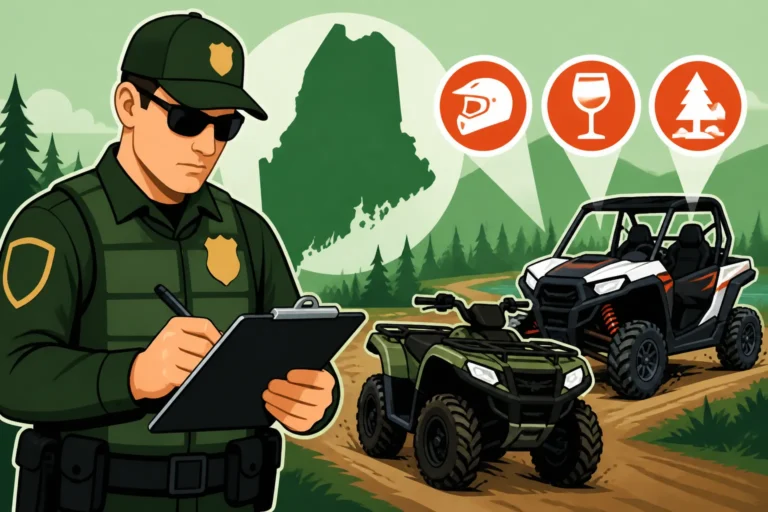
The Maine Warden Service is the primary enforcement agency for ATV laws, and they conduct regular patrols on trails, especially during peak riding seasons. During a routine [Maine Warden Stops and ATV Paperwork] check, they're looking for everything from current registration (like [Maine ATV Registration Confirmation for Immediate Riding]) to proper safety gear, and yes, open containers. Wardens are highly trained and experienced in identifying potential violations, and an open container is often a red flag that can lead to further investigation, including sobriety checks.
Perhaps the most significant risk is how an open container violation can escalate. If you're found with an open container and a Warden suspects impairment, it could quickly lead to an [Maine ATV Operating Under the Influence] (OUI) charge. OUI penalties are severe, including substantial fines, mandatory education programs, potential loss of ATV privileges, and even jail time for repeat offenders. Even if you only had one drink, the presence of an open container makes it easier for law enforcement to suspect impairment, putting you in a very difficult position. The table below outlines some general scenarios and potential outcomes.
| Scenario | Location Type | Open Container Status | Potential Outcome (General) |
|---|---|---|---|
| Rider operating with open can in hand | Designated ATV Access Route, Dirt Town Road | Open | Fine, potential court appearance. |
| Rider stopped on trail with open can accessible | Trail section considered Public Way | Open | Fine, potential court appearance. |
| Rider parked at private camp with open can | Your own land or private land with permission | Open | Generally no open container violation if not operating on public way. OUI laws still apply if impaired. |
| Cooler of unopened beers under seat | Any | Sealed | No violation. |
| Rider operating while impaired | Any (public or private land) | N/A | OUI charge, severe penalties. |
Note: This table provides general information. Specific penalties and circumstances can vary greatly.
Best Practices for Enjoying a Responsible Ride
Given the strictness and broad reach of Maine's open container laws, the safest and most responsible approach is to simply avoid having any open alcoholic beverages on your ATV or UTV while riding, or while parked on any public way or designated access route.
Here are some best practices to ensure your ride is fun, safe, and legal:
- Keep it Sealed: Always keep all alcoholic beverages in their original, unopened, factory-sealed containers while on the trail, especially if you'll be traversing any public ways or designated access routes. Stash them securely in a cooler that's strapped down, out of immediate reach if possible.
- Pack Alternatives: Bring plenty of non-alcoholic refreshments like water, juice, or soda for your ride. Hydration is key, especially during long days on the trails, and these won't cause any legal headaches.
- Separate Drinking from Riding: Plan your trip so that any alcohol consumption happens after you've finished riding for the day, or when you are completely off the ATV and in a stationary, private location where you have permission to consume. For example, once you're settled at your private camp for the night, and your machine is parked, then you can enjoy a drink.
- Know Your Route: Be aware of where you're riding. Understand which parts of the trail system are designated public ways or [Maine ATV Rules on Dirt Town Roads] and plan accordingly. Many riders are surprised to learn that a section of trail they've ridden for years is legally a public way. Even riding on [Maine ATV Rules on Private Camp Roads] can sometimes blur the lines depending on access.
- Be Prepared for Warden Stops: Always have your registration paperwork and any safety course certificates readily available. Wardens are simply doing their job, and being polite and cooperative goes a long way. Knowing the rules, like those for open containers, demonstrates responsible riding.
- Don't Mix: The most important rule of all: alcohol and ATV operation don't mix. The dynamic nature of off-road riding, coupled with varied terrain and unexpected obstacles, demands your full attention and quick reflexes. Impairment from alcohol significantly diminishes these abilities, putting yourself and others at serious risk.
By understanding and adhering to Maine's open container laws, you can ensure your ATV adventures remain enjoyable and free from unnecessary legal trouble. Ride smart, stay safe, and respect the regulations that keep our trails open and accessible for everyone.
Disclaimer
This article is for general informational purposes only and does not constitute professional advice. Laws, prices and regulations vary by location and change over time. Consult a qualified professional for guidance on your specific situation.