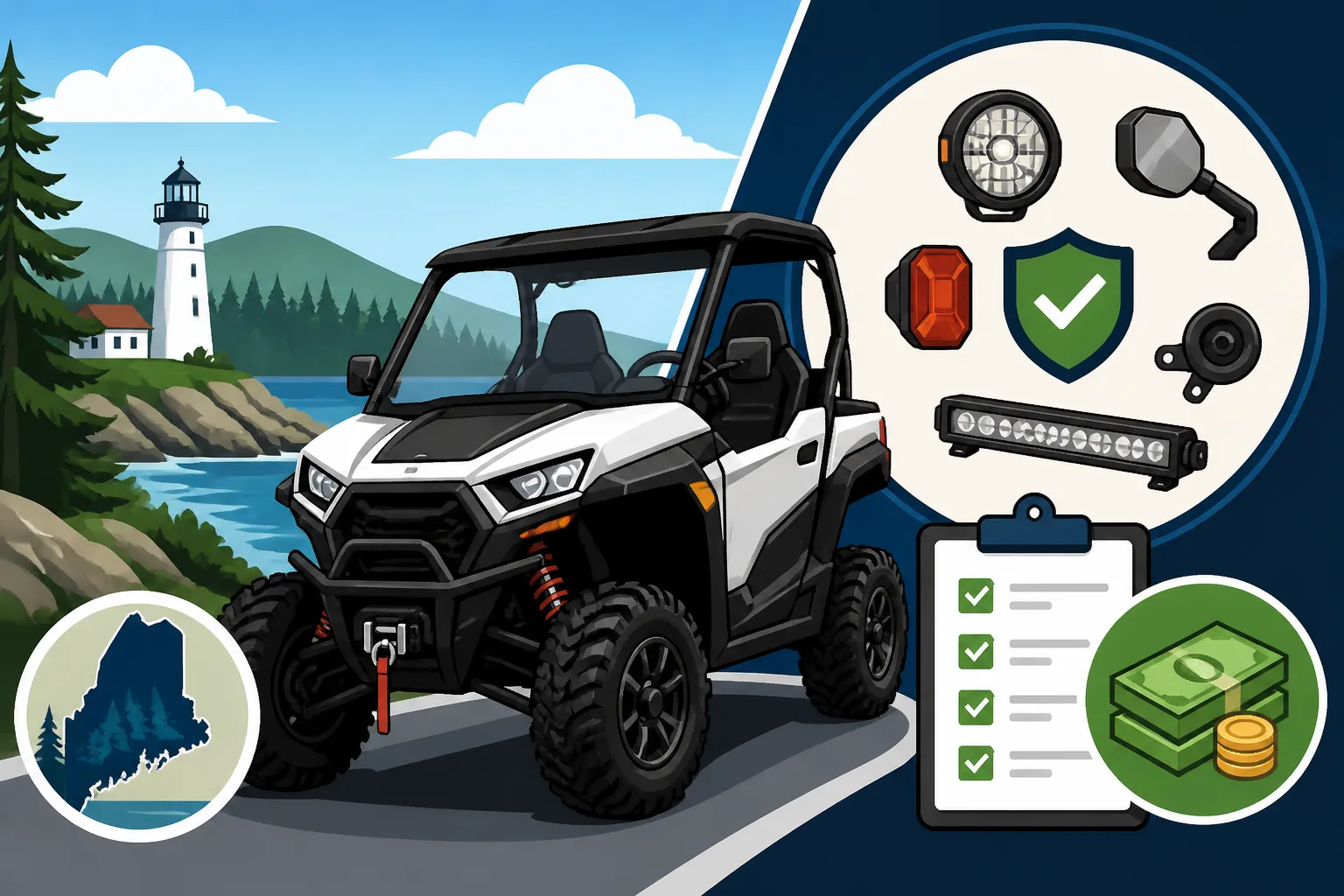
Street-Legal UTV Conversion Cost
Oh, the dream of taking your side-by-side from the trail right into town for a burger, or perhaps just across a short stretch of pavement to the next trail section! It's a common aspiration for UTV owners here in Maine, and it makes perfect sense. Nobody wants to haul their machine onto a trailer just for a half-mile road crossing. But here's the rub: converting your UTV to be truly "street-legal" in Maine isn't always as simple or as cheap as some might hope, and it involves a lot more than just slapping on a license plate. This guide is going to break down the costs and considerations, helping you understand what you're really getting into when you eye those public roads with your UTV.
Decoding Maine's Street-Legal Requirements for UTVs
Before we even talk about specific dollar amounts, it's absolutely crucial to understand what Maine considers street-legal for a UTV. This isn't just about throwing a few extra lights on your machine; it's about meeting a specific set of motor vehicle standards that were originally designed for cars and trucks. The frustration for many UTV owners is that these standards weren't always created with off-road vehicles in mind, leading to a sometimes awkward and expensive fit.
First and foremost, Maine has specific classifications for vehicles, and UTVs (or side-by-sides) generally fall under the "off-road vehicle" umbrella. To operate one on public ways, it usually needs to be reclassified as a "low-speed vehicle" (LSV) or meet the full requirements of a traditional motor vehicle, which is a much taller order. This reclassification often hinges on meeting federal safety standards for motor vehicles, which can be an unexpected hurdle. You might be dreaming of cruising down Route 1, but the reality is often limited to specific town-designated roads or crossing points. It’s not just a matter of adding parts; it's about compliance and, often, finding the right path for registration. [Street-Legal UTV Equipment Lists] will give you a good idea of what's expected.
Understanding the Legal Framework
The core issue here is that most UTVs, fresh from the factory, are designed for off-road use. They lack many of the safety features and compliance certifications that highway-legal vehicles have. Maine's laws are designed to ensure safety on public roads, and that means your UTV needs to mimic a car in certain critical aspects. This isn't just a suggestion; it's a legal mandate that carries potential penalties if not adhered to. Many owners feel this is an unfair burden, especially for machines that might only touch pavement for short distances, but the law is the law.
The state doesn't just wave a magic wand and declare your UTV street legal. You'll need to satisfy criteria related to lighting, braking, tires, and overall vehicle integrity. If you're coming from another state where UTVs are more freely allowed on roads, the rules in Maine can feel particularly restrictive and, frankly, a bit confusing. It’s worth checking the specific town ordinances where you plan to ride, as [Maine Towns That Restrict ATVs on Public Ways] shows, even if your machine is technically street-legal, local rules can still limit where you go.
The Inspection Requirement
Even once you've installed all the necessary components, your UTV will likely need to pass a safety inspection, much like a regular car or truck. This inspection ensures that all the added equipment is properly installed, functioning correctly, and meets the state's standards. This can be a source of anxiety for many, as an inspector might flag something you thought was compliant, leading to further expenses and delays. It's not uncommon for owners to go through the conversion process only to find a small detail overlooked, sending them back to the drawing board (and their wallet).
The inspection isn't a one-time thing, either; it's an annual requirement. Each year, you'll need to make sure your street-legal UTV is still up to snuff, which means maintaining all those added components. This recurring requirement adds to the long-term cost of operating a street-legal UTV. It’s not just the initial conversion, but the ongoing commitment to safety and compliance.
Essential Equipment for Street-Legal Conversion and Associated Costs
Now, let's talk about the actual parts you'll need to buy. This is where the costs really start to add up, and the frustration often mounts as you realize just how many pieces of equipment are required. Remember, we're aiming to make your UTV perform and look, from a regulatory standpoint, more like a small car.
Lighting and Signaling Components
First on the list are lighting and signaling. Your UTV needs to be highly visible and capable of communicating your intentions to other drivers on the road. This means a full suite of lights, often far more robust than what came stock.
- Headlights: Must be DOT-approved, meaning they meet specific brightness and beam pattern standards. Your stock headlights might not cut it.
- Taillights and Brake Lights: Again, DOT-approved and clearly visible. Many UTVs have these, but they might need to be upgraded or supplemented for street use.
- Turn Signals: Front and rear, amber in color, and clearly visible from all angles. This is often one of the biggest additions for UTVs, as most don't come with them from the factory. A good universal turn signal kit can range quite a bit in price, depending on quality and features.
- Horn: A loud, audible horn is a must-have for warning others.
- License Plate Light: To illuminate your license plate at night.
Outfits like SuperATV offer complete street-legal kits that bundle many of these lighting and signaling components, which can sometimes be more cost-effective than buying individual pieces. However, even these kits require installation, which can be a DIY project or an added labor cost.
Vision and Safety Equipment
Next, we move to components that enhance your visibility and the safety of your ride on public roads.
- Windshield: A DOT-approved windshield is usually required. This isn't just a little plexiglass screen; it needs to be made of safety glass that won't shatter dangerously in an impact. Prices for these can vary dramatically based on material (polycarbonate, laminated glass), features (venting, wipers), and fit for your specific UTV model.
- Wipers: If you have a full windshield, you'll likely need wipers to maintain visibility in inclement weather.
- Mirrors: Side mirrors (left and right) and often a rearview mirror are required to give you a full field of vision around your vehicle. Your small off-road mirrors might not be sufficient or might need to be repositioned for road use.
- Seat Belts/Restraints: While UTVs come with seat belts, ensure they meet road-legal standards, especially if you've made modifications.
- DOT-Approved Tires: Your knobby off-road tires, while great for mud and rocks, might not be legal or safe for extended highway use. You'll need tires specifically designed and rated for road travel. This can be a significant expense, as a full set of four new tires isn't cheap, and you'll probably want to keep your off-road tires for trail riding, meaning you might be buying an extra set of wheels too.
Many of these items, like a quality windshield or a comprehensive mirror set, are available from companies like SuperATV, which specializes in aftermarket UTV accessories. They design products to integrate well with popular UTV models, but the cost still needs to be factored in.
Other Essential Modifications
Beyond the obvious, there are often smaller, yet critical, modifications you'll need to consider.
- Speedometer: If your UTV doesn't have a functioning, accurate speedometer, you'll need to add one.
- Exhaust System: Your UTV's exhaust might be too loud for street use or lack a spark arrestor, which is typically required. While a spark arrestor is primarily for fire prevention off-road, some road rules might incorporate it. Aftermarket exhausts designed for street legality can be costly. [Maine Noise Limits and Muffler Rules] highlights this concern.
- License Plate Mount: A secure, illuminated bracket for your state-issued license plate.
- Vehicle Identification Number (VIN) Verification: Ensuring your VIN is clearly visible and matches registration documents is always important. [VIN Verification Before Registering in Maine] can provide more detail on this.
Here's a simplified breakdown of these essential equipment categories and their general cost implications, remembering that actual prices fluctuate wildly based on brand, quality, and your UTV model:
| Component Category | Typical Maine Requirement | General Cost Impact |
|---|---|---|
| Lighting & Signals | DOT Head/Taillights, Turn Signals (F/R), Horn, Plate Light | Moderate to High |
| Vision & Safety | DOT Windshield, Wipers, Side Mirrors, Rearview Mirror | High |
| Tires | DOT-approved Road Tires | High |
| Instrumentation | Functional Speedometer | Low to Moderate |
| Exhaust | Noise Compliant, Spark Arrestor | Moderate (if needed) |
| License Plate Mount | Illuminated | Low |
The Hidden Costs: Registration, Insurance, and Professional Help
The price tag on physical components is just one part of the equation. There are several other significant financial considerations that often surprise UTV owners looking to go street-legal in Maine.
Registration Fees
Once your UTV is converted and ready, you'll need to register it as a street-legal vehicle with the Bureau of Motor Vehicles (BMV), not just with IF&W. This often means a different fee structure than your typical ATV/UTV trail registration. You're essentially registering it like a car or truck, which typically comes with higher annual fees. This is a recurring cost that you'll incur every year to maintain its street-legal status. It’s also distinct from your off-road registration; you might find yourself maintaining both if you plan to still hit the trails frequently.
The specific category under which your UTV is registered (e.g., low-speed vehicle, homemade, or regular motor vehicle) will determine the exact fees. This can sometimes be a bureaucratic maze, and navigating the different forms and requirements can be a source of frustration itself. You'll want to ensure all your paperwork is in order, including a clear bill of sale and proof of ownership, as detailed in [Maine ATV Bill of Sale: What to Include].
Insurance Premiums
This is a big one. An off-road ATV or UTV might have minimal liability insurance coverage, often through a homeowners policy, if at all. However, once you take your UTV onto public roads, it's subject to the same insurance requirements as any other motor vehicle. This means you'll need specific auto insurance coverage, which will undoubtedly be more expensive than your previous off-road policy, if you even had one. [Maine ATV Insurance and When You Need It] can give you a baseline, but street-legal changes the game.
Factors influencing your street-legal UTV insurance premiums include:
- Coverage Limits: What are the minimum liability limits required by Maine? You'll want to meet at least these, and often exceed them for better protection.
- Vehicle Value: The cost of your UTV, plus all the modifications, will impact the comprehensive and collision portions of your premium.
- Your Driving Record: Just like with a car, your driving history can affect rates.
- Usage: How often and where you plan to drive it on public roads.
This can easily add a significant amount to your annual operating costs, and it's not something you can skip. Driving an uninsured motor vehicle on Maine's public roads carries serious penalties. [Insurance for a Road-Ridden UTV] is essential reading if you're going this route.
Professional Installation and Labor Costs
Unless you're a seasoned mechanic with a fully stocked garage, you might opt to have some or all of the conversion work done by a professional shop. This introduces labor costs, which can quickly become substantial. Wiring up turn signals, installing a laminated windshield, and ensuring all components meet inspection standards can be complex and time-consuming.
- Shop Rates: Automotive or powersports shops typically charge an hourly rate for labor, which can vary widely across Maine.
- Specialized Expertise: Finding a shop that is experienced in UTV street-legal conversions might mean paying a premium for their specialized knowledge.
- Hidden Issues: During installation, a shop might uncover other issues with your UTV that need addressing, adding to the overall expense.
While the DIY route saves on labor, it requires significant time, tools, and a good understanding of electrical systems and vehicle mechanics. If you're not confident in your abilities, paying a professional is often worth the peace of mind and the assurance that the job is done right. This can be one of the largest "hidden" costs, but it's a critical one for safety and compliance.
Making the Decision: Is a Street-Legal UTV Right for Your Maine Adventures?
After tallying up all the potential costs for parts, registration, insurance, and labor, you might be looking at a substantial investment. The question then becomes: is it truly worth it for your specific riding style and needs here in Maine? This is where many UTV owners pause and reconsider, weighing the convenience against the financial outlay.
The Convenience Factor
For some, the convenience of a street-legal UTV is paramount. Imagine being able to ride directly from your camp to the general store for supplies, or crossing a paved road to connect two sections of trail without having to load your machine onto a trailer. In certain parts of Maine, particularly those with a mix of trails and short road segments, this freedom can be a game-changer. For those who frequently need to access gas stations, restaurants, or other amenities directly from the trail system, a street-legal UTV makes perfect sense. [Riding to Dinner on an ATV Route] or [Riding an ATV to a Gas Station] becomes a real possibility without a truck and trailer.
This convenience extends to situations like riding to a friend's house a few roads over, or simply being able to access a different trailhead without the hassle of transport. The ability to integrate your UTV into more aspects of your daily or vacation life can greatly enhance the overall experience.
Balancing Cost vs. Use
However, if your primary use is strictly off-road, and you rarely encounter paved roads that require crossing, the significant investment in a street-legal conversion might not pay off. The recurring costs of higher registration fees and insurance premiums, coupled with the initial conversion expense, need to be justified by how often you'll actually leverage that street-legal status. For many, a simple short-distance road crossing might not warrant the thousands of dollars and ongoing expenses.
Consider your local riding environment. Are there many [Maine ATV-Access Routes and How Towns Post Them] that would truly benefit from your UTV being street-legal? Or are you mostly riding in remote areas where public road access is minimal or prohibited anyway? Sometimes, trailering for those specific road-crossing situations remains the more economically sensible option.
Alternatives to Full Street-Legal Conversion
It's also worth noting that Maine does have some specific, limited provisions for ATVs and UTVs on public ways that don't require a full street-legal conversion. These usually involve:
- 500-Yard Limit: Riding on the extreme right of a public way for up to 500 yards to connect trails or access fuel, provided it's not a limited-access highway. [Maine's 500-Yard Limit on a Public Way]
- Designated ATV Access Routes: Certain towns designate specific roads or sections of roads for ATV/UTV use. These are usually clearly marked.
- Road Crossings: Quick, direct crossings of public ways at a 90-degree angle, with a complete stop before entering, are often allowed. [Maine ATV Road Crossing at an Angle]
These limited allowances might be sufficient for many riders who just need to get from point A to point B over a short stretch of pavement, without incurring the full expense of making their UTV truly street-legal. Always check local ordinances and state laws, and understand that these limited allowances come with strict rules about yielding, speed, and positioning on the road.
Ultimately, the decision to go street-legal with your UTV in Maine is a personal one, heavily influenced by your budget, how you ride, and where you plan to explore. Don't let the dream overshadow the financial realities. Do your homework, budget carefully, and then hit the trails (or the roads!) safely.
Disclaimer
This article is for general informational purposes only and does not constitute professional advice. Laws, prices and regulations vary by location and change over time. Consult a qualified professional for guidance on your specific situation.