Maine Helmet Requirements by Age
A helmet question often comes up right before a Maine ride: your child is ready to climb on, the machine is registered, and then you realize you are not sure whether the rule changes at age 16 or 18. This guide explains Maine’s age-based ATV and UTV helmet requirements, what to look for in a helmet, and how to plan safely for family rides.
Maine’s ATV helmet rule by age
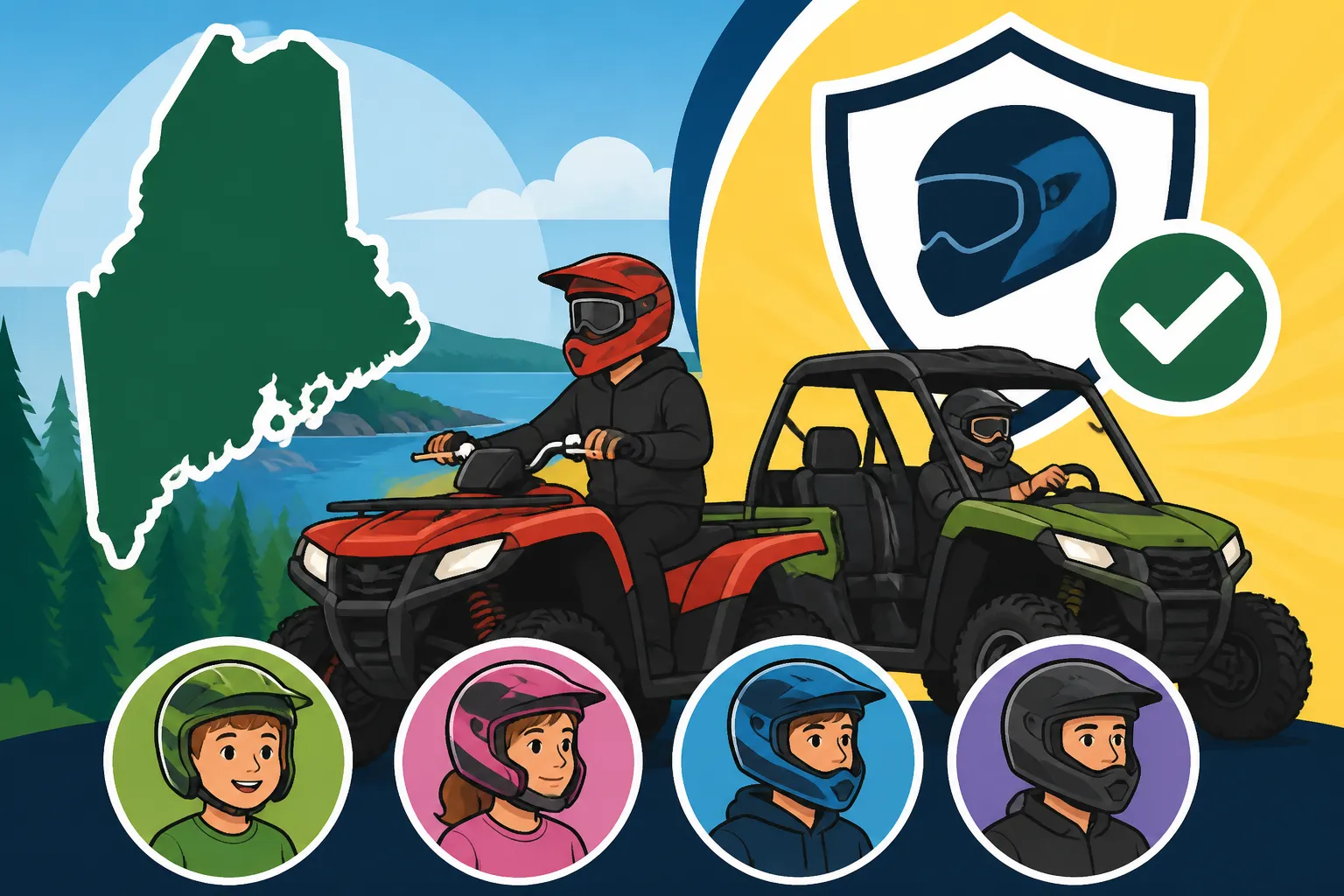
Riders under 18 must wear a helmet
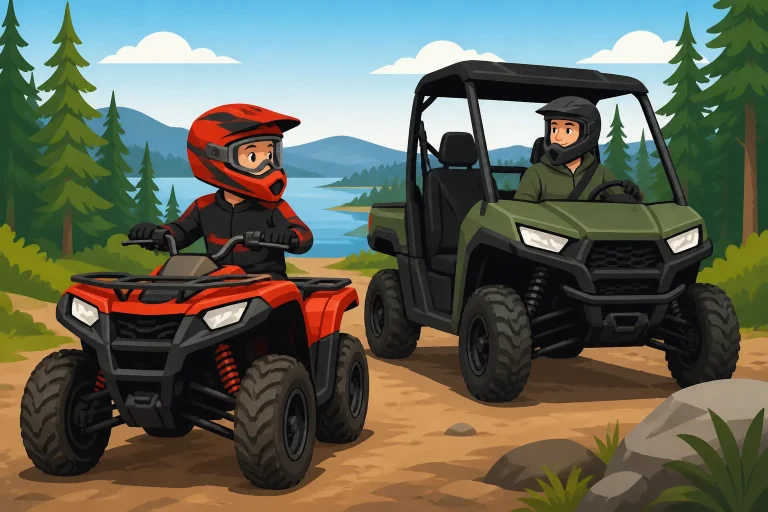
In Maine, anyone under 18 who operates or rides as a passenger on an ATV must wear protective headgear. That includes children, preteens, and 16- and 17-year-olds. The rule applies whether the young person is driving or riding behind someone else.
The practical takeaway is simple: a rider’s 16th birthday does not end the helmet requirement. A 17-year-old still needs a helmet, even if they have experience, have completed a safety course, and are riding with a parent. The age threshold is under 18, so the requirement changes when the rider turns 18.
That age rule matters on family rides because it is easy to focus on the driver and forget about the passenger. If your 17-year-old is riding in a side-by-side with an adult, the teen still needs protective headgear. If your 12-year-old is riding on an ATV as a passenger where passenger riding is otherwise permitted, the child also needs a helmet.
Riders age 18 and older
Maine’s age-based mandatory helmet rule applies to people under 18. Adults 18 and older are not covered by that particular under-18 requirement. That does not mean riding without a helmet is a good idea, or that every trail, event, rental, or insurance arrangement will treat adult helmet use the same way.
A helmet can reduce the risk of a serious head injury in a rollover, collision, or fall. A slow ride on a familiar woods road can still involve a hidden rut, a low branch, loose gravel, or a sudden stop. Plenty of experienced riders choose to wear helmets because a familiar route can become unpredictable in a moment.
For a family, it is often easiest to make helmets a group habit rather than a rule only for children. When adults wear helmets too, younger riders are less likely to see the requirement as an unfair inconvenience. It also avoids the awkward trailhead conversation where a child is geared up while the adult leading the ride is not.
Quick age-by-age guide
| Rider’s age | Maine under-18 helmet requirement | Practical reminder |
|---|---|---|
| Under 10 | A helmet is required if the child is riding, but separate age and operating rules may restrict whether they can operate an ATV | Confirm that the child is legally allowed to operate or ride in the circumstances |
| 10 to 15 | A helmet is required when operating or riding as a passenger | Safety-course, supervision, and machine-use rules may also apply |
| 16 to 17 | A helmet is still required | Turning 16 does not end the helmet requirement |
| 18 and older | The under-18 mandate no longer applies | Wearing a helmet remains a sensible safety choice and may be required by a provider or event |
The helmet rule is only one piece of the legal picture. A helmet does not make an otherwise prohibited ride legal. Before planning a ride for a younger operator, review Maine ATV Age Rules for Riders Under 16 and Maine ATV Passenger Age Rules. Those issues are separate from the helmet question, and each can affect whether a particular person may operate or ride on a particular machine.
Which machines and rides the rule covers
ATVs and side-by-sides
The helmet rule is relevant to both traditional ATVs and side-by-side utility terrain vehicles. Riders sometimes assume the enclosed-looking cab, roll cage, or seat belts in a UTV make it exempt from helmet requirements for minors. Do not make that assumption. A young person riding in a side-by-side should plan to wear a helmet.
A roll cage and seat belt serve different purposes from a helmet. A belt helps keep an occupant in the seating area, while a helmet helps protect the head during impact. Neither replaces the other. In a side-by-side, occupants should use the available restraints and follow the machine’s passenger and seating instructions, in addition to wearing a helmet when required.
This is especially worth checking when families switch between machines during a weekend. A child might spend the morning riding on a quad and the afternoon in a side-by-side. The cabin may feel more protective, but the under-18 helmet rule does not disappear just because the ride feels more like being in a small vehicle.
Roads, trails, and private property
Parents often ask whether the helmet rule applies only on public trails or only when crossing a road. The safe planning assumption is that an under-18 rider needs a helmet whenever operating or riding on an ATV. Do not treat a private driveway, camp road, field, or family woodlot as an automatic helmet-free zone.
Private property can feel lower risk because there may be less traffic, familiar terrain, and fewer other riders. But it can also include rocks, stumps, ditches, slopes, fences, and uneven ground. A short trip to a woodpile or a slow loop around camp can still end in a fall. Helmets should be part of the routine before the engine starts, not something riders put on only when they reach a public trail.
There may also be separate rules about where an ATV can be operated, who can operate it, and what permissions are needed. For example, a landowner’s permission and a youth rider’s eligibility are not the same question as whether a helmet is required. Review Maine Landowner Permission Rules before assuming that access to a property settles every other rule.
Rentals, guided rides, and organized events
Rental providers and guided-tour operators may set safety conditions that go beyond the age-based rule. They may require helmets for every rider, including adults, or may set additional requirements about fit, fastening, and equipment. Read the rental terms before you travel, especially if your family expects to use its own helmets.
A child’s helmet that works for a family-owned machine may not meet a rental company’s condition. The company may require a specific kind of protective gear, provide helmets, or ask riders to use its equipment. Ask before booking whether helmets are included, whether there are size options for children, and whether the operator permits customers to bring their own.
The same approach applies to club rides, races, and special events. Event organizers can set participation rules that are stricter than the basic legal minimum. A family arriving at a staging area with one missing helmet may have to sit out, even if the child has ridden safely all summer. Checking the event’s written rules ahead of time is much easier than trying to solve a gear problem in the parking area.
Choosing a helmet that is suitable for ATV riding
Look for the right type of approval
A helmet should be designed for the kind of riding you are doing and should meet the applicable safety standard. For road use, riders commonly check for a DOT label indicating compliance with Federal Motor Vehicle Safety Standard 218. Maine’s applicable protective-headgear requirements should be checked when choosing equipment; do not rely only on a product listing that uses vague phrases such as “impact resistant” or “meets safety standards.”
A label or certification mark is more useful than a seller’s general claim. Look at the helmet itself and its documentation, not just the title of an online listing. If the standard is unclear, ask the retailer or check the relevant Maine requirements before relying on that helmet for a minor’s ride. Maine Helmet Standards: ANSI and FMVSS 218 offers a related place to explore the standards question.
Families shopping online may compare sizes, shell designs, and ventilation options on Amazon, but a long product description is not a substitute for checking the helmet’s markings and fit. A helmet that looks rugged in a listing can still be the wrong size or lack the certification needed for the intended use. Treat online shopping as a way to compare options, then verify the actual helmet and its labels before riding.
Fit matters as much as the label
A certified helmet that does not fit correctly is not a good solution. The helmet should sit level on the head, cover the forehead appropriately, and feel snug without causing pain. It should not rock freely from side to side or slide backward when the rider moves their head.
Try the helmet on with the chin strap fastened. Ask the rider to move their head gently in several directions. The helmet should move with the head rather than shifting independently. A child may say a helmet feels fine because they want to get going; take a moment to check it yourself rather than treating that quick answer as proof of a safe fit.
Children outgrow helmets, sometimes faster than parents expect. A helmet that fit last season may now press painfully, sit too high, or move too much. Check fit before the first ride of the season and again after a growth spurt. If the helmet no longer fits, do not try to make it work by adding improvised padding or loosening the strap.
Replace damaged or questionable helmets
After a significant impact, a helmet may have damage that is not easy to see from the outside. A cracked shell, crushed liner, loose components, or a history of a hard collision are all reasons to stop using it and follow the manufacturer’s replacement guidance. Do not assume a helmet is still protective because it looks normal after a fall.
Storage also affects condition. Keep helmets away from excessive heat, harsh chemicals, and places where heavy equipment can crush them. A helmet tossed under tools in a trailer or left in direct sun for long periods may not be in the same condition as one stored carefully. Check the shell, liner, strap, buckle, and any removable parts before each ride.
Be cautious with secondhand helmets if you do not know their history. A used helmet can look clean while having been dropped, damaged, or involved in a crash. If you cannot confirm its condition and history, buying a helmet with a known background is the more reassuring choice. Amazon and other marketplaces can make comparison shopping convenient, but the seller, product markings, fit, and return conditions all deserve attention.
Getting a helmet to fit a child or teenager
Measure and try on before ride day
A child’s age does not tell you their helmet size. Two riders of the same age can have different head shapes and sizes, and a helmet that fits one sibling may not fit another. Follow the manufacturer’s measuring instructions, then try the helmet on whenever possible.
If you are buying online, measure carefully and check the seller’s return policy before ordering. Amazon may offer a range of models and sizes, but avoid ordering based only on a child’s age or the size of a helmet they wore years ago. The product’s sizing chart and a hands-on fit check are more useful than a broad age label.
Build in time for a proper fitting before a planned ride. Buying a helmet the night before a trip can leave no room to exchange it if the fit is wrong. A child who cannot comfortably keep the helmet on for several minutes is unlikely to wear it properly for a longer ride. Fixing the issue at home is better than discovering it beside the trailer.
Make the chin strap non-negotiable
A helmet only helps as intended when it stays on the rider’s head. Fasten the chin strap according to the manufacturer’s instructions and make sure the buckle is secure. A loose strap can let the helmet shift or come off during a fall.
Parents can use a simple pre-ride routine: check the helmet’s position, fasten the strap, then ask the rider to open their mouth comfortably. With many helmet designs, a properly adjusted strap should feel snug around the chin when the mouth opens. Follow the helmet’s fitting instructions rather than relying on a strap that hangs loose or has been tied in a knot.
This check is especially useful when children share equipment. A parent may adjust the strap for one rider and assume it is set for the next, but head shapes differ. Recheck it every time the helmet changes hands. If a buckle is broken, the strap is frayed, or the adjustment no longer holds, do not send the rider out with the helmet.
Let teens have a voice without leaving safety to chance
Teenagers are more likely to use equipment consistently when they are part of choosing it. Let them compare comfortable options, ventilation, visor design, and colors, while keeping the safety standard and fit as non-negotiable requirements. They can have a say in style without deciding that an uncertified or poorly fitting helmet is acceptable.
A common conflict is the 16- or 17-year-old who feels experienced enough to ride without a helmet. The clear answer is that under-18 riders remain subject to Maine’s helmet requirement. Rather than turning the conversation into a debate about skill, explain that the rule is based on age and applies to experienced riders too.
Make the expectation consistent for the whole group. If every adult and teen wears a helmet, it becomes standard gear rather than a punishment aimed at younger riders. A parent who wears a helmet on a quick ride to check a trail or move equipment sends a stronger message than one who only insists on helmets when a warden or club leader might be nearby.
Helmet rules are only one part of youth riding
Do not confuse helmet eligibility with permission to operate
A child wearing a helmet is not automatically allowed to operate every ATV. Maine has separate rules concerning age, safety education, adult supervision, and the circumstances in which a minor may operate a machine. A helmet addresses head protection; it does not grant permission to ride or satisfy other legal conditions.
This distinction is important when a family owns several machines. A parent may think a small ATV is suitable for a child because it is physically manageable, but the child’s age and the applicable operating requirements still need to be considered. Likewise, a teen who has completed a course still needs the required helmet and must follow any other rules that apply to their age and activity.
Before the first ride, review Youth ATV Safety Course Requirements and Adult Supervision Rules for Maine Youth Riders. Those topics help families separate the questions: Is the young person allowed to operate? What training or supervision is required? What equipment must they wear? Taking each question in order can prevent a rushed decision at the trailhead.
Match the machine to the rider
A helmet cannot compensate for a machine that is too large, powerful, or difficult for a young rider to control. Consider the rider’s size, experience, reach, strength, and ability to use the controls. If a young person cannot comfortably reach the controls or manage the machine at low speed, they are not ready for it simply because they can sit on it.
A useful way to evaluate readiness is to observe basic control in a safe, appropriate setting. Can the rider start, stop, turn, and respond to instructions without panic? Can they keep both hands where needed and maintain control over uneven ground? A rider who struggles in a low-pressure setting may be overwhelmed on a narrow trail with other machines or unexpected obstacles.
Do not let a helmet create a false sense of security. Protective equipment reduces some risks; it does not eliminate the consequences of poor judgment, excessive speed, passengers on a machine not designed for them, or riding beyond a child’s ability. Review Maine ATV Safety Course for Riders 10 to 15 for more context about youth preparation.
Passengers need their own properly fitted helmets
A passenger should have a helmet that fits them, not simply borrow the driver’s oversized helmet. A helmet that moves around on a child’s head may not stay positioned during a sudden stop or fall. Each rider needs a size that fits securely and a strap adjusted for that person.
Before carrying a child, also check that the machine is designed and permitted for passenger use. A helmet does not make it safe to carry a passenger on a single-rider ATV. On a side-by-side, occupants should use the proper seating position and restraints, and all riders under 18 should wear helmets.
The passenger should understand basic expectations before the machine moves: keep hands and feet inside the designated area, remain seated, follow the driver’s instructions, and avoid shifting suddenly. Parents sometimes focus so much on getting the helmet fastened that they skip this conversation. A short explanation at camp can make the ride calmer for everyone.
A practical pre-ride helmet routine
Check the rider and helmet before every outing
A reliable helmet routine takes only a few minutes. Start by confirming the rider’s age and whether the helmet requirement applies. Then check the helmet’s condition, confirm that it fits, and fasten the strap. If the helmet has been dropped hard or involved in an impact, do not assume it is fine because there is no obvious crack.
For a group ride, assign an adult to do a final check rather than assuming every rider has checked themselves. That is particularly helpful when several families meet at a trailhead in places such as Greenville, Millinocket, or Presque Isle and everyone is eager to get moving. A quick inspection is easier before the machines are running and helmets are already dusty.
Keep spare equipment only if it is serviceable and fits the person who may need it. A spare adult-size helmet is not a meaningful backup for a small child. If a rider arrives without a properly fitting helmet, the safest plan is to delay that person’s ride until suitable equipment is available.
Pack for a full day, not just the first mile
Maine rides can involve changing weather, dust, rain, and long stretches away from home. Bring gear that makes it realistic to keep the helmet on and usable throughout the ride. Depending on the helmet design, that may include appropriate eye protection, a clean cloth, or a way to secure the helmet when the rider is off the machine.
Check the helmet before leaving home, but also pay attention during the day. A strap can loosen, a buckle can collect mud, or a visor can become difficult to see through. If a helmet becomes damaged or cannot be fastened properly, stop and address the problem rather than continuing because the group is already on the trail.
Families who travel with multiple helmets should store them so they do not bang against tools, fuel containers, or heavy cargo. A helmet’s outside may tolerate ordinary handling, but repeated crushing or careless storage is not worth the risk. Use a dedicated, secure spot in the vehicle or trailer.
Confirm other rules before the ride
Helmet compliance does not settle every issue that can affect a youth ride. Check the route, access permissions, machine registration, safety-course obligations, supervision rules, and passenger restrictions. A family can have perfectly fitted helmets and still face a problem if the trail is closed or the young rider is not permitted to operate the machine in that situation.
If you are bringing a machine from out of state, do not assume that your home state’s rules or registration arrangements answer Maine’s requirements. Before crossing into Maine for a trail weekend, review What Maine Riders Need Before They Ride. Planning those details in advance helps avoid a disappointing turn-around after unloading at a trailhead.
For a basic family checklist, use this order:
- Confirm the rider’s age and whether they may operate or ride as a passenger.
- Check that the route and property access are permitted.
- Make sure the machine is suitable for the rider and intended use.
- Inspect the helmet for damage and verify its markings.
- Fit the helmet and fasten the chin strap.
- Check any additional equipment and restraints.
- Explain the ride plan and what the young rider should do if the group stops or becomes separated.
Common questions about Maine helmet requirements
Does a 17-year-old still need a helmet?
Yes. A 17-year-old is under 18, so the helmet requirement still applies when they operate or ride as a passenger on an ATV. Having a license, taking a safety course, or being an experienced rider does not change the age threshold.
This is one of the easiest details to miss when a teen has been riding for years. Some families assume the rule changes at 16 because other youth rules may have different age cutoffs. For helmet planning, continue requiring a helmet until the rider turns 18.
Does a child need a helmet on a side-by-side?
Plan on a helmet for any rider under 18 in a side-by-side. The presence of a roll cage, doors, or seat belts should not be treated as a substitute for protective headgear. Use the machine’s restraints as directed as well.
If the side-by-side is rented or used in an organized ride, ask the provider about its equipment policy. It may require helmets for adults too, or may have specific rules for children. Getting that answer before the trip helps you avoid arriving with gear that does not meet the provider’s conditions.
Does an adult have to wear a helmet?
The under-18 requirement does not apply to riders who are 18 or older. However, adults may still be required to wear helmets by an outfitter, event organizer, employer, or other applicable conditions. Even when not required by the age rule, wearing a helmet is a practical safety choice.
A parent’s example can make a difference. When adults wear helmets consistently, children are less likely to think of them as something imposed only on minors. That small change can reduce arguments and make the whole group’s routine more dependable.
Is a bicycle helmet enough?
Do not assume a bicycle helmet is suitable for ATV riding. Choose protective headgear intended for the activity and verify that it meets the applicable requirements. The design and safety standards for different types of helmets can vary, so a helmet that is appropriate for a bicycle ride may not be appropriate for an ATV.
When in doubt, check the helmet’s markings and the applicable Maine standards before riding. Buying a Helmet That Meets the Standard can help with the practical selection process. The key is to confirm the actual product, rather than relying on a retailer’s broad description.
What if my child refuses to wear one?
Do not start the ride without a properly fitted helmet. A child or teen who will not wear required protective headgear should not ride until the issue is resolved. A helmet sitting loose on the head or hanging from the handlebar does not satisfy the purpose of the rule.
Try to understand the objection. The helmet may be uncomfortable, too hot, too heavy, or the wrong size. Adjusting the fit or choosing a better-suited model may solve the problem. If the objection is simply that the rider does not want to wear it, the boundary should remain firm: no helmet, no ride.
What should I do if I am unsure about a particular helmet?
Check the markings and product information, then confirm that the helmet meets the requirements applicable to the ride. If the certification is unclear, ask a qualified retailer or the relevant Maine authority before relying on it for a minor. Do not treat an unfamiliar label or a seller’s general claim as proof.
A careful check is especially worthwhile when buying online, using a hand-me-down, or purchasing a helmet for a child who has not tried it on. Keep the receipt and product information, inspect the helmet when it arrives, and return it if the fit or markings are not what you expected. A little extra time before the ride is far better than discovering the uncertainty at the trailhead.
Disclaimer
This article is for general informational purposes only and does not constitute professional advice. Laws, prices and regulations vary by location and change over time. Consult a qualified professional for guidance on your specific situation.