ATV Rules at Railroad Crossings
Riding your ATV or UTV through Maine's incredible network of trails often means you'll encounter a variety of terrain, including the occasional railroad crossing. It's a moment that can be confusing for many riders, leaving them wondering about the precise rules and how to safely navigate these intersections. This guide is here to untangle the complexities of Maine's laws and best practices for ATV and UTV operators when you come face-to-face with railway tracks, ensuring you stay safe and legal on your adventures.
Understanding Maine's Legal Requirements at Railroad Crossings
Navigating railroad crossings isn't just about common sense; it's about following specific laws designed to keep everyone safe. In Maine, these rules apply universally, whether you're in a car, truck, or on your ATV or UTV. Ignoring them can lead to serious consequences, not just legally, but personally.
The Mandate to Stop, Look, and Listen
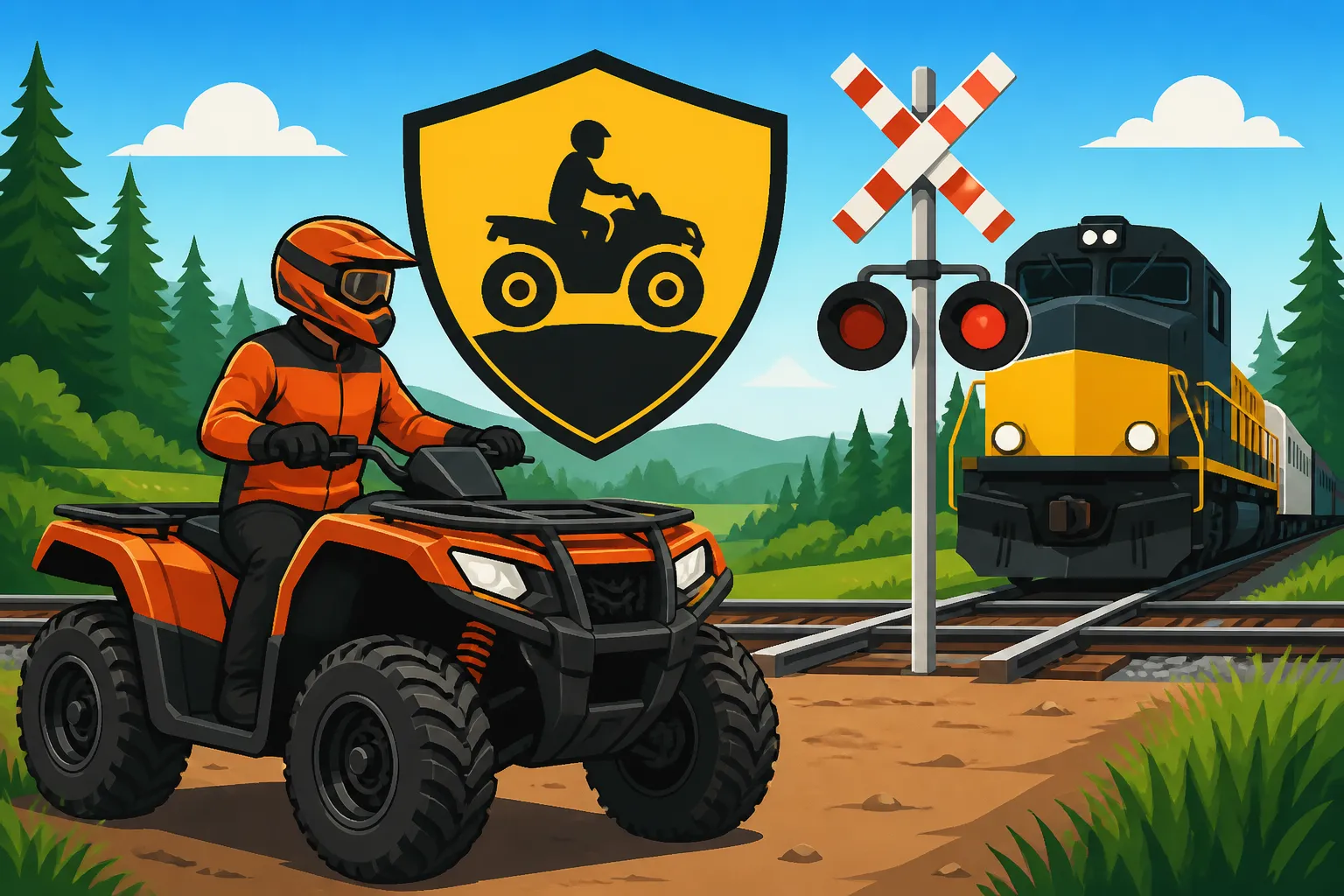
Maine law is very clear on what's expected of any operator approaching a railroad crossing: you must stop, look, and listen. This isn't a suggestion; it's a mandatory step for your safety and the safety of others. Imagine you're riding a scenic trail in Aroostook County, perhaps near the old Bangor and Aroostook line, and you see the familiar crossbuck sign. Even if you've been across it a hundred times and never seen a train, the law demands you bring your machine to a complete stop.
This stop needs to be at a safe distance from the tracks – far enough back that if a train were to pass, you wouldn't be in its path, but close enough to get a good view down the line in both directions. Then, you absolutely must scan both ways, carefully looking for any sign of an approaching train. Your peripheral vision isn't enough here; you need to turn your head. And just as importantly, you need to listen. Modern ATVs and UTVs, especially those equipped with aftermarket exhaust systems, can be pretty loud, so you might need to momentarily quiet your engine or remove your helmet for a clearer listen. Trains, even at a distance, create a distinct rumble, and their horns are unmistakable. This brief pause, often just a few seconds, could be the difference between a memorable ride and a devastating accident. It's not about being overly cautious; it's about respecting the immense power and speed of a train.
Yielding Right-of-Way to Trains and Rail Equipment
There's no debate about it: trains always have the absolute right-of-way at a railroad crossing. This principle is fundamental to rail safety. You, as the ATV or UTV operator, are legally required to yield to any train or rail equipment that is approaching or occupying the crossing. This means if you see a train, hear its horn, or even spot railroad maintenance equipment working on the tracks, you must stop and wait until it has passed and the tracks are clear before proceeding.
Consider a scenario where you're on a multi-day ride, maybe heading towards Jackman, and you approach a crossing. A slow-moving freight train appears, seemingly crawling along. It can be tempting to try to zip across before it gets too close, especially if you're feeling impatient or have miles to cover. But this is precisely the kind of dangerous gamble that Maine's laws are designed to prevent. Trains cannot swerve, stop quickly, or easily avoid anything on their tracks. Their momentum is enormous. Even a train moving at a seemingly slow speed can be upon you far faster than you anticipate. Waiting for the train to fully clear the crossing, and then allowing ample time for any second train (a rare but possible occurrence) or for your view to be completely unobstructed, is the only safe and legal course of action. This also applies if you encounter any [Maine Warden Service ATV Patrols] near a crossing; they will be strictly enforcing these rules.
Penalties for Non-Compliance: What's at Stake
Violating railroad crossing laws in Maine carries significant penalties, both legal and personal. These aren't just minor infractions; they're treated seriously because of the inherent danger involved. If a Maine Warden or other law enforcement officer observes you failing to stop, look, and listen, or failing to yield to a train, you could face substantial fines. These fines are designed to deter risky behavior and underscore the importance of safety. They can be hundreds of dollars, and repeatedly ignoring the rules could lead to even more severe consequences, potentially impacting your ability to register your machine or even ride trails in the future.
Beyond the immediate financial hit, there's the very real risk of an accident. Colliding with a train is almost invariably fatal or results in catastrophic injury. Your ATV or UTV would be utterly destroyed, and the cost of property damage would be immense, not to mention the emotional and physical toll on you and your loved ones. Even near misses can be traumatic. There are also potential civil liabilities if your actions cause a train to emergency brake, leading to damage to cargo or injuries to train personnel. The legal system in Maine takes these matters extremely seriously, and the repercussions extend far beyond a simple ticket. It's a powerful reminder that every time you approach those tracks, you're not just crossing a trail; you're entering a high-risk zone that demands your full attention and adherence to the law. For a broader understanding of fines, you might look into [Fines Maine Wardens Write Most Often].
Navigating Different Types of Railroad Crossings on Your ATV or UTV
Not all railroad crossings are created equal. Some are clearly marked and maintained, while others might be barely visible. Understanding the distinctions and how to approach each type is crucial for your safety.
Marked Crossings: Gates, Lights, and Warning Signs
These are the crossings we're most familiar with: the ones that feature flashing lights, ringing bells, and often, automatic gates that lower when a train is approaching. Even on remote ATV trails in Maine, you might encounter such a crossing, particularly where a popular trail or designated access route crosses an active rail line. The presence of these active warnings provides a layer of safety, but they should never lead to complacency.
When you approach a marked crossing, the "stop, look, and listen" rule still applies. If the lights are flashing, the bells are ringing, or the gates are down, you absolutely must stop. Do not try to go around lowered gates, even if you think you can make it or if you don't immediately see a train. Gates are there for a reason, and trying to bypass them is not only incredibly dangerous but also highly illegal. It's a quick way to get your ATV or UTV stuck, or worse, put yourself in the direct path of an oncoming train. Sometimes, multiple trains can pass in quick succession, or the warning system might activate for a train that's out of sight but still approaching. Always wait until the gates are fully raised and the lights stop flashing before you even think about proceeding. Even when clear, still take that extra moment to scan both directions before crossing. This level of caution is critical, whether you're riding your quad or navigating [Maine Snowmobile and ATV Shared Road Corridors].
Unmarked or Unofficial Crossings: Heightened Vigilance
Many ATV trails, especially those traversing older logging roads or less-traveled backcountry routes, might cross disused or "unofficial" railroad tracks. These are often the most dangerous because they lack the visible warnings of their marked counterparts. You won't find flashing lights, bells, or gates here. Instead, you'll see simple crossbuck signs, if anything at all, indicating a railroad crossing ahead. Sometimes, the tracks themselves might be overgrown or barely visible, making them easy to overlook, especially if you're focused on the trail ahead.
It's at these unmarked crossings that your personal responsibility and vigilance must be at their absolute peak. The legal requirement to stop, look, and listen is paramount here. Even if the tracks appear abandoned, you must treat them as active. Rail lines that look disused can suddenly become active for maintenance, logging operations, or even the occasional historical train. You should always reduce your speed significantly as you approach any area where tracks are known or suspected to be, giving yourself ample time to react. Look for subtle signs like disturbed ballast, shiny rail tops (indicating recent use), or cleared areas on either side of the tracks. Good quality mirrors, like those available from SuperATV, can also help you keep an eye on your surroundings, although direct visual scans are always best. Never assume a track is completely dead without absolute, verifiable proof, and even then, caution is your best friend. Navigating these areas safely is part of [Maine ATV Safety Course Requirements].
The Dangers of Riding on Railroad Property
It might seem obvious, but it bears repeating: riding your ATV or UTV on railroad tracks or along the railroad right-of-way (the property immediately adjacent to the tracks) is extremely dangerous and illegal. Railroad property is private property, owned by the rail company, and it is not intended for ATV use. Trespassing on these lands can lead to fines, legal action, and potential confrontation with railroad police or Maine Wardens. The penalties for [Maine Penalties for Trespass on an ATV] are real and strictly enforced.
Beyond the legal ramifications, the physical dangers are immense. The ballast stones that support the tracks are unstable and can easily cause you to lose control of your machine, leading to a tip-over or a crash. Getting your wheels stuck between the rails is a common scenario, leaving you vulnerable to an oncoming train. The rails themselves can be slippery, especially when wet, and crossing them at a shallow angle can cause your tires to get caught, leading to a sudden stop or a spill. Moreover, trains are incredibly quiet until they are very close, and the noise of your own machine can easily mask the sound of an approaching train. You may think you have plenty of time to move, but a train can cover a mile in less than a minute. Staying off the tracks and away from the immediate right-of-way is not just a rule; it's a matter of life and death. Always refer to your [Maine ATV Trail Maps and Club Boundaries] to ensure you're on designated trails and not inadvertently trespassing onto rail lines.
Practical Strategies for Safe Railroad Crossings in Maine
Safety at railroad crossings goes beyond just knowing the rules; it involves developing consistent habits and having a clear plan for every crossing you encounter.
Approaching the Crossing: Slow Down and Assess
Your approach to any railroad crossing should always prioritize caution. As soon as you see a warning sign – be it a crossbuck, a "Railroad Crossing Ahead" sign, or even just recognize the distinct cleared path of a rail line – you should begin to slow down. Reduce your speed significantly, down to a pace where you can comfortably stop if necessary, and shift your focus entirely to the crossing ahead. This isn't the time to be racing or trying to catch up with your riding buddies.
Look for a clear, unobstructed view down the tracks in both directions. Sometimes, trees, dense brush, or even bends in the track can obscure your vision. If your view is limited, that's where the "listen" part of the mandate becomes even more critical. You might even need to creep forward slowly, pausing multiple times, to ensure you can adequately see and hear any approaching rail traffic. If you're riding with a group, establish a system: the lead rider signals the crossing, everyone slows, and each rider individually performs the stop, look, and listen procedure before crossing one at a time. This methodical approach minimizes risks. Equipping your UTV with better lighting, perhaps an LED light bar from SuperATV, can also improve your visibility of the crossing itself, especially in low-light conditions.
The Act of Crossing: Technique and Awareness
Once you've stopped, looked, and listened, and determined that the tracks are clear, the act of crossing itself still requires attention. Aim to cross the tracks as perpendicularly as possible. This means approaching the rails at a 90-degree angle if the terrain allows. Crossing at a sharp angle increases the risk of your tires getting caught in the flangeway (the groove next to the rail) or sliding along the rail, which can cause you to lose control. Maintain a slow, steady speed as you cross, avoiding sudden acceleration or braking.
Be mindful of the surface condition. Railroad ties and the ground between the rails can be uneven, muddy, or gravelly. Your machine's suspension, especially if upgraded with components from SuperATV, can help absorb some of these bumps, but it's still crucial to be gentle. Watch for loose gravel that could cause your tires to slip. If you're on a multi-rider UTV, ensure all passengers are secure and aware that you're crossing. Some older, less-used crossings might have significant dips or raised rails, so be prepared to navigate these obstacles carefully. If your machine stalls on the tracks, immediately try to restart it. If it won't start, and there's a train approaching, get yourself and your passengers to safety away from the tracks as quickly as possible, then attempt to move your machine.
Emergency Procedures: When a Train is Approaching
Despite all your precautions, there might be a rare instance where you find yourself too close to a crossing when a train is suddenly spotted or heard. In such a high-stress situation, immediate and decisive action is critical. If you are on the tracks or very close to them and a train is approaching, your absolute top priority is to get yourself and any passengers to safety, far away from the tracks and the area where the train would overhang. Forget the machine if you can't move it instantly. A train's path is wide, so you need to be well clear of the rails.
Once you are in a safe location, if there's time and it's safe to do so, call 911 or the local emergency number immediately to report the stalled or stuck ATV/UTV on the tracks. Provide as much detail as possible about your location. Most railroad crossings have an emergency information sign with a specific number to call the railroad dispatch directly; use this if you can. Never, under any circumstances, try to wave down a train. Train operators might not see you, or they may not be able to stop in time due to the train's immense momentum. Your only job in this scenario is self-preservation. While not directly about crossings, [What to Carry on a Remote Trail Ride] highlights items like a satellite messenger that could be crucial in reporting an emergency situation.
Equipping Your Machine for Safer Rail Crossings
While rider awareness and adherence to rules are paramount, your ATV or UTV can also be equipped to enhance safety specifically for tricky situations like railroad crossings. Thoughtful upgrades can give you an edge.
Enhancing Visibility and Awareness
Clear vision and being seen are vital, especially around potential hazards like railroad crossings. Upgrading your ATV or UTV's lighting system can significantly improve your ability to spot obstacles like overgrown tracks, uneven ballast, or obscured signage, especially if you find yourself riding around dusk or in less-than-ideal weather. High-intensity LED headlights or an auxiliary light bar from a reputable brand like SuperATV can cut through the gloom, illuminating the crossing area far more effectively than standard factory lights.
Beyond seeing, being seen is equally important, particularly if you're crossing a busier road that also has a rail line or if you're riding with a group. Brighter taillights, auxiliary running lights, or even reflective decals on your machine can make you more conspicuous to others, including train operators if they're on a slow-moving maintenance vehicle. While not a substitute for stopping and looking, every bit of enhanced visibility contributes to a safer riding experience. Remember, [Maine Lighting Requirements for Night Riding] are in place for a reason, and exceeding those minimums can only benefit you.
Protecting Your ATV or UTV During Crossings
Railroad crossings, especially the unmarked or less-maintained ones, can be notoriously rough on your machine. The uneven surface, raised rails, and loose ballast can all pose a threat to your ATV or UTV's underside, suspension, and tires. Investing in robust protection can save you from costly damage and keep you from getting stranded.
Heavy-duty skid plates, often made from durable aluminum or UHMW (Ultra High Molecular Weight polyethylene), can shield your machine's vital components – engine, transmission, and differential – from impacts with rocks or debris between the rails. Aftermarket A-arm guards and CV boot protectors can prevent punctures or damage to your suspension components if you bottom out or scrape the rails. For those navigating particularly rough or older crossings, a lift kit from SuperATV can provide additional ground clearance, reducing the chance of your machine getting hung up on a raised rail or a deep rut. Upgrading to more aggressive, puncture-resistant tires can also provide better traction over slippery rails and reduce the risk of a flat from sharp ballast. These protections are an investment in the longevity of your machine and your peace of mind.
Preparing for the Unexpected: Recovery Gear
Even with all the precautions and protective gear, things can still go wrong. A momentary lapse in judgment, an unexpected obstacle, or a mechanical issue could lead to your ATV or UTV becoming stuck on or near railroad tracks. Being prepared for this contingency is a crucial aspect of responsible riding, especially when venturing into remote areas.
A high-quality winch, properly installed on your machine, is perhaps the most valuable piece of recovery gear you can carry. It can be used to pull your machine off the tracks if it gets stuck, or to assist a riding buddy in the same predicament. Winches come in various capacities, and choosing one with sufficient pulling power for your machine's weight is essential. Along with a winch, carry a recovery strap, shackles, and work gloves. A small, compact tool kit for minor repairs could also be helpful if a simple fix can get you moving again quickly. Consider carrying a small shovel if you frequently ride muddy or sandy trails that might be present around crossings. A satellite messenger or fully charged cell phone (though service can be spotty in remote Maine) should always be with you for emergency communication. While we all hope to never need them, having these items on hand can turn a potentially dangerous and costly situation into a manageable one. This readiness complements the general advice on [What to Carry on a Remote Trail Ride].
| Crossing Type | Description | Recommended Action | Key Dangers |
|---|---|---|---|
| Marked Crossings | Flashing lights, bells, automatic gates. Visible warning signs. | STOP if warnings are active. Wait for clear, then Stop, Look, Listen. | Impatience, going around gates, assuming "all clear" too soon. |
| Unmarked Crossings | Simple crossbucks, or just visible tracks. No active warning systems. | STOP, LOOK, LISTEN always. Treat as active, even if tracks seem disused. | Overlooking tracks, assuming abandonment, limited visibility. |
| Railroad Property | The tracks themselves and the immediate area (right-of-way). | AVOID. Do not ride on tracks or adjacent property. Stay on designated trail. | Trespassing fines, unstable surface, getting stuck, direct train collision risk. |
Disclaimer
This article is for general informational purposes only and does not constitute professional advice. Laws, prices and regulations vary by location and change over time. Consult a qualified professional for guidance on your specific situation.