Losing Trail Access After a Violation
It's a gut-wrenching feeling, isn't it? You're out enjoying the vast, beautiful trail systems that Maine has to offer, feeling the wind in your face and the rumble of your machine, only for that exhilarating ride to come to a screeching halt with the flash of blue lights or a stern conversation with a landowner. An ATV violation isn't just about the immediate sting of a fine; for many Maine riders, the real fear is losing the privilege to enjoy the very trails we cherish. This guide is here to walk you through what exactly can happen when you receive a citation, how your trail access might be affected, and what steps you can take to prevent future issues and protect your riding future.
The Real Stakes: What Happens After an ATV Violation in Maine?
When you get pulled over or confronted on a Maine ATV trail, the initial shock can be disorienting. You might be focused on the immediate fine, but it’s crucial to understand that the ramifications of an ATV violation can extend far beyond a monetary penalty. We're talking about something far more valuable to many of us: the ability to keep riding the trails we love.
Immediate Consequences of a Citation
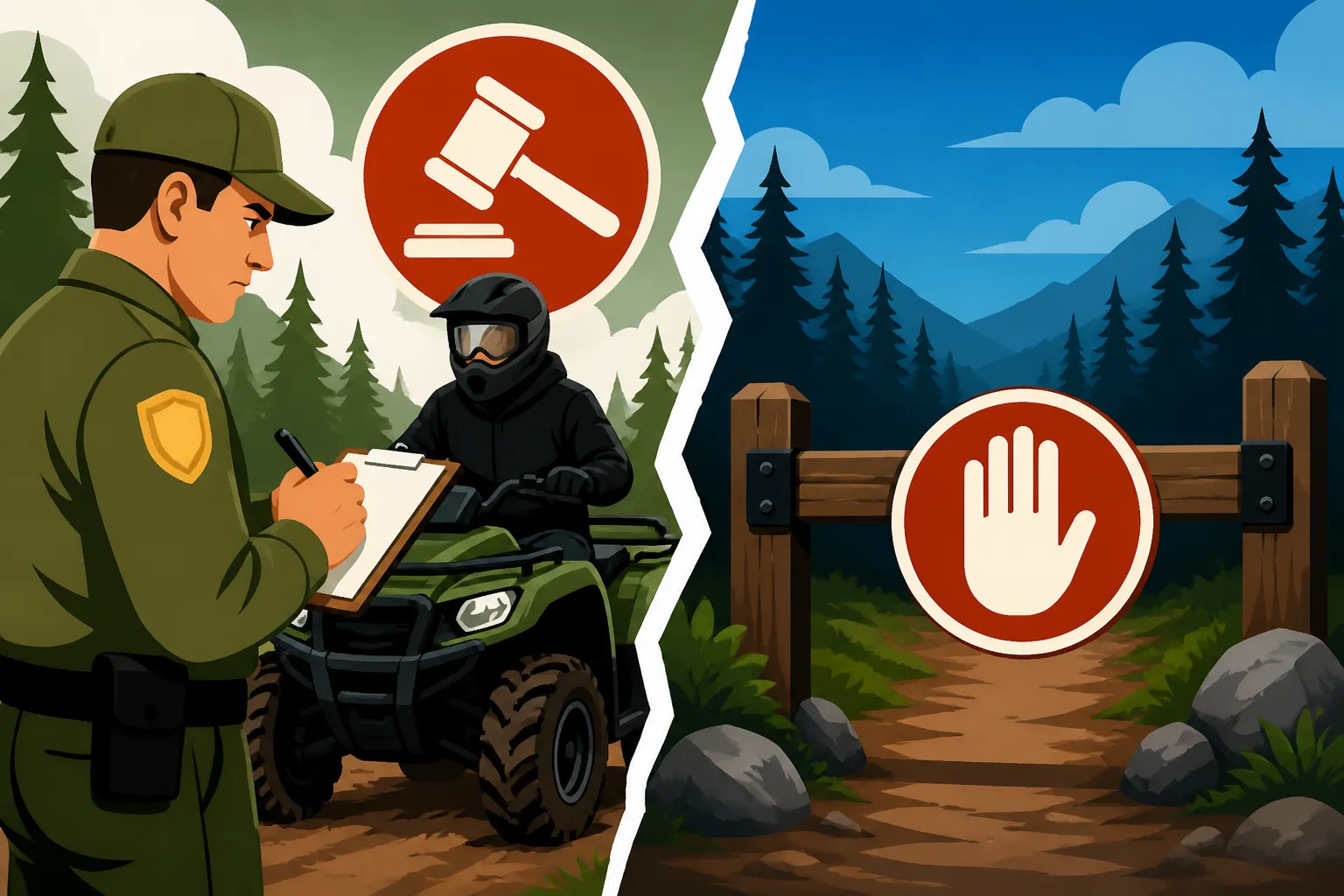
First and foremost, a citation for an ATV violation usually comes with a fine. These can vary wildly depending on the severity and nature of the offense. Riding an unregistered ATV, for example, will carry a certain fine, while trespassing on private land or operating under the influence will result in far steeper penalties. These fines are often payable to the state or relevant municipal authority, and prompt payment is usually expected to avoid further complications. Beyond the financial hit, a violation might also involve points on your driving record, depending on the nature of the offense and if it involved operating on a public way. In more serious cases, particularly those involving public safety or significant property damage, you could even face court appearances or temporary suspension of your operating privileges. It's a sobering reality that a moment of lapse in judgment can lead to a cascade of legal and financial burdens.
But let's be realistic: for many of us, the money, while painful, isn't the worst part. It’s the shame, the frustration, and the worry about what this means for our future rides. Will the wardens remember us? Will our local club look at us differently? Will we still be welcome on the trails? These are valid concerns that weigh heavily on responsible riders.
Beyond the Fine: Understanding the Wider Impact
While the fine is direct, the impact on your trail access can be more nuanced and, frankly, more devastating for avid riders. Maine's extensive ATV trail network relies heavily on the goodwill of private landowners and the tireless work of local ATV clubs. [Why 80 Percent of Maine Trails Sit on Private Land] explains just how dependent we are on these relationships. When a rider commits a violation, especially one involving trespassing, property damage, or reckless behavior, it doesn't just reflect on that individual; it damages the trust between landowners, clubs, and the entire riding community.
Landowners, understandably, can become hesitant to allow trail access across their property if they experience problems. A single incident of disrespect or damage can lead to a "No Trespassing" sign going up, permanently closing a section of trail for everyone. For clubs, repeated violations by their members or visitors can jeopardize their agreements with landowners, making it harder to maintain existing trails or secure new ones. This means that your violation, even a seemingly minor one, could contribute to the closure of trails for countless other riders, shrinking the very network that draws us all to Maine. This ripple effect is a powerful reminder of how interconnected we all are on the trails.
How Trail Access Can Be Revoked or Restricted
The idea of losing access to the trails can manifest in several ways, from informal exclusions to official, state-mandated restrictions. It's not always a single, clear-cut moment, but often a result of escalating actions or a breach of trust.
Landowner Decisions and Club Rules
The most immediate and common way to lose trail access after a violation, particularly for infractions like trespassing or property misuse, is directly from the landowner. Maine law gives landowners significant power over their property, and if you violate their trust or cause damage, they have every right to withdraw their permission for you, or anyone, to use their land. This might mean an individual telling you directly to stay off their property, or, more broadly, posting [Purple Paint Marks Along a Maine Road] or "No Trespassing" signs that effectively close a section of trail. Once that permission is gone, it's incredibly difficult to get it back, and it affects everyone who used that segment of the trail.
ATV clubs, which often manage vast trail networks thanks to agreements with multiple landowners, also play a critical role. Each club has its own set of rules and bylaws, often extending beyond state law, that riders are expected to follow. [Maine ATV Club Membership and Dues] are often vital to trail maintenance and access. If you're a member of a club and violate their rules – perhaps through reckless riding, damaging trail infrastructure (like bog bridges, which are expensive to maintain), or repeatedly riding in closed areas – the club might take disciplinary action. This could range from a warning to suspension or even permanent expulsion from the club. While expulsion doesn't directly forbid you from riding state-sanctioned trails, it often means losing access to club-specific trails, events, and the community support that makes riding in Maine so enjoyable. Moreover, a club might share information about persistent violators with other clubs or even with landowners, further limiting your options.
State-Level Actions and Recourse
While landowners and clubs manage specific segments of trails, the state of Maine, through its Department of Inland Fisheries and Wildlife (IF&W) and the Warden Service, has broader authority over ATV operations and safety. Certain violations can lead to direct state-imposed restrictions on your riding privileges. For example, severe infractions like operating an ATV under the influence (OUI) or repeated instances of reckless operation can lead to the suspension or revocation of your ATV registration privileges. This means you wouldn't be able to legally register an ATV in Maine for a set period, effectively banning you from all public and club trails.
In some cases, if a violation is serious enough, it might also affect your driver's license, especially if it occurred on a public way or involved extreme negligence. While Maine's ATV laws generally operate separately from vehicle laws, there can be overlaps. Furthermore, the state can impose civil penalties or require participation in ATV safety courses. While these don't always equate to an outright ban from trails, being unable to legally register your machine, or having your right to operate revoked, is a de facto loss of trail access. The state's system is designed to ensure safety and responsible use, and repeated or serious violations will definitely draw their attention. [Penalties for Riding an Unregistered ATV in Maine] details some of the specific consequences you can face.
Preventing Violations and Protecting Your Riding Privileges
No one sets out to violate rules, but sometimes, a moment of carelessness or a lack of awareness can lead to big problems. Proactive measures are always better than reactive ones when it comes to keeping your trail access secure.
Essential Practices for Responsible Riding
The best defense against losing trail access is to be an exemplary rider. This starts with knowing the rules. Before every season, and especially if you're exploring new areas, take time to review the current [Maine ATV Rules That Changed Recently] or any local ordinances that might apply. Always ensure your ATV is properly registered and that you have proof of ownership and registration with you. [Do You Carry Registration Papers While Riding?] is a common question, and the answer is a resounding yes!
Beyond official paperwork, responsible riding means respecting the land and other users. Stick to marked trails, stay off private property unless you have explicit permission, and always observe speed limits, especially near residential areas or trail crossings. Be mindful of noise, as loud machines can be a major source of conflict with landowners. Consider aftermarket parts from reputable brands like SuperATV that not only enhance your machine's performance but also comply with local noise and safety regulations. A good spark arrestor, for instance, is non-negotiable for fire safety on our dry summer trails. Pack out everything you pack in, and if you see litter, consider picking it up – it's a small act that makes a huge difference in [Landowner Relations on Maine ATV Trails]. Remember, you are an ambassador for all ATV riders.
Safety is also paramount. Always wear appropriate safety gear, including a helmet, and never operate under the influence of alcohol or drugs. Young riders should always have their [Maine ATV Safety Course Requirements] completed and be under adult supervision as required by law. These practices not only keep you safe but also demonstrate a level of respect that helps maintain trail access for everyone.
Rebuilding Trust After a Mistake
If you've already had a run-in with the law or a landowner, it's not necessarily the end of your riding days, but it will require effort to rebuild trust. First, accept responsibility for your actions. Arguing or making excuses won't help your case with wardens or landowners. Pay your fines promptly and fulfill any legal requirements, such as attending a safety course.
For landowner-related issues, if feasible and safe to do so, consider directly apologizing to the landowner, if you know who they are. Offer to repair any damage you caused. Actions speak louder than words. If the issue was with a local ATV club, reach out to their leadership. Express your regret, understand their concerns, and ask what steps you can take to regain their trust and potentially your membership. Perhaps you can volunteer for trail maintenance days, showing a commitment to the trails you want to ride. Consistency in responsible riding from that point forward is key. It's a marathon, not a sprint, to re-establish yourself as a trustworthy member of the riding community, but it's absolutely worth the effort to continue enjoying Maine's incredible trails.
When to Seek Help and What to Expect
Navigating the aftermath of an ATV violation can feel overwhelming, especially if it involves more than just a simple fine. Knowing your rights and understanding the appeal process can make a significant difference.
Understanding Your Rights and Options
If you receive a citation, you generally have the right to contest it in court. This means you can plead "not guilty" and present your case before a judge. While many minor ATV violations might not warrant legal representation, if the penalties are severe – such as a significant fine, potential suspension of registration privileges, or a lengthy ban from trails – it might be wise to consult with an attorney who specializes in traffic or outdoor recreation law. They can help you understand the charges, explain the potential consequences, and advise you on the best course of action. They can also assist in navigating court procedures and negotiating with prosecutors.
It's also important to remember that not all violations are clear-cut. Sometimes, there might be mitigating circumstances, misunderstandings of signage, or even errors in the citation itself. Documenting everything, including dates, times, specific locations, and any witnesses, can be crucial if you decide to contest a ticket. Even if you don't fight the ticket, understanding the process for paying fines and any additional requirements (like safety courses) is essential to avoid further legal trouble. The [Maine Warden Service ATV Patrols] are trained professionals, but mistakes can happen, and you have the right to due process.
Navigating Appeals and Reinstatement
For state-imposed suspensions of your registration or operating privileges, there's usually an appeal process. This might involve submitting a written request for review or attending a hearing before an administrative board. During such a process, you would have the opportunity to explain your side of the story, provide any mitigating evidence, and demonstrate what steps you've taken to ensure future compliance. Success in these appeals often hinges on showing genuine remorse, a clear understanding of the rules you violated, and a concrete plan for responsible operation going forward.
Reinstatement of privileges typically requires fulfilling all conditions set by the state, such as paying all fines, completing any required courses, and waiting out the suspension period. For club-related issues, reinstatement often means approaching the club's board or relevant committee, explaining your case, and demonstrating a renewed commitment to their rules and the trail system. Offer to help with trail work, engage positively with other members, and show that you're dedicated to being a part of the solution, not the problem.
It's not always an easy road, and patience is key. Rebuilding trust and regaining access, whether with the state, landowners, or clubs, takes time and consistent, responsible behavior. But for those who truly love Maine's ATV trails, the effort is undoubtedly worth it.
| Violation Type | Potential Immediate Penalty | Potential Impact on Trail Access | How to Prevent |
|---|---|---|---|
| Unregistered ATV | Monetary fine, potential impoundment | State registration suspension, direct warden interaction | [What It Takes to Register an ATV in Maine], always renew |
| Trespassing | Monetary fine, property damage liability | Landowner withdraws permission, trail section closed for all | Always stay on marked trails, respect "No Trespassing" signs |
| Operating Under the Influence | Significant fines, license suspension | State registration suspension/revocation, major trust erosion | Never drink and ride |
| Reckless Operation/Speeding | Monetary fine, potential injury | Club disciplinary action, landowner complaints, safety risk | Observe speed limits, ride within your skill level |
| Damaging Private Property | Monetary fine, restitution required | Landowner withdraws permission, club sanctions | Stay on trails, avoid cutting corners, respect infrastructure |
| Excessive Noise | Monetary fine, "nuisance" complaints | Landowner complaints, town ordinances, trail closures | Maintain muffler, consider quieter aftermarket parts (SuperATV) |
| Riding on Closed Trails | Monetary fine, increased scrutiny | Landowner frustration, club warnings | Always check trail status, respect seasonal closures |
| Failure to Yield/Stop (Road) | Monetary fine, points on driver's license | Increased state scrutiny, potential loss of ATV road privileges | [Complete Stop Before Entering a Maine Public Way] |
Disclaimer
This article is for general informational purposes only and does not constitute professional advice. Laws, prices and regulations vary by location and change over time. Consult a qualified professional for guidance on your specific situation.